
Chak HaoThe Black Rice of Manipur
For over two thousand years, the paddy fields of Manipur have nurtured a grain so dark, so rich in anthocyanins, it was once reserved for royalty. Today, this glutinous purple rice remains the soul of Meitei feasts, rituals and the beloved Chak Hao Kheer.
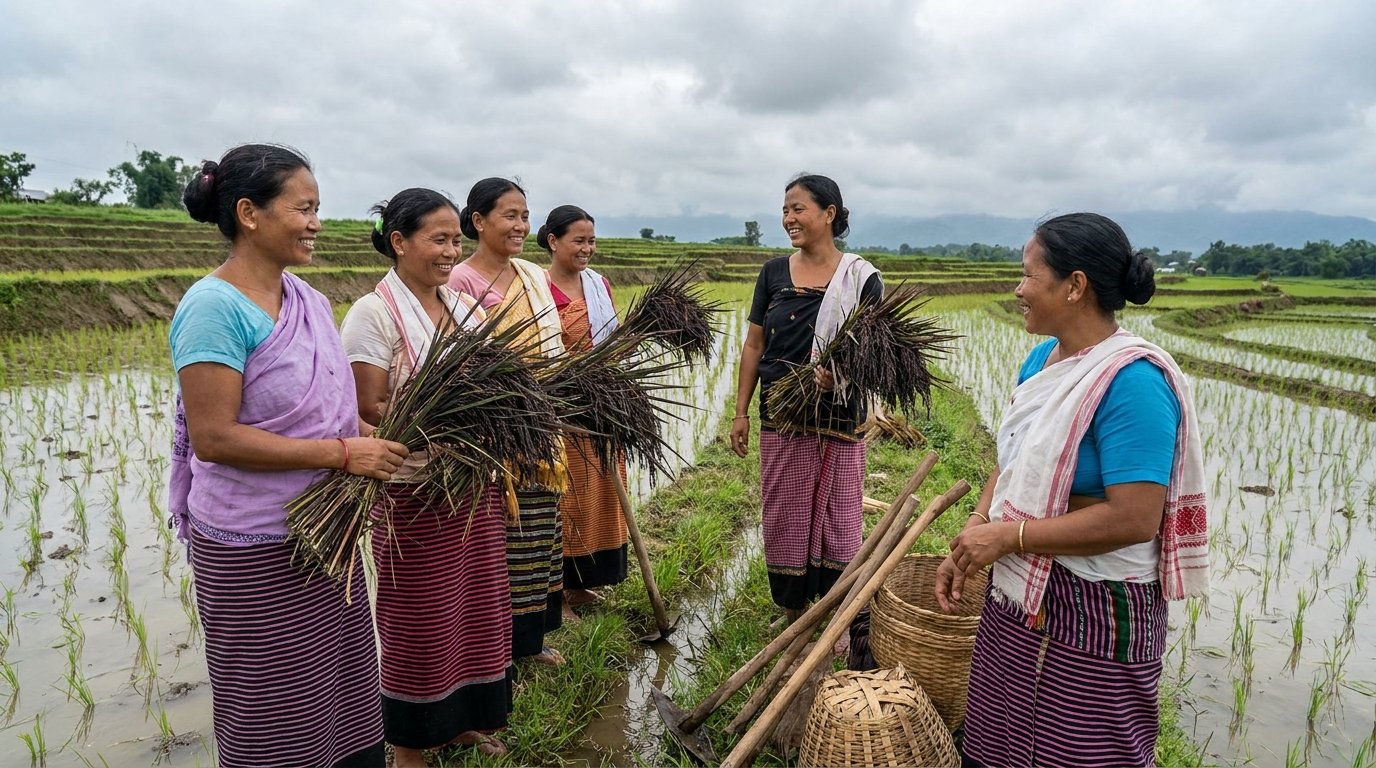
Chak = rice · Hao = delicious in Meiteilon
A grain whispered aboutfor two millennia
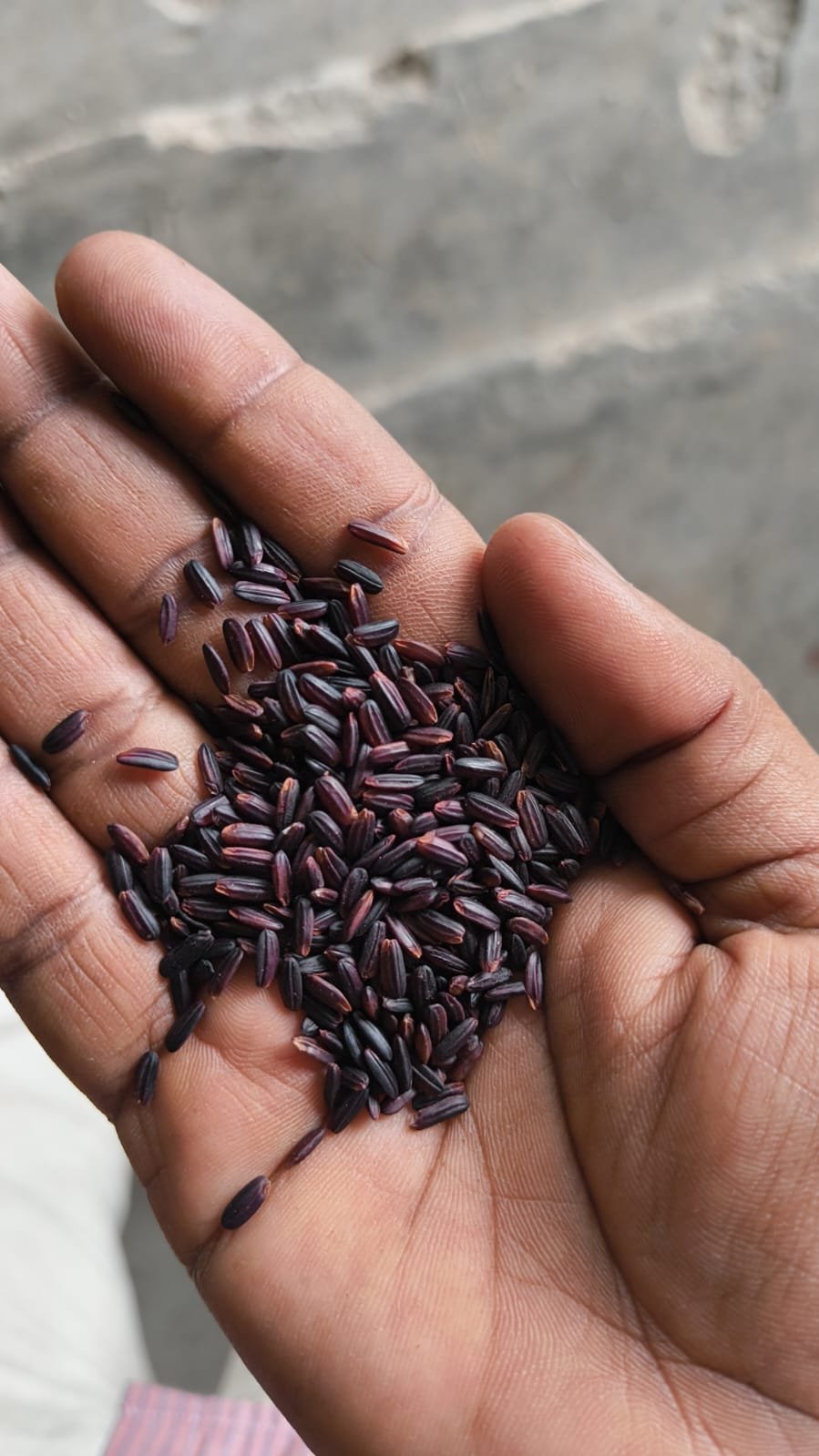
Chak Hao is a short-grained, glutinous black rice indigenous to the lush valleys of Manipur in Northeast India. The name itself — Chak (rice) and Hao (delicious) — is a quiet promise of what lies within: an earthy, nutty aroma, a tender chew, and a colour so vivid it stains the cooking water royal purple.
Once Reserved for Royalty
Historically cultivated only for the Meitei kings of Manipur, Chak Hao was a grain of privilege — served at royal banquets and sacred ceremonies.
Bleeds Purple
Its striking colour comes from anthocyanins, the same antioxidants found in blueberries. When cooked, the grains release a deep violet hue.
Certified Organic Heirloom
Grown organically in the Imphal valley with zero chemical inputs or polishing, Chak Hao is a glutinous, aromatic rice preserved by generations of farmers — and certified organic for today's global trade.
Why the colour is the medicine
That vivid violet isn't just beautiful — it's a signature of concentrated anthocyanins, the same compounds that make blueberries a superfood. Chak Hao is, quite literally, the antioxidant rice.
Anthocyanin Antioxidants
The deep purple pigment is anthocyanin — a powerful antioxidant that fights free radicals and cellular aging.
Heart Healthy
Regular consumption is linked to lower cholesterol and improved cardiovascular function.
Blood Sugar Friendly
A lower glycemic index than white rice makes Chak Hao a wiser choice for balanced energy.
Brain & Memory
Anthocyanins cross the blood-brain barrier, supporting memory and cognitive health.
Rich in Fiber & Iron
Higher dietary fibre and iron content than polished white rice supports digestion and vitality.
Naturally Gluten-Free
A wholesome, gluten-free whole grain suitable for sensitive diets — no polishing, no additives.
Chak Hao vs. everyday rice
Approximate nutritional comparison per 100 g of uncooked grain.
* Values are approximate, sourced from published nutritional analyses of pigmented rice varieties. Anthocyanin content can vary by variety and season.
More than a grain —a Meitei inheritance
"In every violet spoonful of Chak Hao lies the memory of Manipur's kings, its festivals, and the patient hands that saved this seed for a thousand seasons."
A Royal Grain
Chak Hao was cultivated exclusively for the Ningthouja dynasty. Commoners rarely tasted it — it was the rice of kings, priests and sacred offerings.
Food of the Gods
Offered to deities during Lai Haraoba and other Meitei festivals, black rice carries deep spiritual significance in Manipuri religious life.
The Kheer Tradition
No Manipuri celebration — wedding, birth, or harvest — is complete without Chak Hao Kheer, the purple pudding that crowns every feast.
A Living Heritage
Passed seed-to-seed by farming families, Chak Hao survives as a living heirloom — a flavour of Manipur that refuses to be forgotten.
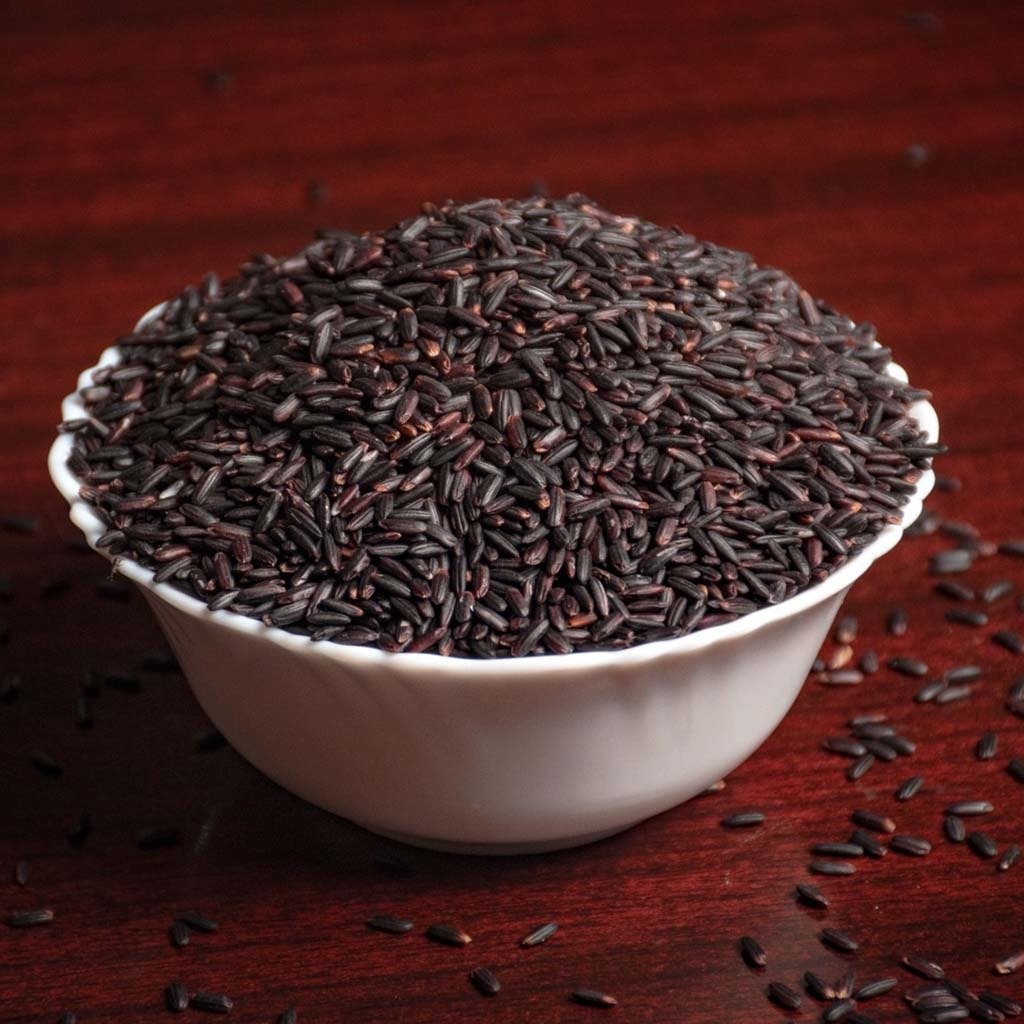
The festival where Chak Hao is offered to the gods
years of tradition
Recipes coloured by tradition
From the legendary kheer to smoky bamboo-steamed rice, Chak Hao moves effortlessly between sweet and savoury — always unmistakably itself.
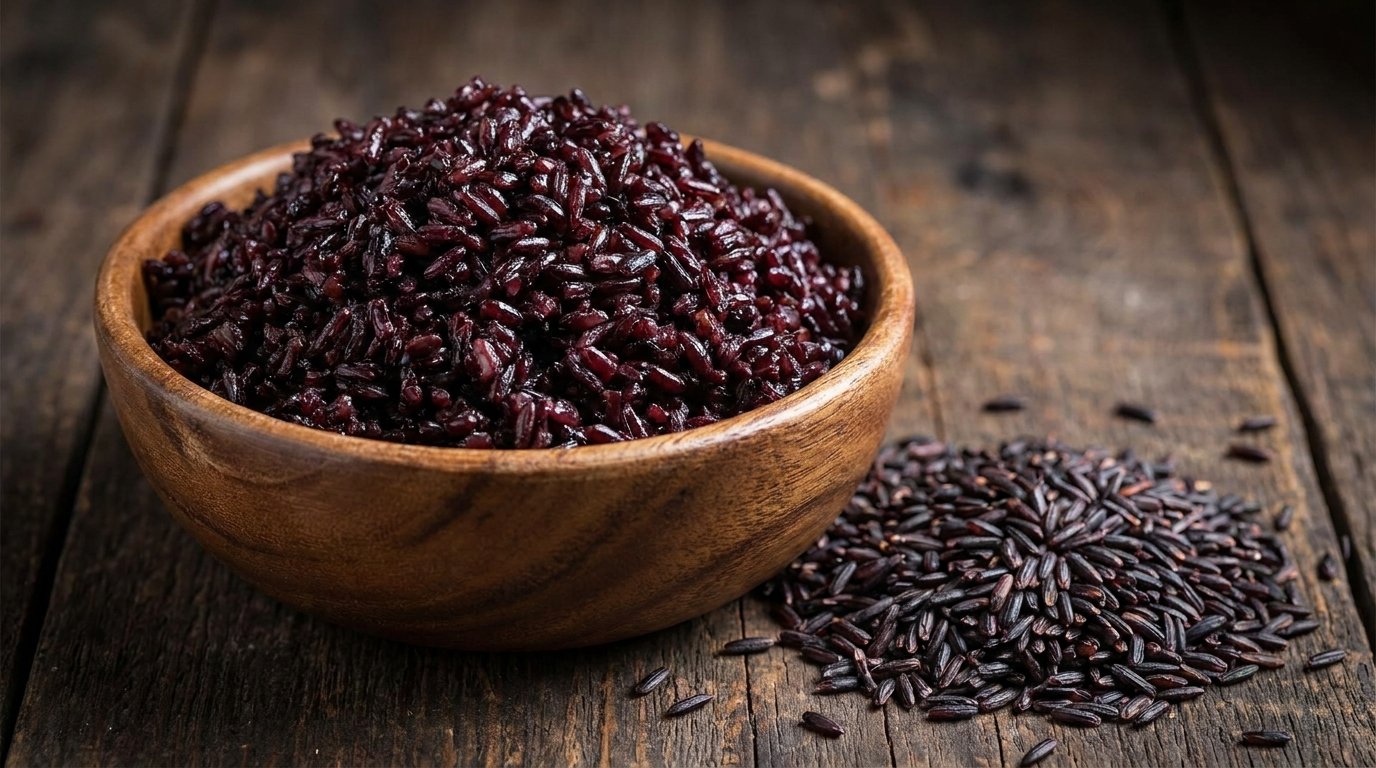
Chak Hao Kheer
The violet-hued pudding that graces every Manipuri celebration — creamy, fragrant and impossibly beautiful.
Ingredients
- ½ cup Chak Hao black rice
- 4 cups whole milk
- ⅓ cup sugar (or jaggery)
- 3 green cardamoms, crushed
- 1 tbsp ghee
- A pinch of salt
- Slivered almonds & pistachios to garnish
Method
- 1Rinse Chak Hao and soak in water for 2–3 hours, then drain.
- 2In a heavy pot, bring the milk to a gentle boil on low heat.
- 3Add the soaked rice and simmer, stirring often, until grains soften — about 35–40 minutes.
- 4Stir in sugar, cardamom and a pinch of salt. Continue to cook until the pudding thickens and turns deep violet.
- 5Finish with ghee, garnish with nuts, and serve warm or chilled.
Chak Hao Kheer
DessertThe iconic purple-black rice pudding simmered in milk, sweetened and scented with cardamom. The crown of every Manipuri feast.
Chak Hao Sunga
SavoryBlack rice steamed inside a bamboo tube over fire — a smoky, earthy preparation rooted in tribal tradition.
Chak Hao Chak
BreakfastSteamed black rice cakes enjoyed as a wholesome breakfast, often paired with sesame or jaggery.
Chak Hao Pitha
FestiveFestive rice-flour dumplings and pancakes made from black rice paste, filled with coconut and palm sugar.
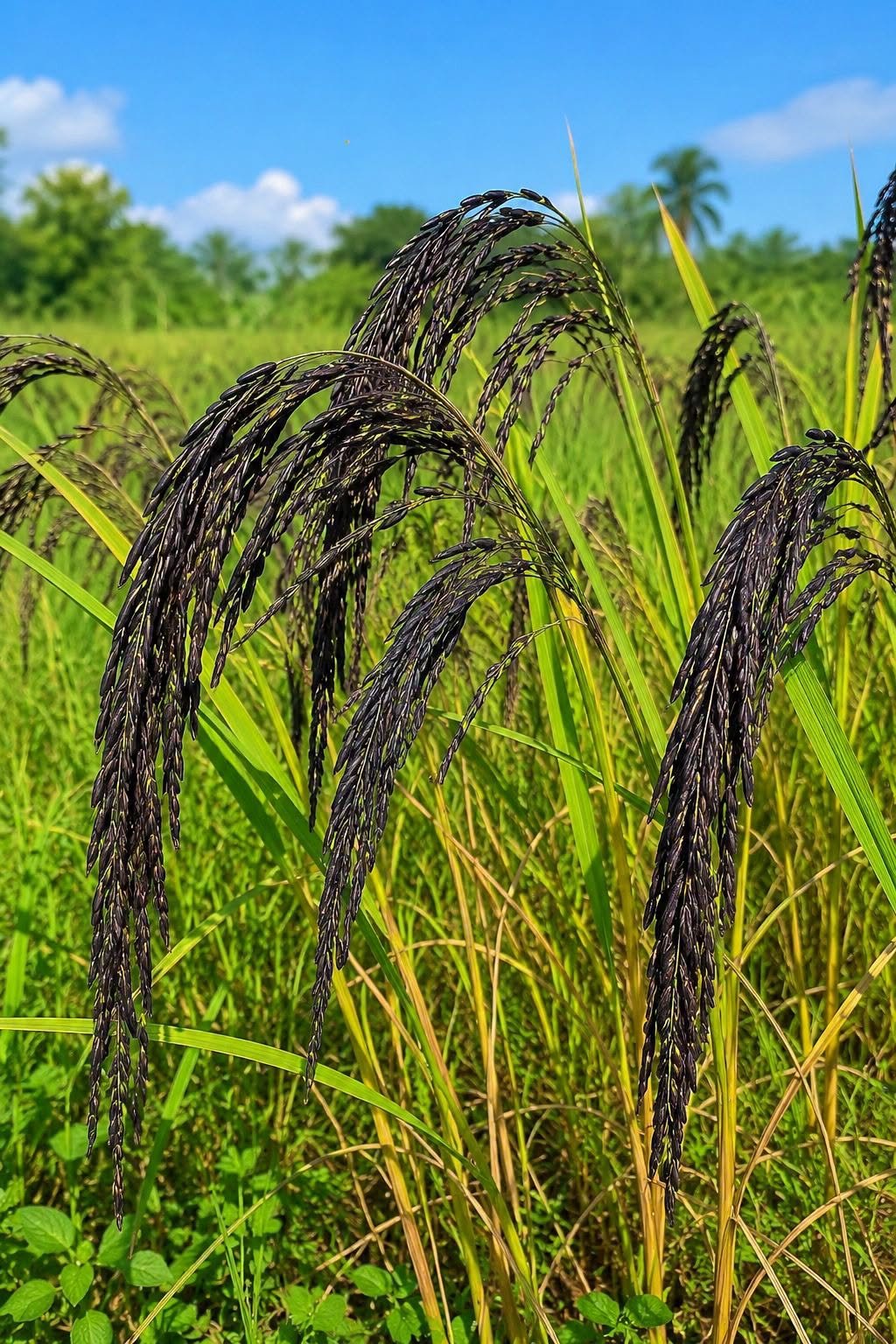
No chemical fertilisers — only the rhythm of monsoon, soil and saved seed.
Grown in theImphal valley
Chak Hao is a lowland, monsoon-fed rice. Its cultivation follows a calendar unchanged for centuries — sown in nurseries, transplanted into flooded fields, ripened under the Northeast sun, and reaped by hand. Every stage respects the land that has carried this grain since antiquity.
Nursery Sowing
Seeds saved from the previous harvest are sown in prepared nurseries as winter loosens its grip on the valley.
Transplanting
Young seedlings are transplanted by hand into flooded paddies, timed with the pre-monsoon showers.
Monsoon Flooding
Paddies stay submerged through the rains — the water regulates temperature and suppresses weeds naturally.
Ripening
The grain darkens as anthocyanins concentrate. Fields turn from green to gold-edged violet at the stem.
Harvest
Panicles are hand-cut with sickles, bundled, and left to sun-dry before the patient work of threshing.
Threshing & Storing
Grains are threshed, winnowed and stored — a portion always set aside as seed for the next season.
Registered under the Geographical Indications of Goods Act, 1999 — a recognition centuries in the making.
A name now legally sacred
For generations, Chak Hao lived only in oral tradition. In 2020, it earned a place in India's registry of Geographical Indications — a formal promise that this grain, this colour, this heritage belong to Manipur alone.
Geographical Indication
In April 2020, Chak Hao was awarded GI registration (no. 613), legally tying the name to the Manipur region and protecting its origin.
Bound to a Place
Only black rice grown in the defined agro-climatic zones of Manipur can carry the Chak Hao name — the soil and climate are part of its identity.
Protecting Farmers
The GI tag shields smallholder farmers from mislabelling, ensuring the premium and the pride stay with the people who grew it.
Source organic Chak Haofor your trade
We supply certified organic Manipuri black rice to importers, distributors, HORECA buyers and retailers worldwide. Share your requirement and our trade desk will respond within 24 hours with pricing, packaging and documentation.
Request a quote
Tell us about your requirement — packaging, certifications, target market and volume.