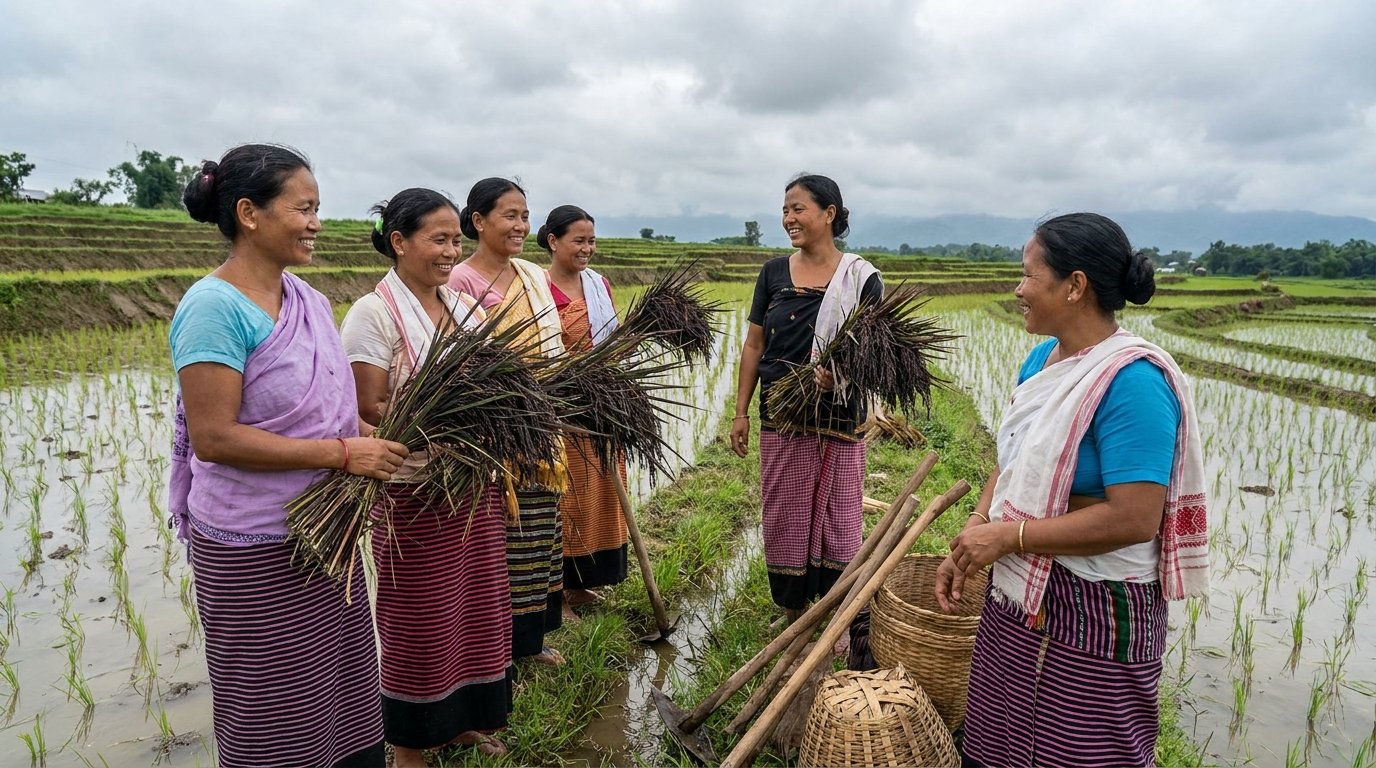
Not every business calling itself a black rice manufacturer is doing the same job. Some grow the paddy themselves. Some buy already-milled stock and simply repackage it. A smaller group actually runs the full process — sourcing, dehusking, polishing, sorting, testing and packing — and can tell you exactly where a given batch came from. That difference matters more with black rice than with ordinary white rice, because nearly everything that makes black rice worth paying for — its anthocyanin-rich bran, its natural aroma, its GI-protected origin in places like Manipur — is also what gets damaged first by careless processing. This guide walks through what a genuine black rice manufacturer does, step by step, and what's worth checking before you place a bulk order.
What Is a Black Rice Manufacturer?
"Manufacturer" is a specific role in the black rice supply chain, distinct from the farmer who grows it and the trader who moves it between hands. A black rice manufacturer is the party that physically converts raw black paddy — the grain as it comes out of the field, still in its husk — into a finished, food-grade product ready for a retail shelf or an export container.
- Farmer / Grower. Cultivates black paddy in the field and sells it on, usually as raw unhulled grain, without processing infrastructure of their own.
- Trader / Aggregator. Buys already-processed black rice, often from multiple sources, and resells it, sometimes blending batches without controlling how any of it was grown or milled.
- Manufacturer / Processor. Runs the actual conversion — dehusking, polishing, sorting, testing and packaging — and can usually trace a finished bag back to a specific harvest and paddy field.
In practice, the label gets used loosely. A business with a small huller and a packing table might call itself a manufacturer just as readily as one running an automated colour-sorting and vacuum-packing line. The rest of this guide is about telling those two apart.
How Black Rice Is Manufactured
The process itself stays fairly consistent across serious manufacturers, even when the scale of the equipment varies enormously. Here's the sequence a batch of black paddy typically goes through before it's ready to ship.
Paddy Procurement
Sourcing black paddy from registered farms or cooperatives, with the harvest batch logged for traceability.
Cleaning & Destoning
Removing straw, stones and field debris before the paddy enters the mill.
Dehusking
Removing the outer husk while keeping the pigmented bran layer intact.
Light Polishing
A brief, controlled polish that smooths the grain without stripping away the bran.
Colour Sorting
Removing broken, discoloured or foreign grains from the batch.
Grading
Testing moisture and sorting the batch into export, standard or bulk grades.
Packing & Labeling
Packed into retail or bulk formats with batch and origin labeling.
Lab Sign-Off
A final quality check before the batch is cleared for dispatch or export.
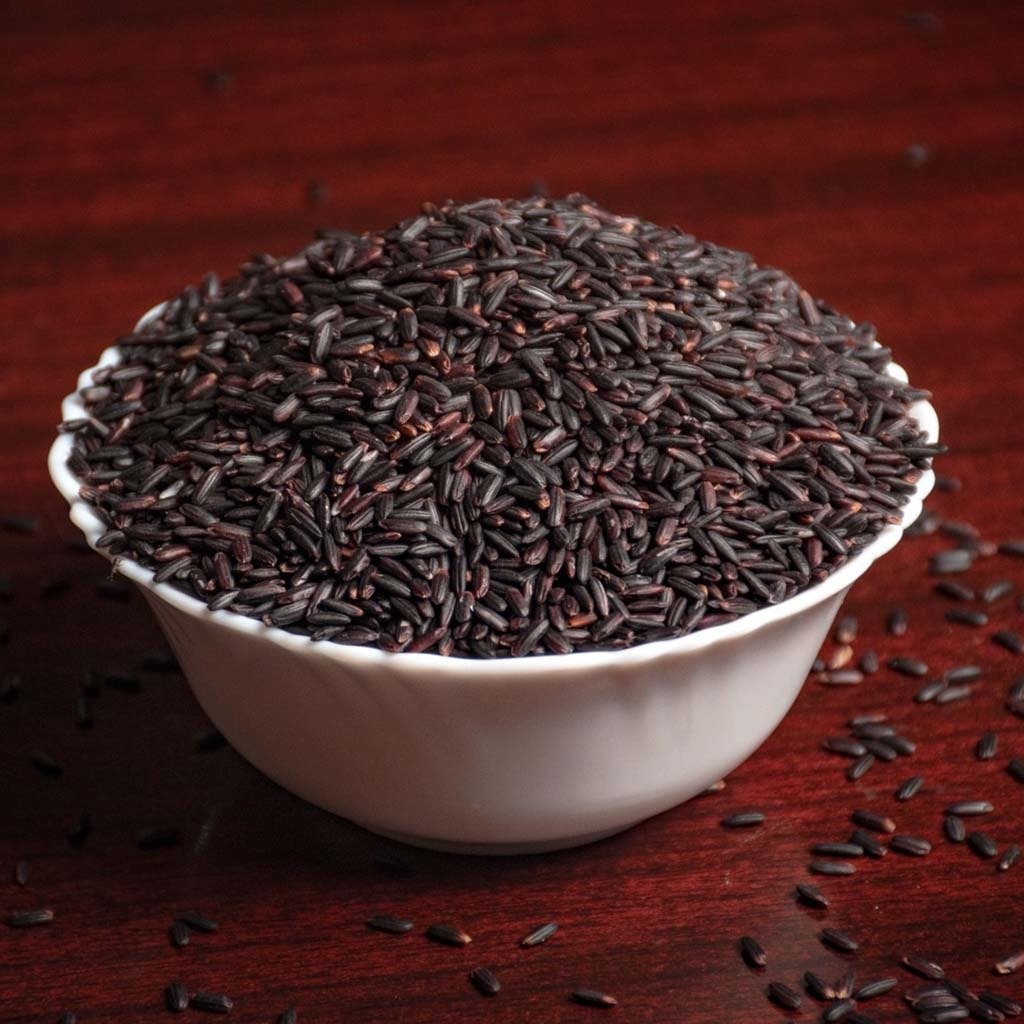
The step most manufacturers get wrong — usually because it's faster and cheaper not to — is polishing. Black rice's value sits almost entirely in its bran layer, where the anthocyanin pigment and most of the fibre live. Push the grain through a polisher built for white rice and it comes out lighter, greyer, and nutritionally closer to ordinary rice than to genuine black rice. A manufacturer that understands the grain runs a shorter, gentler polish and checks the result by eye and by lab test, not just by throughput.
Types of Black Rice Manufacturers
Not every manufacturer is built the same way, and the type you're buying from changes what you should expect on order flexibility, batch consistency and documentation.
Smallholder Cooperative Manufacturer
Common in Manipur, where GI-tagged Chak-Hao is largely grown and processed through farmer cooperatives. Batches are smaller and highly traceable, but capacity and turnaround can be limited during off-season months.
Contract / Private-Label Manufacturer
Processes and packs black rice under a buyer's own brand, handling everything from milling to custom labeling. A good fit for retailers and D2C brands that don't want to run their own facility.
Multi-Grain Commercial Mill
A larger rice mill that added black rice as one product line alongside white and brown rice. Usually more automated, but black rice can get less specialised handling than at a dedicated manufacturer.
Vertically Integrated Farm-to-Pack Manufacturer
Controls or closely partners with the paddy fields themselves, then processes, tests and packs in-house. The strongest traceability of the four, and typically the easiest to get harvest-specific documentation from.
Quality Grades: What Separates One Manufacturer From Another
Ask two manufacturers for "export-grade black rice" and you can get two different products. There's no single global grading standard specific to black rice, so most manufacturers grade against the same broad parameters used across the wider rice trade: broken-grain percentage, moisture content, foreign matter, and how uniform the grain length is. Here's roughly how three common grade tiers compare.
Premium / Export Grade
Tightest tolerancesStandard / Domestic Grade
Everyday retail qualityBulk / Economy Grade
Suited to processing & blendsThese are typical benchmarks used across the wider rice trade rather than a single certified standard — always ask a manufacturer for their own specification sheet and batch-level lab results before ordering.
Manufacturing Yield & Capacity
Paddy loses weight at every stage of processing — the husk comes off, some grain breaks, over-polished material gets sifted out. A manufacturer's yield curve is a decent proxy for how efficient and careful their process is.
Yield isn't something most manufacturers volunteer, but it's a fair question to ask. A low Grade-A yield can mean older equipment, inconsistent paddy quality, or a process breaking more grain than it should — none of which are dealbreakers on their own, but all worth knowing before you commit to a volume.
Operational benchmarks like these vary from manufacturer to manufacturer — the figures here illustrate the kind of metrics worth asking an established manufacturer to share, not an industry average.
Certifications a Black Rice Manufacturer Should Have
Certifications don't guarantee a good product on their own, but their absence is a fast way to rule a manufacturer out. Here's what's reasonable to ask for.
FSSAI License
Mandatory for any food business operating in India, covering manufacturers, packers and exporters alike. Ask for the license number and confirm it's current.
GI Compliance Documentation
For genuine Chak-Hao specifically, documentation tying the batch to Manipur's GI-protected growing area — not just a claim printed on the packaging.
Organic Certification (NPOP)
India's national organic certification programme, administered by APEDA, for manufacturers sourcing from certified organic paddy.
ISO 22000 / HACCP
Food safety management certification. Increasingly required by importing countries for larger shipments, not just a nice-to-have.
Phytosanitary Cert. & COO
Required for most cross-border shipments. A manufacturer with export experience should produce these without much back-and-forth.
Batch-Level Lab Reports
Moisture, foreign matter and, where relevant, pesticide residue results for the specific batch being shipped — not a generic spec sheet.
Bulk & Private-Label Manufacturing
For buyers ordering above small retail quantities, most established manufacturers offer more than just bagged rice.
- Custom packaging. Retail pouches, bulk sacks (jute, PP or vacuum-sealed) and box formats sized to a specific market or channel.
- Private-label / OEM packing. The manufacturer's own rice, packed and labeled under a buyer's brand — common for retailers, specialty grocers and D2C food brands.
- Formulation support. Some manufacturers also offer milled black rice flour, broken-grain blends, or par-boiled formats for buyers building a packaged product rather than selling raw rice.
- Export documentation handling. Manufacturers with export experience typically manage the certificate of origin, phytosanitary certificate and HS-code classification — rice generally falls under HS code 1006 — as part of the order.
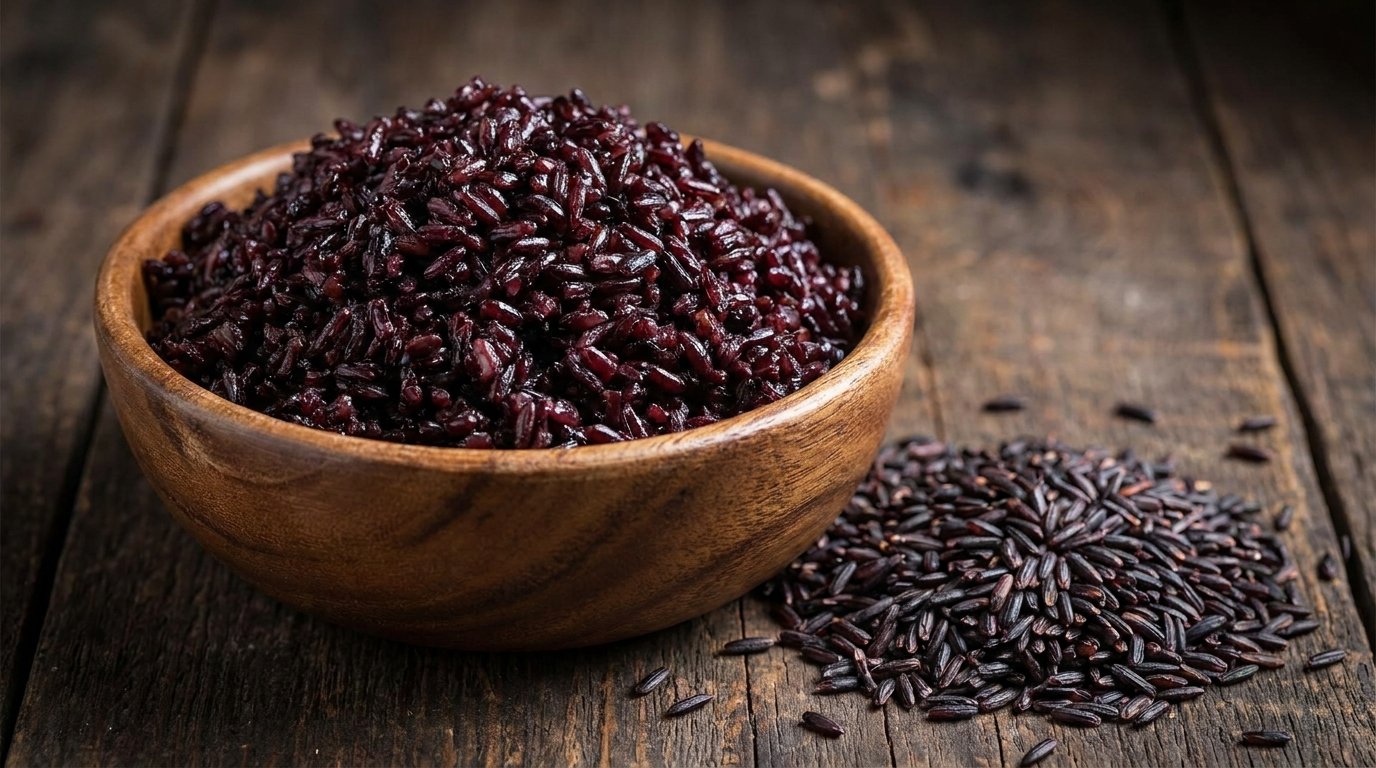
Looking for a black rice manufacturer that handles private-label packaging end to end? Our trade desk can walk you through formats and documentation.
How to Vet a Black Rice Manufacturer
A short list of questions does more to separate real manufacturers from re-packers than any amount of marketing copy.
- 1Ask for licensing up front. Request the FSSAI license number (or local equivalent) and any GI or organic certificates before discussing anything else.
- 2Request a current batch sample. A manufacturer confident in their process will send a small sample from recent stock, not an old marketing sample.
- 3Ask where the paddy is sourced. A specific answer — a district, a cooperative, a season — is a good sign. A vague "Manipur region" answer is less reassuring.
- 4Check for batch-level lab reports. Moisture and quality figures should match the specific lot being shipped, not a generic average.
- 5Ask about processing capacity honestly. A manufacturer who's upfront about lead times and seasonal limits is usually more reliable than one who promises unlimited volume year-round.
- 6Confirm export experience if you're importing. Ask how many shipments they've handled to your country and whether they manage documentation directly or through an agent.
Where Black Rice Manufacturing Happens
Manufacturing capacity and practice look different depending on where the grain is processed.
Manipur, India
Home to Chak-Hao, India's only GI-tagged black rice. Manufacturing here is still largely smallholder and cooperative-based, meaning smaller batch sizes but unusually strong traceability back to specific paddy fields.
China
The largest-scale black rice manufacturing globally, mostly built around the "forbidden rice" variety. Larger, more industrial mills with higher throughput, often at the cost of the batch-level traceability smaller manufacturers offer.
Thailand & Indonesia
Manufacturing here often blends black rice varieties with other grains for retail formats, or processes glutinous types like ketan hitam mainly for the domestic market rather than bulk export.
Sustainable Manufacturing Practices
Because Chak-Hao paddy has traditionally been grown with minimal synthetic input across small family plots, sustainability in Manipur's black rice manufacturing tends to start upstream, in the field, rather than in the processing plant. That said, the manufacturing side has its own footprint worth asking about: how much of the byproduct — husk, and bran removed during polishing — gets reused rather than discarded, whether packaging is recyclable or biodegradable, and how water is managed during the wetland paddy stage. None of this shows up on a spec sheet by default, so it's worth asking directly if it matters to your buyers.
Frequently Asked Questions
The Bottom Line
Every black rice manufacturer will tell you their rice is authentic, well-processed and ready to ship — the difference shows up in documentation, not adjectives. A GI certificate, a current FSSAI license, a batch-specific lab report and a straight answer about where the paddy came from will tell you more in five minutes than a product page will in an hour. Whether you're sourcing a single pallet or planning a recurring container order, those are the details worth checking before the rice does. To see how our own paddy-to-pack process works, explore our cultivation and wholesale pages.
Further reading
- FSSAI — Food business licensing in India
- APEDA — Requirements for export of rice
- APEDA — National Programme for Organic Production (NPOP)
- Wikipedia — Chak-Hao black rice
- Press Information Bureau, Government of India — Manipur unveils high-yielding black rice variety RC Manichakhao-1