
Somewhere between a grain and a legend, black rice has spent the last few thousand years being quietly extraordinary. It's the only rice that turns its cooking water a deep violet, the only rice ancient emperors are said to have kept entirely to themselves, and — according to a growing body of nutrition research — one of the more genuinely nutrient-dense grains you can put in a bowl. This guide covers what black rice actually is, where it comes from, what the science says about it, how the different varieties compare, and exactly how to cook it at home.
What Is Black Rice?
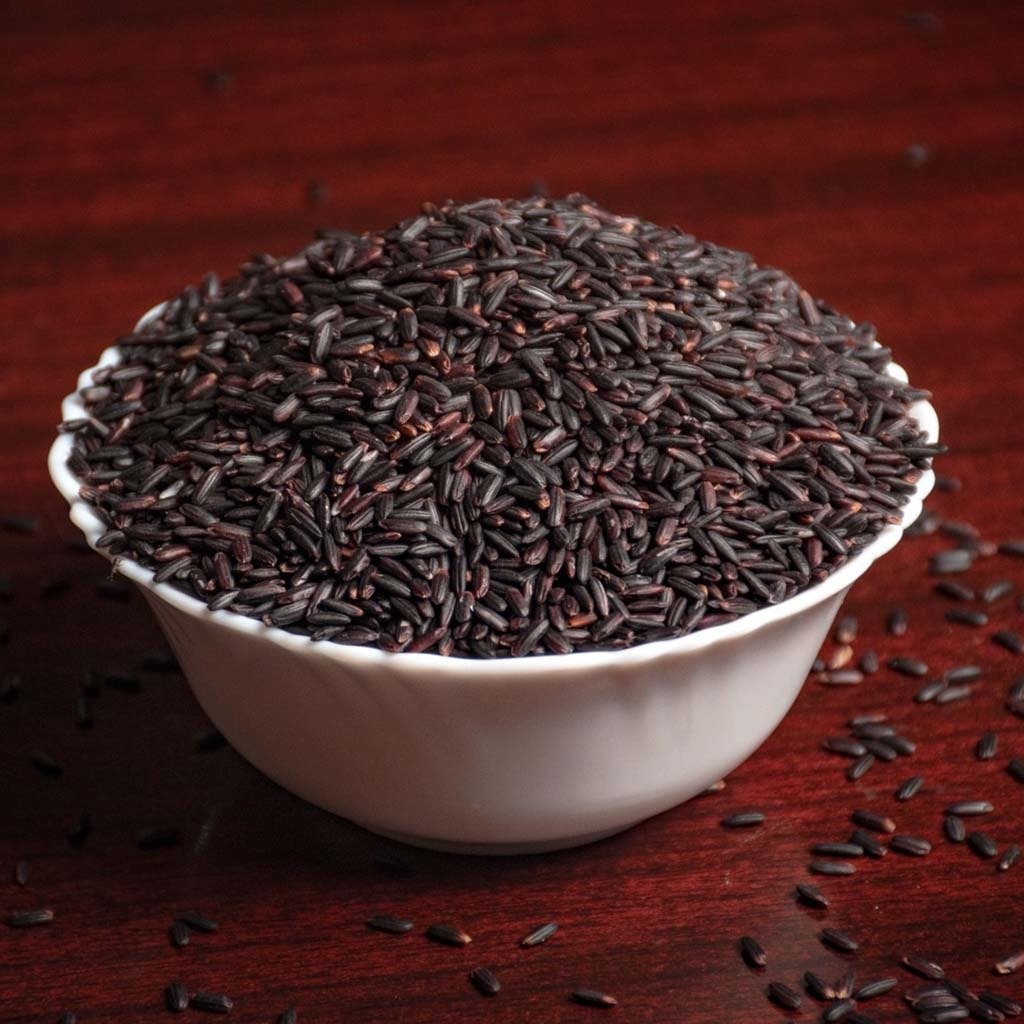
Black rice is a variety of Oryza sativa — the same rice species used for everyday white and brown rice — distinguished by a deep purple-black bran layer instead of the usual pale husk. That colour isn't a dye or a processing trick; it comes from naturally occurring anthocyanin pigments concentrated in the outer layer of the grain, the same family of compounds that gives blueberries, purple cabbage and eggplant their colour.
Because black rice is milled far less aggressively than white rice, it keeps most of its bran and germ intact. That's the main reason it behaves more like a whole grain nutritionally, with a chewier bite, a nutty aroma, and — depending on the variety — either a fluffy or distinctly sticky, glutinous texture. Most black rice grown today comes from South and Southeast Asia, with well-known heirloom varieties in China, Indonesia, Thailand, the Philippines and Northeast India.
Why Is Black Rice Called "Forbidden Rice"?
Black rice carries one of the more evocative nicknames in the grain world: "forbidden rice." The name traces back to imperial China, where legend holds that black rice was grown exclusively for the emperor and his court, and that ordinary farmers caught growing or eating it could be punished. Whether the ban was ever enforced quite that strictly is debated by historians, but the reputation stuck — black rice became shorthand for a grain too precious for ordinary tables.
That pattern of royal exclusivity wasn't unique to China. Across Asia, several black rice traditions carry a similar story of a grain once reserved for nobility, priests or sacred ritual rather than everyday eating — Manipur's own Chak Hao among them, historically grown for the region's ruling dynasty and offered at religious festivals long before it made its way into wider Meitei cuisine. It's a recurring theme: wherever black rice grew, it seems to have been treated as something worth guarding.
Black Rice Nutrition: What Makes It So Special
What earns black rice its reputation isn't folklore — it's the nutrient profile packed inside that dark bran layer. Because so little of the grain is milled away, black rice retains far more of its natural nutrition than polished white rice, and noticeably more than most brown rice too.
- Anthocyanins. Black rice bran is one of the richest natural sources of anthocyanins found in any staple grain, a class of plant compounds studied extensively for their antioxidant activity. White rice contains essentially none, since the pigmented bran is removed during polishing.
- Fibre and protein. With the bran and germ intact, black rice provides meaningfully more dietary fibre and protein per serving than white rice, and modestly more than most brown rice varieties.
- Iron and minerals. Pigmented rice varieties tend to carry more iron and trace minerals than their polished counterparts, making black rice a useful plant-based source for people watching their iron intake.
- A lower glycemic profile. Black rice generally digests more slowly than white rice thanks to its fibre and starch structure, which translates into a gentler rise in blood sugar after eating.
- Naturally gluten-free. Like all rice, black rice contains no gluten, making it a safe whole-grain option for people avoiding it.
Health Benefits of Black Rice
None of this makes black rice a cure for anything, but a reasonable body of nutrition research points to some real advantages over refined grains:
- Antioxidant support. The anthocyanins in black rice bran show strong antioxidant activity in laboratory studies, helping neutralise the free radicals linked to cellular ageing.
- Heart health. Diets built around whole grains like black rice are associated with better cholesterol profiles and lower cardiovascular risk than diets heavy in refined grains.
- Blood sugar management. Its lower glycemic index and higher fibre content mean black rice tends to produce a steadier post-meal blood sugar response than white rice.
- Gut health. Early research suggests black rice anthocyanins may support a more diverse gut microbiome, though much of this evidence so far comes from animal studies rather than large human trials.
- Skin and cellular repair. Anthocyanins extracted from black rice have been shown in cell studies to support collagen-producing skin cells, hinting at benefits for skin resilience.
- Satiety and weight management. The extra fibre and protein in black rice digest more slowly than in white rice, which can help you feel fuller for longer.
Black Rice vs. White Rice vs. Brown Rice
All three come from the exact same plant species — the difference is almost entirely down to how much of the original grain survives milling.
White Rice
The bran and germ are fully polished away, leaving mostly starchy endosperm. Fast-cooking and mild-tasting, but the lightest of the three nutritionally — minimal fibre, little iron, and none of the anthocyanin pigment.
Brown Rice
Only the outer husk is removed, so the bran stays intact. That keeps more fibre, protein and minerals than white rice, with a chewier bite — but brown rice still lacks the anthocyanins unique to pigmented varieties.
Black Rice
Milled about as lightly as brown rice, but with a naturally pigmented bran layer loaded with anthocyanins. The result is the most nutrient-dense of the three — more fibre and iron than white rice, plus an antioxidant profile the other two simply don't have.
Popular Varieties of Black Rice Around the World
Black rice isn't one single crop — it's a family of regional heirloom varieties, each shaped by its own soil, climate and centuries of local farming.
"Forbidden Rice"
The variety most associated with the imperial legend — long-grained, aromatic, and the one most widely sold internationally under the "forbidden rice" name.
Beras Hitam (Ketan Hitam)
A glutinous black rice best known as the base of bubur ketan hitam, a comforting coconut-milk black rice porridge.
Riceberry & Black Jasmine
Bred for both colour and a soft, fragrant grain, often blended with white jasmine rice for a milder everyday bowl.
Pirurutong
A sticky black rice traditionally milled into flour for kakanin — the country's beloved rice cakes and sweets.
Chak Hao
A GI-tagged, organically grown glutinous black rice historically reserved for Manipur's royal court, now the heart of the beloved Chak Hao Kheer. Read more about its heritage.
How to Cook Black Rice (Step-by-Step)
- 1Rinse well. Wash the rice in cold water two or three times until the water runs mostly clear — black rice releases a lot of its pigment, so don't worry if it stays a little cloudy.
- 2Soak, if you can. Soaking for 30 minutes to two hours softens the bran and shortens cooking time. Glutinous varieties in particular benefit from a longer soak.
- 3Use the right ratio. A good starting point is 1 cup of black rice to roughly 2–2¼ cups of water, adjusted for how soft or firm you like the finished grain.
- 4Simmer, covered. Bring to a boil, then reduce to a low simmer and cover. Most black rice takes 30–45 minutes to fully soften — longer than white rice, similar to brown rice.
- 5Rest, then fluff. Let the pot sit off the heat, covered, for 10 minutes before fluffing with a fork — this lets the last of the moisture even out through the grains.
Simple Ways to Enjoy Black Rice
Black rice is far more versatile than its reputation as a specialty ingredient suggests:
- Breakfast bowls. Cooked black rice with warm milk, fruit and a drizzle of honey makes a naturally purple, antioxidant-rich take on porridge.
- Grain salads. Its firm bite and dramatic colour hold up well cold, tossed with herbs, citrus and roasted vegetables.
- Puddings. Glutinous black rice simmered slowly in milk is the base of desserts across Asia — from Indonesia's bubur ketan hitam to Manipur's Chak Hao Kheer.
- Stir-fries and rice bowls. A sturdier alternative to white rice under stir-fried vegetables, tofu or fish.
- Baking. Milled into flour, black rice adds colour, fibre and a subtle nuttiness to pancakes, dosas and gluten-free baking.
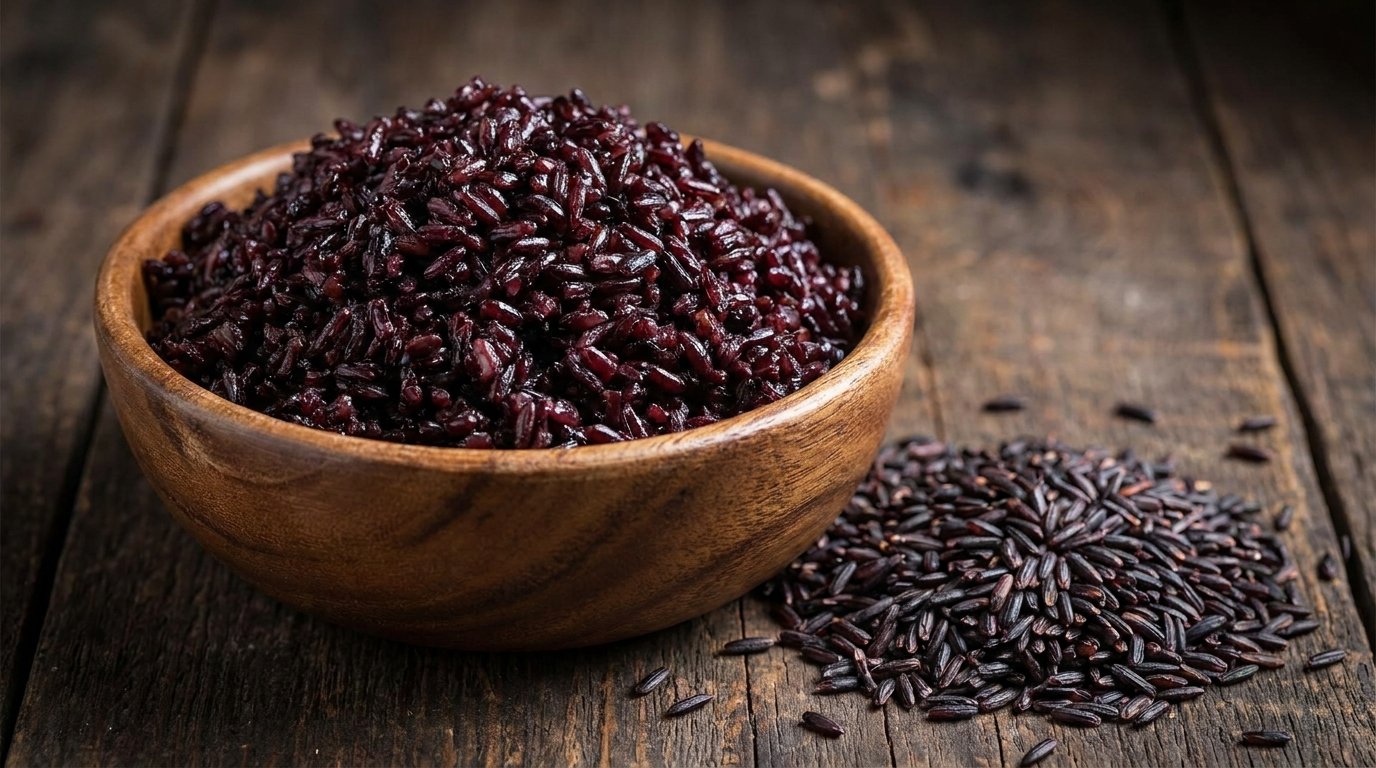
If you'd like the full recipe for our own Chak Hao Kheer, you'll find it here.
How to Store Black Rice
Raw black rice keeps well when it's protected from light, heat and moisture. Store it in an airtight container in a cool, dark pantry, where it typically stays fresh for 8–12 months. Light can gradually fade the anthocyanin pigment over time, so an opaque or dark-tinted container is a better choice than a clear glass jar left on an open shelf. Cooked black rice keeps for about 4–5 days refrigerated in a sealed container, and freezes well for up to three months — handy for batch-cooking ahead.
Is Black Rice Gluten-Free?
Yes. Black rice, like every variety of rice, is a naturally gluten-free grain, which makes it a safe whole-grain choice for people with coeliac disease or gluten sensitivity. The one caveat worth knowing: cross-contamination can happen during processing or packaging if a facility also handles wheat, barley or rye, so if you need certified gluten-free rice, check the packaging rather than assuming based on the grain alone.
How to Choose Good-Quality Black Rice
Not all black rice on the shelf is equal. A few things worth checking:
- Deep, even colour. Good black rice looks uniformly dark, almost black-purple, rather than patchy brown-black — inconsistent colour often signals a blend of different harvests or ages.
- Minimal polish. The bran layer should look matte rather than unnaturally glossy; over-polishing strips away the very nutrients that make black rice worth choosing in the first place.
- Organic certification. Look for a recognised organic certification if you want assurance the rice was grown without synthetic fertilisers or pesticides.
- Verified origin. For heirloom varieties like Chak Hao, a Geographical Indication (GI) tag or clear origin labelling confirms you're buying the authentic regional grain rather than a generic substitute sold under the same name.
- A trustworthy supplier. Reputable growers and exporters should be able to share batch testing, harvest dates and traceability information on request.
Buying Chak Hao in bulk? Get pricing, packaging options and documentation from our trade desk in minutes.
Frequently Asked Questions
The Bottom Line
Black rice earns its reputation honestly — it's rare, richly pigmented, backed by a growing body of nutrition research, and steeped in genuinely fascinating history. Whether you're drawn to it for the antioxidants, the texture, or simply the striking colour it lends to a bowl of kheer, it's worth a regular place in the pantry, not just an occasional specialty buy. To go deeper on one variety in particular, explore the nutrition, heritage and cultivation of Chak Hao, Manipur's own GI-tagged organic black rice.