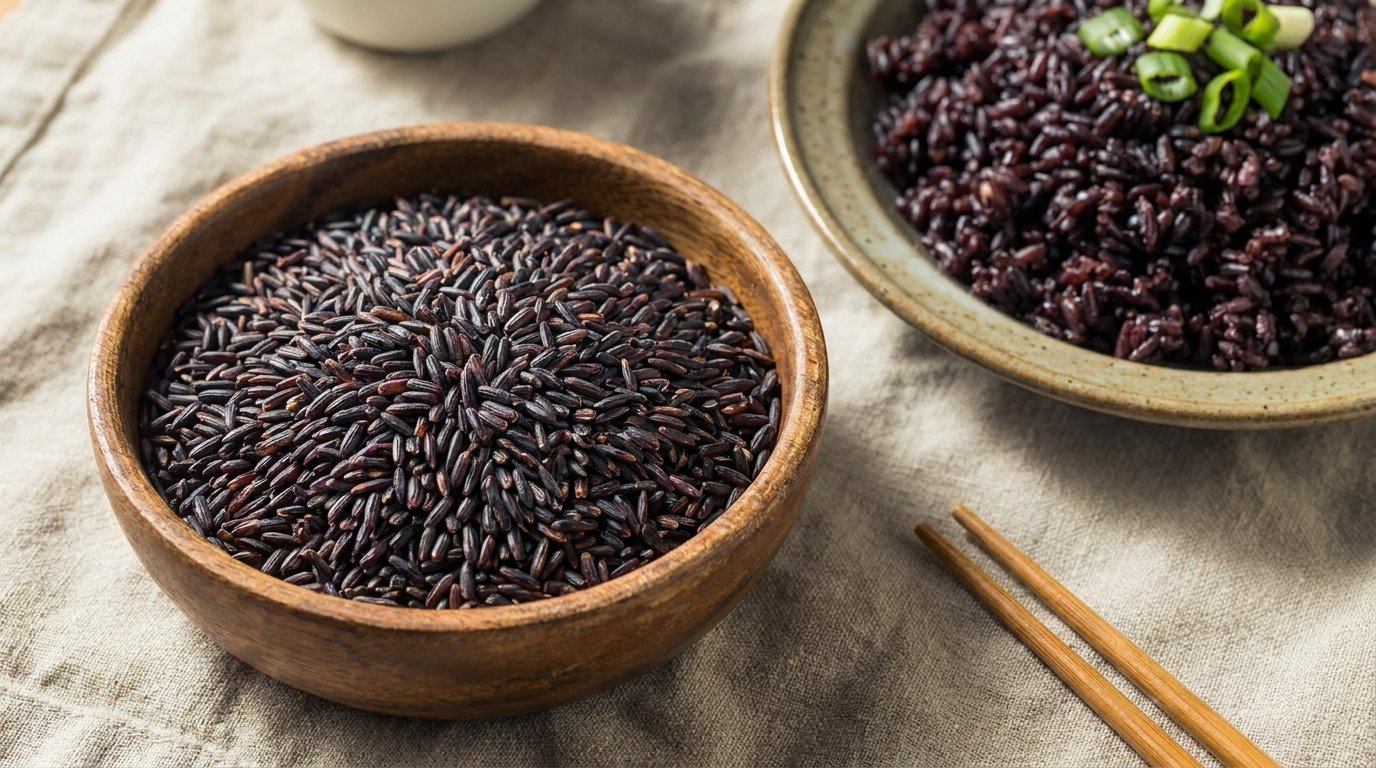
Type "best black rice" into a search bar and the results pull in at least four or five genuinely different grains — Chinese forbidden rice, Thai riceberry, Indonesian ketan hitam, and India's own Chak-Hao from Manipur, alongside a growing pile of black rice sold with no clear origin at all. They don't taste the same, cook the same, or carry the same nutrition, so "best" can't simply mean "darkest." This guide sets out clear criteria, ranks the black rice actually available in India against them, and explains why Manipur's Chak-Hao consistently comes out ahead.
What Makes Black Rice "The Best"?
Before ranking anything, it's worth agreeing on what "best" is actually measuring. Color alone is a weak test, since plenty of black rice on the market is polished, blended or dyed to look darker than it actually cooks. Four criteria hold up better:
- Aroma. A genuine natural fragrance that develops as the rice cooks, not something added afterward.
- Texture. Glutinous, sticky black rice behaves very differently in a pot than the drier, long-grain kind — neither is automatically better, it depends on what you're cooking.
- Antioxidant richness. How much anthocyanin survives in the bran, which comes down to how lightly the rice was milled.
- Authenticity and traceability. Whether the name on the bag can actually be traced back to where the rice was grown, or whether it's a generic label applied to a blend.
Score any black rice against all four, and one grain in particular keeps landing at the top — for reasons that go beyond marketing, as the comparisons below show.
Best Black Rice in India, Ranked
Here's how the black rice most commonly available in India stacks up against the criteria above. This is our own editorial assessment, built from each variety's publicly documented growing conditions, GI status and typical eating characteristics — not a laboratory measurement, so treat it as a starting point for your own comparison rather than a certified test result.
Manipur Chak-Hao
9.6 / 10The only Indian black rice with GI protection, grown in a single traceable valley, with a natural aroma and a glutinous bite that's genuinely hard to fake.
GI-Tagged · ManipurAssam-Grown Black Rice
7.8 / 10Solid black rice grown at real scale, but mostly from seed stock introduced from Manipur or Odisha rather than a distinct indigenous landrace, and without GI protection of its own.
Chinese Forbidden Rice
7.3 / 10Widely available and reliably dark, but longer-grained, firmer and noticeably less aromatic than Chak-Hao — a different tool for a different kind of dish.
Thai & Indonesian Black Rice
7.0 / 10Riceberry and ketan hitam are excellent in their own regional dishes, especially coconut-milk desserts, but rarely sold with clear origin documentation.
Commercial Black Rice Blends
5.4 / 10Increasingly common on general grocery shelves, grown from newer high-yield cultivars bred for volume rather than aroma, heritage character or antioxidant content.
Scoring weighs aroma, texture, antioxidant richness and traceability roughly equally. It's an editorial ranking meant to guide comparison shopping, not a substitute for independent lab testing of any specific batch.
Why Chak-Hao Tops the List
Manipur's Chak-Hao is the only black rice grown anywhere in India that carries a Geographical Indication tag, registered in April 2020 after the Consortium of Producers of Chak-Hao applied with backing from Manipur's Department of Agriculture and NERAMAC, the region's agricultural marketing body. That single fact does more work than any marketing claim: it legally ties the name to rice grown within a defined part of Manipur, mainly the Imphal valley districts of Imphal East, Imphal West, Bishnupur and Thoubal, so a bag can't carry the name unless the grain inside genuinely came from there.
Beyond the paperwork, Chak-Hao simply behaves differently in the pot. Its bran is thick and its starch is glutinous, so it turns noticeably stickier than Chinese or commercial black rice as it cooks, and it releases a natural fragrance most other black rice doesn't have. That combination of aroma and stickiness is exactly what slow-cooked dishes like Chak-Hao Kheer are built around, and it's genuinely difficult to replicate with a different grain.
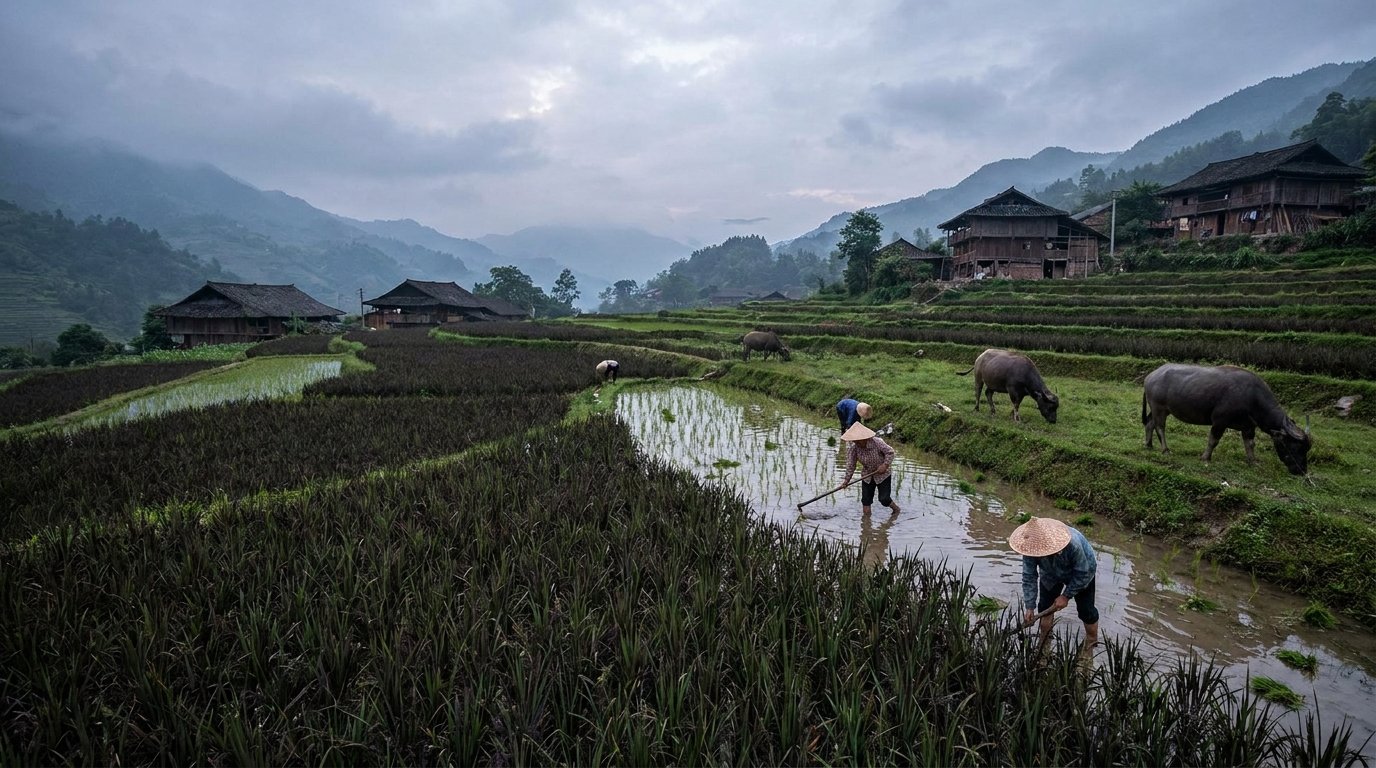
It also helps that Chak-Hao isn't a recently bred commercial variety chasing yield. It has been grown by smallholder families in Manipur for generations, historically served at community feasts and Meitei festivals rather than eaten as an everyday staple, which is part of why the growing tradition — and the seed stock itself — has stayed close to its original character instead of being bred toward volume the way many newer black rice cultivars have been.
Chak-Hao vs. Other Black Rice Grown in India
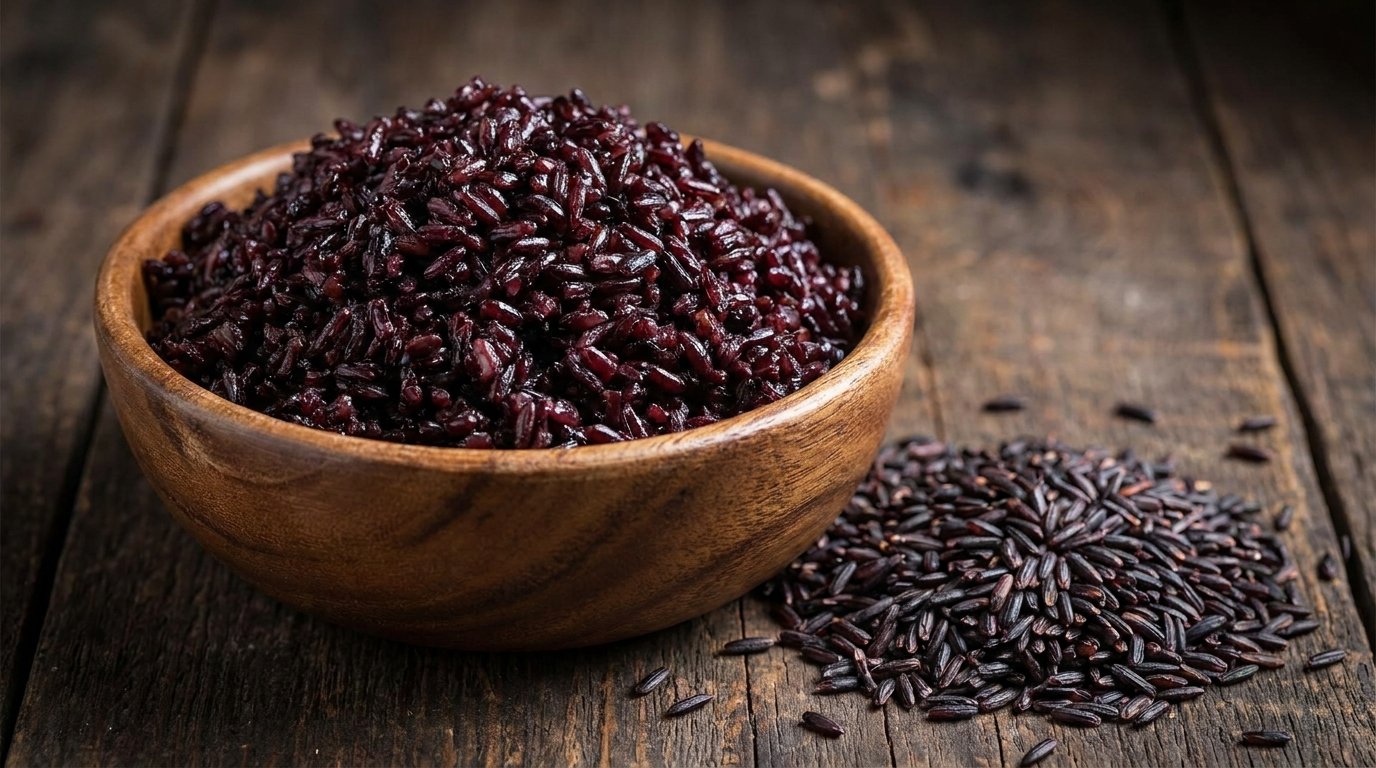
Chak-Hao isn't the only black rice grown on Indian soil, but it is the only one with a defined, legally protected identity. Here's how it compares to black rice grown elsewhere in the country across the same four criteria.
Manipur Chak-Hao Top Pick
Assam-Grown Black Rice
Chinese Forbidden Rice
Thai & Indonesian Black Rice
The gap is widest on traceability, which is really a stand-in for "can you trust the label." Assam's black rice is grown well, but without GI protection there's nothing stopping a bag marked "black rice from Assam" from containing grain originally sourced from Manipur or Odisha seed stock — which happens more often than most buyers realize.
Manipur Black Rice vs. International Black Rice
Outside India, "best black rice" usually means one of two other things, and neither is quite the same grain as Chak-Hao.
Chinese Forbidden Rice
Long-grained and dependably dark, this is the black rice most commonly sold internationally under the "forbidden rice" name. It cooks firmer and drier than Chak-Hao, with a much milder scent.
Thai & Indonesian Black Rice
Thailand's riceberry is often blended with white rice for an everyday bowl, while Indonesia's glutinous ketan hitam is closer to Chak-Hao in stickiness but built specifically for coconut-milk desserts rather than savory cooking.
Manipur Chak-Hao
Aromatic, glutinous and grown only in one valley in Northeast India — the single black rice on this list that's legally barred from being grown anywhere else and still carrying the name.
Black Rice vs. White Rice: The Nutrition Gap
Whichever black rice you land on, the bigger nutritional gap isn't between different black rice varieties — it's between black rice as a category and ordinary polished white rice. Milling black rice lightly keeps its bran and germ intact, and that's where almost all of the nutritional advantage lives.
Figures are typical values for cooked rice per 100g, based on USDA FoodData Central. Anthocyanin content isn't measured in the same units and is shown qualitatively here — it's concentrated in the bran layer that black rice retains and white rice has polished away.
None of this makes black rice a superfood in the marketing sense of the word — it's still mostly carbohydrate, like any rice. But gram for gram, it consistently outperforms white rice on fiber, protein and iron, while offering something white rice has almost none of: anthocyanins, the antioxidant pigment responsible for the color in the first place.
Health Benefits Worth Caring About
None of this turns black rice into medicine, but a reasonable body of nutrition research points to genuine advantages over refined white rice:
- Antioxidant support. Anthocyanins in black rice bran show strong antioxidant activity in laboratory studies, helping neutralize the free radicals linked to cellular aging.
- Steadier blood sugar. The retained fiber and starch structure slow digestion, producing a gentler rise in blood sugar than white rice.
- Heart-healthy profile. Diets built around whole grains like black rice are generally linked to better cholesterol numbers and lower cardiovascular risk than diets heavy in refined grains.
- Gut support. Early research suggests black rice anthocyanins may help support a more diverse gut microbiome, though most of this evidence so far comes from animal rather than large-scale human studies.
- Longer-lasting fullness. The extra fiber and protein digest more slowly than in white rice, which tends to make meals feel more satisfying for longer.
How to Spot High-Quality Black Rice
Because the name "Chak-Hao" is now GI-protected, buying well mostly comes down to verifying origin rather than guessing at quality:
- Look for a GI reference or clear origin labeling. For Manipur black rice specifically, this is the single strongest signal that it was actually grown in the Imphal valley rather than elsewhere and sold under the same name.
- Check the color and finish. Genuine black rice looks deep and even, purple-black rather than patchy brown-black, with a matte rather than glossy bran layer — over-polishing strips away the very nutrients that make it worth choosing.
- Trust your nose. Authentic black rice, and Chak-Hao in particular, carries a distinct natural aroma even before cooking; a complete lack of scent is often a sign of a blended or lower-quality grain.
- Ask about traceability. A reputable supplier should be able to share harvest region and sourcing details on request, not just a bag with a label on it.
- Don't use price as a shortcut. Cost varies for reasons that have nothing to do with quality, from packaging to shipping distance, so it's not a reliable stand-in for the checks above.
How to Cook Black Rice Properly
- 1Rinse thoroughly. Wash the rice in cold water two or three times until it runs mostly clear. Chak-Hao in particular releases a fair amount of pigment, so slightly cloudy water afterward is normal.
- 2Soak if you have time. A soak of a few hours, or even overnight, softens the bran and cuts down cooking time — genuinely useful for glutinous varieties like Chak-Hao and ketan hitam.
- 3Get the ratio right. Use roughly 1 cup of black rice to 2–2¼ cups of water, adjusting slightly depending on whether you soaked it and how firm or soft you prefer the finished grain.
- 4Simmer, covered, and be patient. Bring it to a boil, then reduce to a low simmer with the lid on. Glutinous varieties like Chak-Hao typically need 40–45 minutes; firmer types like Chinese forbidden rice can finish closer to 30.
- 5Rest before serving. Let the pot sit off the heat, still covered, for about 10 minutes, then fluff gently with a fork so the last of the moisture settles evenly.
Best Ways to Eat Black Rice
- Chak-Hao Kheer. Manipur's black rice pudding, simmered slowly in milk with sugar and cardamom until it turns a deep violet and takes on a rich, creamy consistency — the dish most people outside Manipur first associate with the grain.
- Cold grain salads. Cooked and cooled black rice holds its chewy bite well, making it a striking base for a salad with herbs, citrus and something crunchy.
- Coconut porridge. Closer to the Southeast Asian tradition, glutinous black rice simmered slowly in coconut milk with a little palm sugar.
- Served plain, at a feast. In Manipur, Chak-Hao is still often served with little more than light seasoning, because the aroma and texture are the point rather than any accompaniment.
If you'd like the full recipe for our own Chak-Hao Kheer, you'll find it here.
Buying the best black rice in bulk? Get packaging options and documentation from our trade desk in minutes.
Frequently Asked Questions
The Verdict: Which Black Rice Is Actually the Best?
Based on the criteria that actually matter — aroma, texture, antioxidant richness and whether the name on the bag can be trusted — Manipur's Chak-Hao comes out ahead, and by a clear enough margin that it isn't a close call. That doesn't make Chinese forbidden rice or Indonesian ketan hitam bad grains; they're excellent at what they're bred for. It simply means that if you're specifically shopping for the best black rice grown in India, Chak-Hao is the one grain here that can't be substituted, relabeled or grown somewhere else and still be the same thing. For a deeper look at the grain itself, see our full guide to Manipur black rice and its GI tag, or explore the nutrition and cultivation of our own Chak Hao.
Sources & Further Reading
- USDA FoodData Central — nutrient data referenced for cooked black and white rice. fdc.nal.usda.gov
- Geographical Indications Registry, India — GI registration details for Chak-Hao black rice. ipindia.gov.in