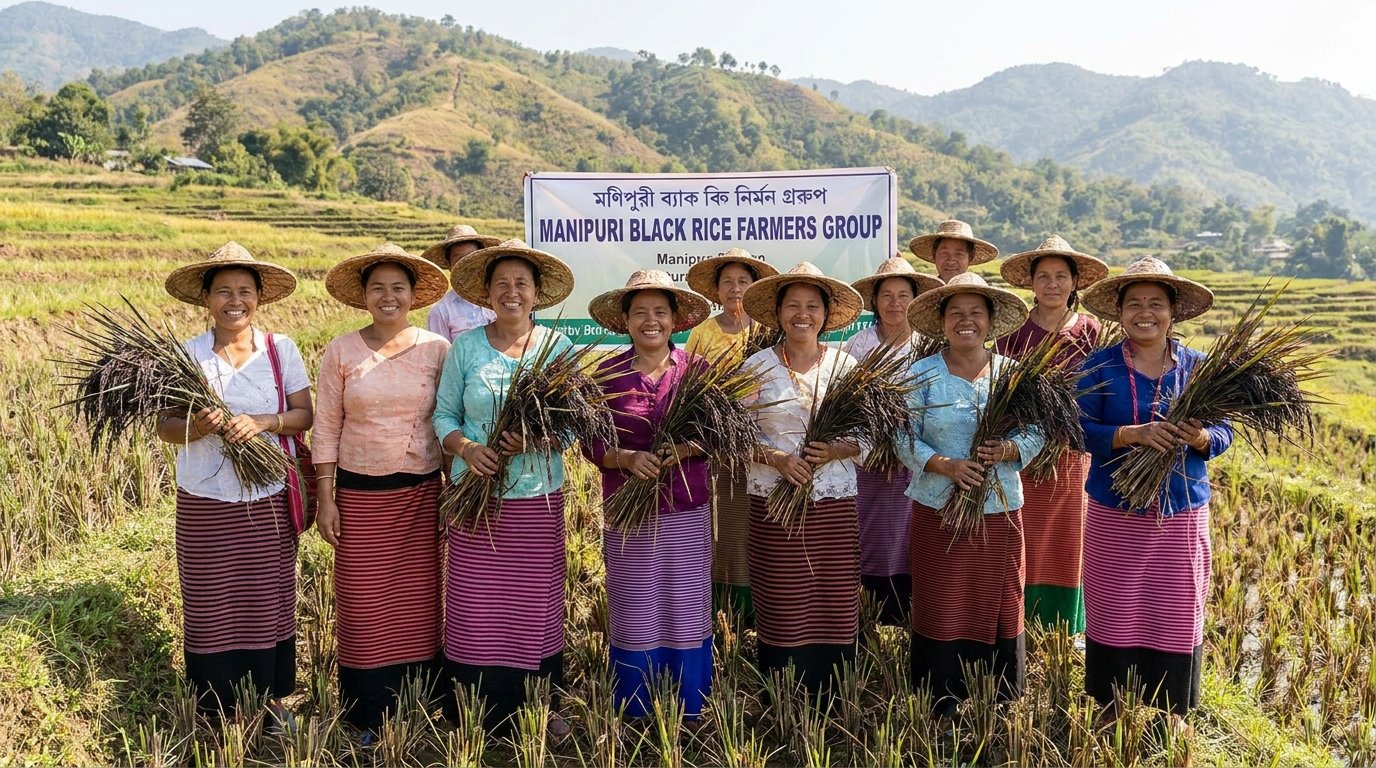
Search "black glutinous rice wholesale" and you'll land on everything from small retail bags relabeled for bulk buyers to genuine export-grade lots moving by the container. The difference between the two isn't always obvious from a listing page. This guide is written for buyers — importers, food manufacturers, retailers and food-service operators — who need to know what separates a dependable bulk supplier from a rebadged retail one, and what to actually check before committing to an order.
What Is Black Glutinous Rice, Exactly?
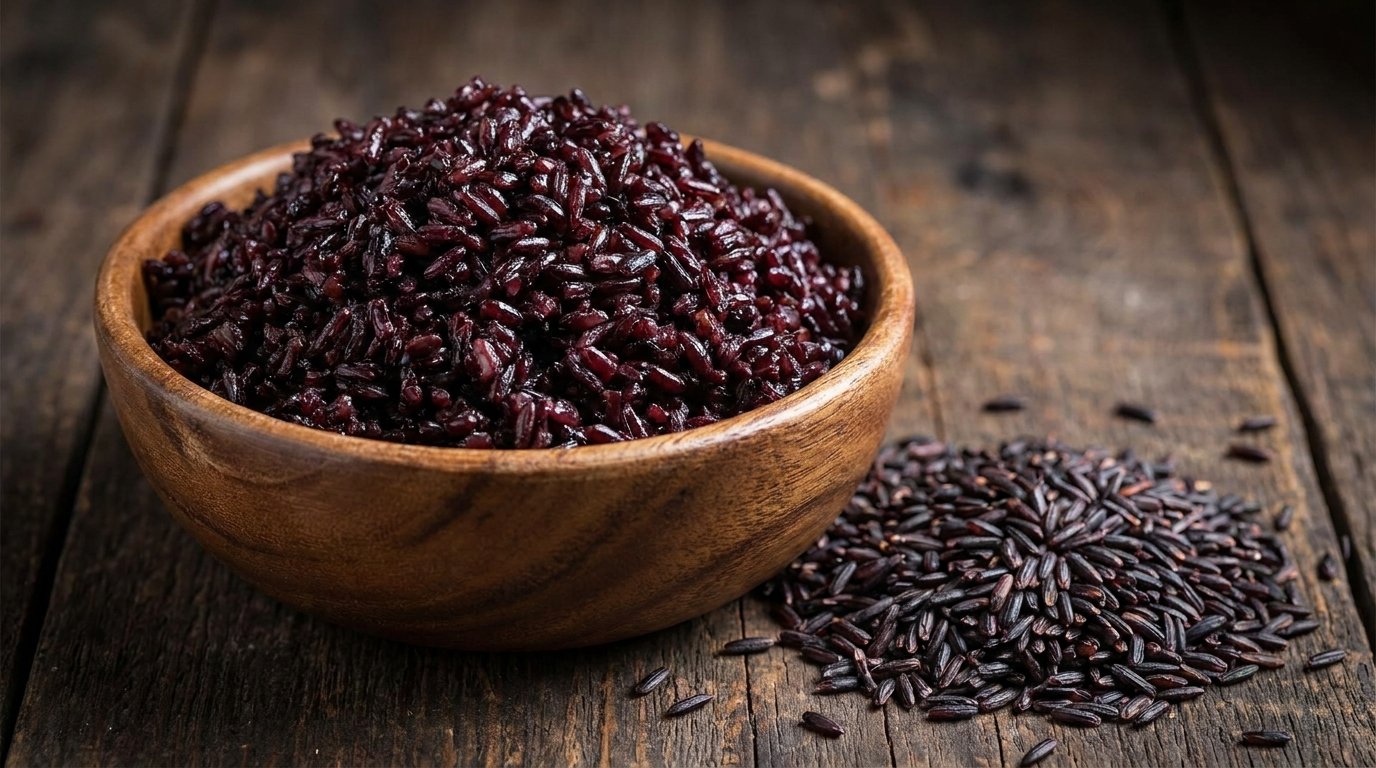
Black glutinous rice is a low-amylose, sticky-textured rice with a naturally dark bran layer — distinct from ordinary black rice, which doesn't share the same waxy starch structure. The stickiness comes from starch composition, not preparation: cooked black glutinous rice clumps and holds together in a way plain black rice doesn't, which is exactly why it turns up in porridge, rice pudding, dumplings and dessert-style drinks across South and Southeast Asia.
Wholesale buyers usually meet it under a handful of names depending on origin — black sticky rice, purple sticky rice, black glutinous rice, or, if it's sourced from Manipur in Northeast India, by its local name, Chak-Hao Amubi. These aren't interchangeable marketing terms; they point to real differences in grain length, aroma and how the rice performs once it's part of your product.
Why Buyers Are Sourcing It at Wholesale Volume
Three things tend to push buyers toward bulk orders rather than repackaged retail sourcing. The grain's anthocyanin-rich, deep-purple bran fits neatly into "ancient grain" and functional-food positioning. Its natural stickiness makes it useful in categories — desserts, bubble tea, snack bars — where ordinary rice simply doesn't behave the same way. And growing familiarity with dishes like black rice pudding means the ingredient rarely needs explaining on a menu or a label anymore. None of that changes what a sound wholesale order should look like, but it's useful context before you start negotiating volume.
Why It's So Sticky: Amylose Content Compared
Every rice variety sits somewhere on a spectrum of amylose content, and that single figure explains why black glutinous rice behaves so differently from the rice most wholesale buyers are used to sourcing.
Approximate amylose content by rice type
Lower amylose means a stickier grain once cooked. Figures are typical ranges cited in rice-science literature; actual values vary by variety, harvest and milling.
Because glutinous rice — black or white — sits at the low end of that scale, it holds together after cooking instead of separating into individual grains. That's a functional distinction, not a marketing one, and it's worth confirming before you buy: some listings describe ordinary black rice as "black glutinous rice" when it isn't genuinely low-amylose. A quick cook test on a sample settles the question faster than any spec sheet.
Where Wholesale-Grade Black Glutinous Rice Comes From
Black glutinous rice is grown across several regions, and each has its own grain character and supply pattern. This matters for a wholesale buyer because "black glutinous rice" on a listing can mean noticeably different grain sizes, aromas and stickiness depending on where it was actually grown.
| Origin | Local name | Grain character | What buyers should know |
|---|---|---|---|
| Manipur, India | Chak-Hao Amubi | Large-grained, highly aromatic, deeply glutinous | India's only GI-tagged black rice; smallholder-grown, so volumes are steadier through an established exporter than a single farm |
| Thailand | Khao Niew Dam | Medium-grained, milder aroma | Often blended with white glutinous rice for a softer, everyday product |
| Indonesia | Ketan Hitam | Short-to-medium grain, very glutinous | Mainly grown for domestic coconut-milk porridge; a smaller export category |
| China | Black glutinous / "purple" rice (regional names vary) | Grain length varies by province | High production volume, but glutinous purity and grain character vary more between suppliers |
| Philippines | Pirurutong | Small-grained, very dark | Mostly grown for local dessert use; limited export volumes |
Chak Hao sources directly from Chak-Hao Amubi paddies in Manipur's Imphal valley — the origin in the table above with legal Geographical Indication protection on the name. If traceable, single-origin sourcing matters for your brand, that's the detail worth asking about with every supplier you evaluate, regardless of which origin you land on.
Nutritional Profile Wholesale Buyers Should Know
For buyers repackaging or building a product around black glutinous rice, the nutrition panel is often as much a selling point as the grain itself. A typical raw sample breaks down roughly as follows:
Typical composition, raw grain, per 100 g
Representative averages for reference only — actual lab results vary by harvest, milling degree and testing method. Ask any supplier for a current certificate of analysis before finalizing a specification.
- ~78% Carbohydrate
- ~9% Protein
- ~4% Dietary fiber
- ~9% Fat, trace minerals & moisture
The two figures that tend to matter most commercially are the anthocyanin content responsible for the grain's color — the same antioxidant class found in blueberries and purple cabbage — and the fiber content, which runs meaningfully higher than in polished white rice because the bran layer is left largely intact. Both are worth confirming with a certificate of analysis if your labeling or marketing depends on specific claims.
Quality Grades & What to Inspect Before You Buy
Not every lot described as wholesale-grade actually meets the bar. These are the checks worth running on any sample before you place a bulk order:
Moisture content
Wholesale-grade rice should test at or below roughly 14% moisture. Anything higher raises the risk of mold and spoilage once it's in bulk storage.
Broken grain percentage
Ask for the broken-grain ratio in writing. A higher percentage isn't automatically a problem, but it should be reflected in how the lot is graded and priced.
Foreign matter & purity
Check for husks, stones, chaff or mixed grain varieties. A clean sample should be close to uniform in both color and grain size.
Milling & bran retention
Over-polished black glutinous rice loses both color and nutrition. The bran layer should still be visible and matte, not glossy.
Aroma before cooking
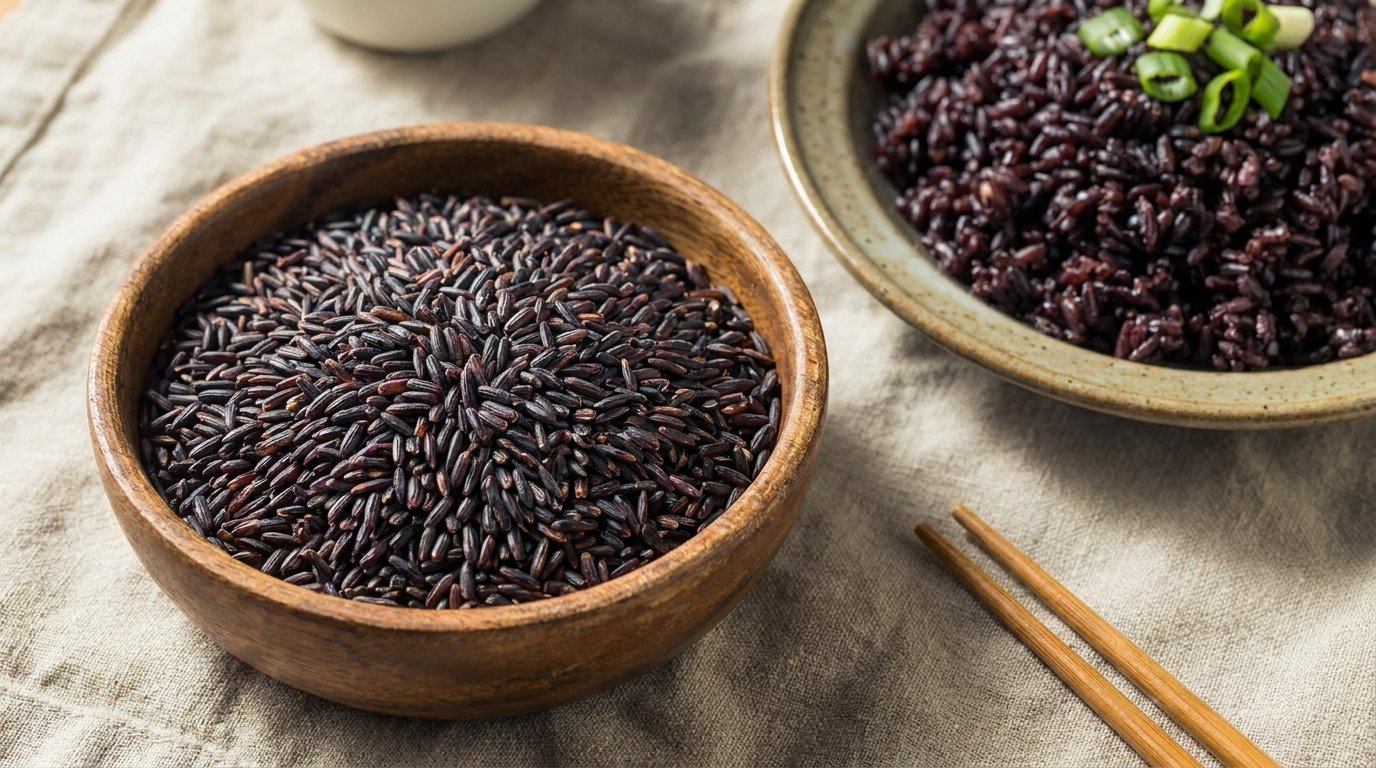
Genuine aromatic varieties like Chak-Hao carry a noticeable natural scent straight out of the bag. A flat, scentless sample is worth questioning.
Cook test
Before committing to volume, cook a small batch from your sample lot. Texture and stickiness tell you more in five minutes than any spec sheet.
Need packaging specs or a certificate of analysis before you commit to a bulk order? Our trade desk can send documentation the same day.
Wholesale Packaging & Order Formats
Bulk black glutinous rice typically ships in one of a few standard formats, and the right one depends on how you plan to use or repackage it:
Many suppliers, including smaller GI-protected producers, can pack under a buyer's own branding once volume justifies it. It's a detail worth raising early in the conversation rather than after a first order is already placed.
Who's Actually Buying Black Glutinous Rice in Bulk
Demand for bulk black glutinous rice comes from a fairly consistent set of buyer types:
Puddings, Mochi & Baked Goods
Its natural stickiness and color make it a common base for rice puddings, mochi-style sweets and specialty baked goods.
Bubble Tea & Functional Drinks
Whole or ground black glutinous rice shows up in black rice milk, bubble-tea toppings and antioxidant-positioned drink lines.
Ancient-Grain & Gluten-Free Lines
Packaged food brands use it as a naturally gluten-free, whole-grain ingredient in blends, cereals and snack bars.
Restaurants & Catering
HORECA buyers source it in bulk to build authentic South and Southeast Asian menu items without relying on small retail bags.
Private-Label Repacking
Retailers and specialty grocers buy in bulk and repackage under their own branding for shelf sale.

How to Evaluate a Wholesale Supplier
The suppliers worth building a repeat order with tend to survive the same short sequence of checks:
A six-step supplier evaluation flow
Walk through these in order before you sign off on a full container or a long-term contract.
Define your requirements
Clarify grain type, volume, delivery frequency and end use before reaching out.
Request a sample
Test aroma, cook time and stickiness against your own recipe or spec.
Verify origin & certification
Confirm GI, organic or export documents match what's stated on the label.
Confirm packaging & MOQ
Align on bag sizes, minimum order quantity and private-label options.
Review logistics
Check production capacity, lead time and shipping support for your market.
Place a trial order
Start smaller before committing to a full container or a long-term contract.
Certifications & Documentation That Matter
Documentation is where a genuine wholesale supplier tends to separate itself from a repackager. Depending on your destination market, it's reasonable to ask for:
- Geographical Indication documentation. Chak-Hao carries India's only GI tag for black rice, legally tying the name to grain grown in Manipur — useful proof of origin if authenticity is part of your product story.
- Organic certification. Many smallholder Chak-Hao farms grow without heavy synthetic input use by tradition, but a formal organic certificate is what actually holds up for labeling and resale.
- Phytosanitary certificate. Standard for most international rice shipments, confirming the grain meets plant-health import requirements at destination.
- Certificate of origin. Ties the shipment to its country of production, often required for customs clearance and preferential trade terms.
- Certificate of analysis. A lab report covering moisture, purity and, where relevant, nutritional values — worth requesting per lot rather than once at the start of a relationship.
Storage, Shelf Life & Logistics for Bulk Orders
Raw black glutinous rice keeps well when it's protected from light, heat and moisture — store it airtight, opaque and in a cool, dark space, where it typically holds quality for roughly 8 to 12 months. Light gradually fades the anthocyanin pigment over time, so bulk stock is better off in sealed sacks than sitting in clear packaging under warehouse lighting.
On the logistics side, humidity control matters more for a full container than it does for a single retail bag: temperature swings during ocean freight can cause condensation inside a sealed container, so buyers moving container-scale volumes should confirm their supplier uses moisture-resistant liners and proper dunnage. It's also worth asking about typical lead time from order confirmation to shipment — production and packing schedules vary more for a seasonal, smallholder-grown crop like Chak-Hao than for a commodity rice with year-round milling capacity.
Frequently Asked Questions
Sourcing Black Glutinous Rice Wholesale, Simplified
Black glutinous rice wholesale sourcing comes down to the same handful of checks every time: confirm it's genuinely low-amylose and glutinous, verify where it was actually grown, inspect a real sample before committing to volume, and get certification paperwork in writing rather than on trust. Do that consistently and the rest — packaging, logistics, repeat ordering — tends to fall into place. For more on the grain itself, see our full Manipur black rice guide, or head to the product page to start a wholesale enquiry.