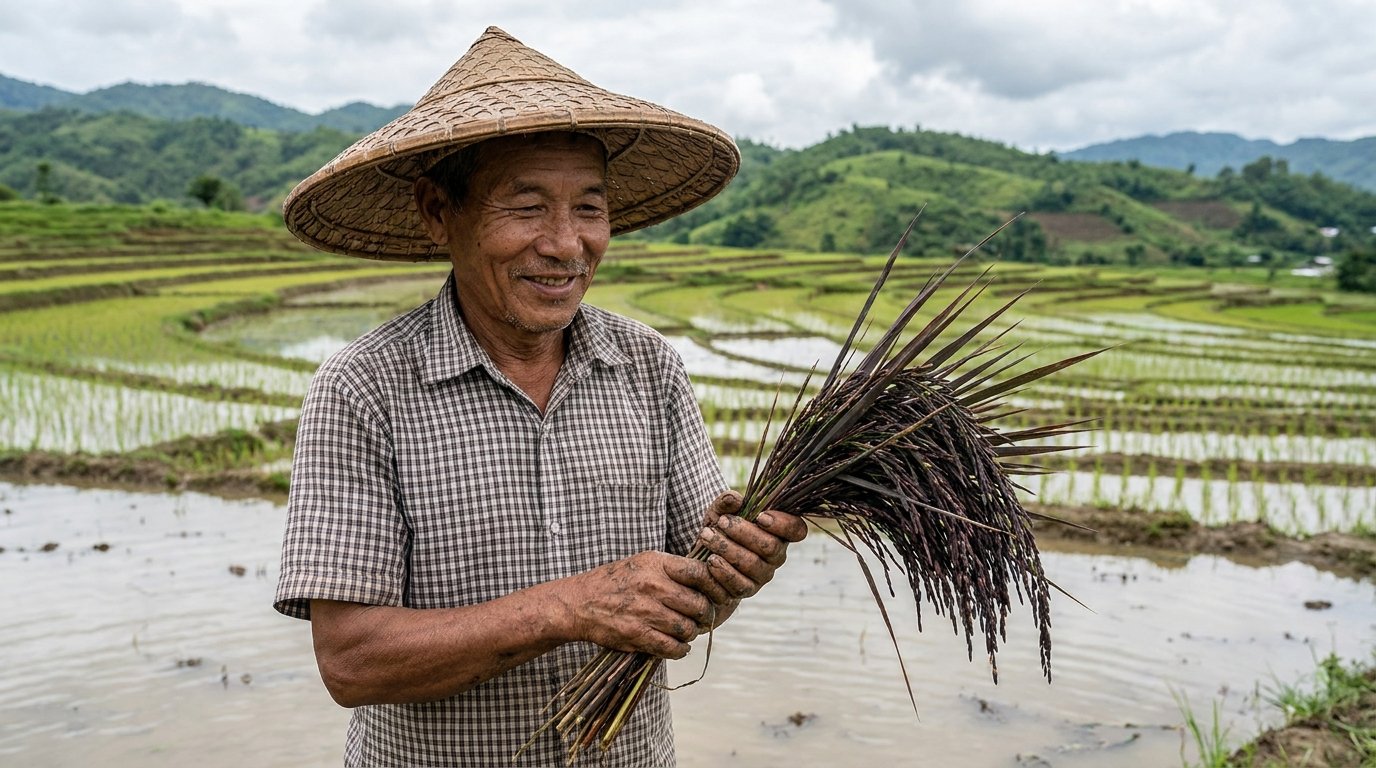
Type "black rice Assam" into a search bar and you'll find a real, growing black rice story — sitting right next to Northeast India's far more famous black rice, Manipur's GI-tagged Chak-Hao. The two get blurred together constantly, and for good reason: Assam's newer black rice actually descends from Manipur's own stock. This guide separates what Assam grows under the "black rice" name from what Chak-Hao actually is, looks at what the research says about both, and gives an honest answer to the question buyers keep asking — which one is genuinely the best?
What "Black Rice Assam" Actually Refers To
Assam is one of India's most rice-diverse states — farmers there grow more than 300 rice varieties across the fertile plains fed by the Brahmaputra and Barak rivers, everything from the fragrant Joha rice to the no-cook Chokuwa rice. Black rice sits inside that diversity too, but it isn't one single, clearly defined variety the way Manipur's Chak-Hao is. When people search "black rice Assam," they're usually looking for one of two different things without realising it.
The first is Kola Bora Saul, an old, indigenous black sticky rice that's been part of Assamese food culture for generations. The second is a newer, Manipur-descended black rice that Assamese farmers have only started growing commercially over the past decade or so, popularised largely out of Goalpara district. Neither is quite the same grain as Chak-Hao Amubi, the specific black rice grown in Manipur's Imphal valley — and understanding that difference matters if you're trying to buy, cook with, or simply understand black rice properly.
Kola Bora Saul
Assam's original black sticky rice, part of the wider Bora Saul family used for generations in Bihu snacks like pitha and jolpan — valued for its glutinous texture more than a Chak-Hao-style aroma.
"Upen" Black Rice
A newer black rice grown commercially around Goalpara, descended from Manipur's cha-khao stock and popularised by farmer Upendra Rabha's growers' group over roughly the last decade.
Chak-Hao Amubi
The aromatic, glutinous black rice grown exclusively in Manipur's Imphal valley — India's only Geographical Indication–protected black rice, and the one most people mean by "black rice" internationally.
Kola Bora Saul — Assam's Original Black Sticky Rice
Long before "black rice" became a global superfood term, Assam already had its own glutinous rice tradition. Bora Saul — a family of sticky rice that includes Bogabora, Johabora, Rangabora, Rupahibora and Kola (black) Bora — has been grown in Assam since at least the Ahom era, with local accounts even crediting a Bora rice paste, mixed with egg and black lentils, as part of the mortar used in historic Ahom-era structures.
Kola Bora Saul is the black-grained member of that family: a glutinous rice ground into flour for pitha, or served plain with curd, jaggery and cream during Bihu. It's genuinely sticky and genuinely black-hulled, which is why it often gets swept into "black rice Assam" search results — but its traditional role has been about festival snacks and jolpan rather than the deep-pigment, high-antioxidant profile that most nutrition content actually means by "black rice."
Assam's Newer, Manipur-Descended Black Rice
The black rice actually driving Assam's recent headlines is a different, more recent story. Agricultural scientists, including researchers at Assam Agricultural University, have said plainly that the black rice varieties now grown in Assam trace their origin back to Manipur, arriving via a broader Southeast Asia–Manipur route rather than developing independently within the state.
Commercial cultivation picked up meaningfully in Assam only over the past several years, led in large part by farmer Upendra "Upen" Rabha's growers' group in Goalpara district, whose black rice — now often just called the "Upen" variety — has since spread to roughly 650 acres worked by more than a hundred farming families. It's a genuinely welcome development for flood-prone communities along the Brahmaputra, since black rice tends to tolerate flooding and drought better than many commercial paddy varieties. But it's worth staying clear-eyed about what it actually is: Manipur's own cha-khao lineage, replanted on Assamese soil within roughly the last decade, rather than a separate variety Assam bred on its own.
Where Black Rice Is Grown in Assam
Assam's rice cultivation, black rice included, is concentrated along the Brahmaputra and Barak river valleys, where centuries of alluvial deposits have built some of the richest paddy soil in Northeast India. Black rice specifically has been documented in districts including Goalpara, where the Upen-descended variety is now grown at meaningful scale, and Darrang, where researchers have sampled and characterised a distinct local black rice landrace.
That's a very different footprint from Manipur, where Chak-Hao Amubi is cultivated almost entirely within one defined stretch of the Imphal valley, across the districts of Imphal East, Imphal West, Bishnupur and Thoubal — a smaller area overall, but a far more concentrated and traceable one, which is part of what made a Geographical Indication tag possible there in the first place.
Assam Black Rice: What the Research Actually Shows
The most direct comparison between the two comes from a 2024 study that characterised twelve black-pigmented rice landraces collected from Assam and Manipur, examining protein, starch, phytochemical content and cooking behaviour side by side. The results were genuinely interesting: Assam's Darrang black rice landrace recorded the highest protein content of all twelve landraces tested, at 12.62% — a real point of pride for Assam's black rice, and a reminder that "less famous" doesn't mean "less nutritious."
But the same study also made an important point about maturity rather than nutrition: Chak-Hao varieties from Manipur are comparatively well known and well characterised, while Assam's black rice landraces remain largely unstudied, and the state's black rice value chain — from seed to market — is still described as unexplored. In practice, that means Manipur has spent years building the research base, quality control and traceability that Assam's black rice movement is only just beginning to develop.
Black Rice Assam vs Manipur Chak-Hao — Side by Side
Putting the two side by side makes the practical differences clearer than any single fact can. The comparison below focuses on Assam's newer, Chak-Hao-descended black rice — the "Upen" variety and others like it — since that's the grain most "black rice Assam" searches are actually asking about. Assam's older Kola Bora Saul, covered above, is a related but distinct glutinous rice with its own separate use case.
These bars are an editorial comparison built from the sourced facts described in this article, not laboratory measurements or a formal scoring system. Protein content is the one figure above drawn directly from published research (see Sources).
So, Which Is the Best Black Rice — Assam or Manipur?
There's no need to pretend Assam's black rice movement isn't real or worthwhile — it clearly is. The Darrang landrace outperforming every Manipuri sample tested for protein content is a genuine result, and the flood resilience black rice offers matters enormously for farming communities along the Brahmaputra. If you're specifically looking for a locally grown, flood-resilient black rice with strong protein numbers, Assam's black rice deserves a serious look.
But for the qualities most people actually associate with black rice — a naturally strong aroma, a distinctly sticky, glutinous bite, a deep, even purple-black colour, and verified origin — Manipur's Chak-Hao is still the variety that sets the standard. It's the only black rice in India with legal Geographical Indication protection, meaning the name can only be used for rice actually grown in Manipur's Imphal valley. It's been part of Meitei royal and religious life for generations, not adopted as a cash crop within the last decade. And it remains the variety that research, chefs and export markets keep returning to as the reference point for what black rice at its best should taste and feel like.
That's really the honest answer: Assam is building a promising black rice story of its own, but if the question is which state currently grows the best black rice in India, the evidence — GI protection, unbroken cultivation history, documented research and culinary reputation — still points to Manipur.
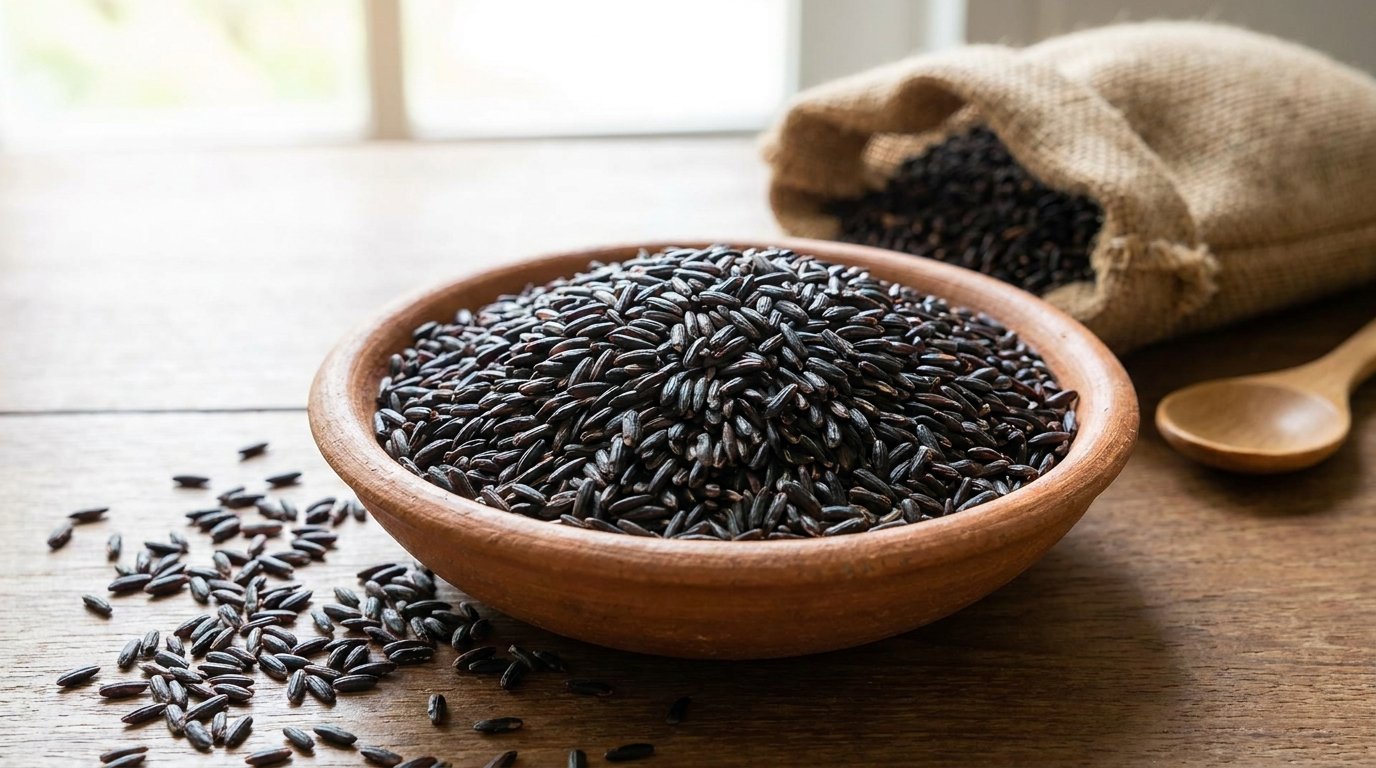
How to Tell Assam Black Rice and Manipur Chak-Hao Apart When Buying
- Check the origin label. Only rice actually grown in Manipur's Imphal valley can legally be sold as Chak-Hao, thanks to its GI tag; Assam-grown black rice should be labelled as Assam black rice, not as Chak-Hao.
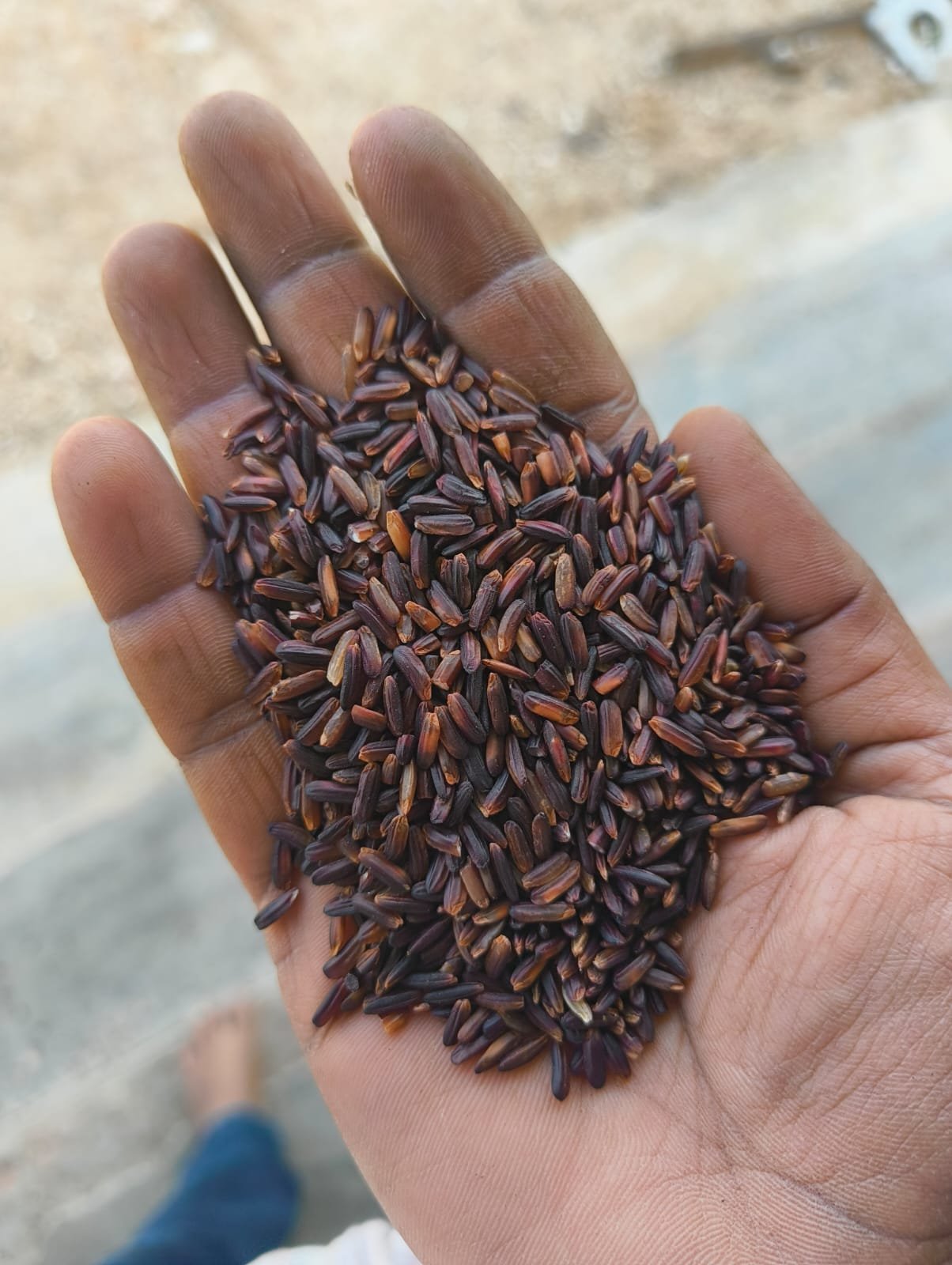
- Look at the grain. Chak-Hao Amubi tends to be larger-grained and more uniformly glutinous; Assam's Kola Bora Saul and newer black rice varieties can vary more in grain size and stickiness batch to batch, since they haven't been standardised the way Chak-Hao has.
- Smell before you cook. Genuine Chak-Hao carries a distinct natural aroma even raw; a completely neutral-smelling black rice is often a sign of a blend or a less aromatic variety.
- Ask for traceability. A reputable Chak-Hao supplier should be able to point to harvest details tracing back to Manipur's valley districts, not just a generic "black rice" label with no origin behind it.
Sourcing verified black rice instead of an unlabelled "black rice"? Get packaging options and traceability documentation from our trade desk in minutes.
Cooking & Using Black Rice
However you source it, black rice generally needs a longer soak and simmer than white rice, thanks to its thick, fibrous bran — most varieties, Assamese or Manipuri, benefit from a few hours of soaking and roughly 35–45 minutes of gentle simmering. Assam's Kola Bora Saul leans toward flour-based snacks like pitha, while Chak-Hao is most famously simmered slowly in milk to make Chak-Hao Kheer, Manipur's signature black rice pudding. For a full step-by-step cooking method and our Chak-Hao Kheer recipe, see our complete guide to cooking Manipur black rice.
Frequently Asked Questions
The Bottom Line
Black rice in Assam is a real and growing story — a centuries-old sticky rice tradition in Kola Bora Saul, and a newer, promising black rice movement descended from Manipur's own stock. But when it comes to the grain most people actually mean when they say "black rice" — aromatic, glutinous, deeply pigmented and verifiably sourced — Manipur's Chak-Hao remains the benchmark, backed by the only GI tag any black rice holds in India. If you're buying, cooking with, or simply curious about black rice, that distinction is worth knowing before the next bag you pick up. To go deeper on the grain itself, see our full guide to Manipur black rice and Chak-Hao.
Further reading
- Dialogue Earth — Assam farmers hope to cash in on black rice superfood
- ScienceDirect — Quality characterization of black rice landraces of Assam and Manipur
- Wikipedia — Bora saul
- Wikipedia — Chak-Hao black rice
- The IP Press — Geographical Indication (GI) tags of Assam
- IRRI — IRRI plans massive black rice production in Assam