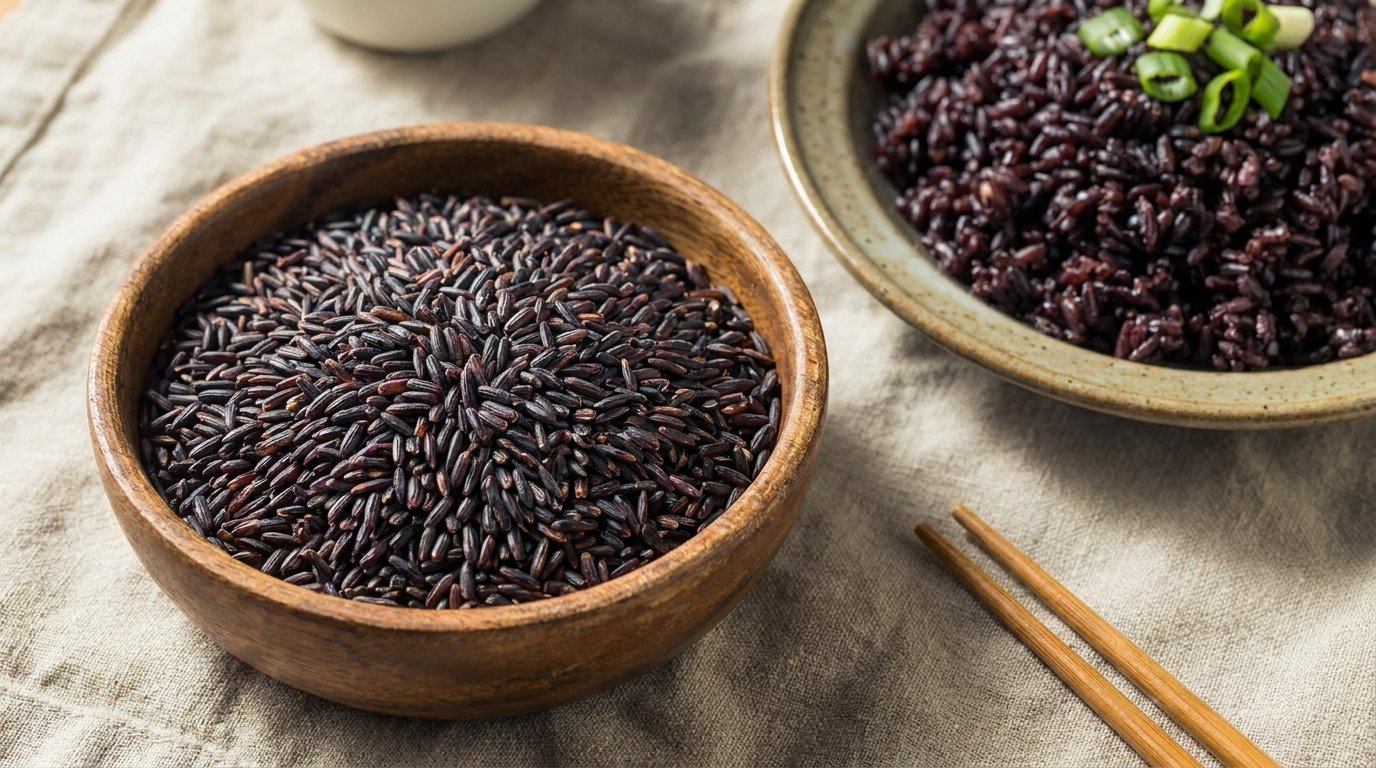
Black rice doesn't move through Australian supply chains the way white rice does. Volumes are smaller, sourcing is concentrated in a handful of growing regions, and the compliance checklist — biosecurity, labelling, traceability — carries real weight once you're buying by the carton or the container rather than the packet. This guide is written for the buyer's side of that conversation: what "bulk" actually means for black rice, where supply comes from, how Australia's import rules apply, and what to check before you commit to an order.
What Counts as Bulk Black Rice, Really?
There's no single legal definition of "bulk" in the rice trade, but in practice, Australian buyers tend to fall into three rough tiers. Small wholesale buyers — independent grocers, cafés, health food shops — often start with 25kg to 100kg cartons, enough to stock a shelf or run a menu item without tying up too much capital in one line. Mid-volume buyers, including regional distributors and smaller manufacturers, typically move to 500kg or 1-tonne jumbo bags. Container-scale buyers — national distributors, larger manufacturers and private-label programmes — order part- or full-container loads, where black rice is bought and shipped the same way any other bulk food commodity is.
This guide covers all three tiers, because the questions worth asking — about origin, compliance and quality — don't really change with volume. What changes is how much leverage you have to ask them, and how much paperwork follows the shipment.
Why Australian Businesses Buy Black Rice in Bulk
Demand for black rice in Australia has grown alongside the wider whole-grain and "ancient grain" trend — the same shift that's put quinoa, buckwheat and freekeh on more shelves and menus over the past decade. Buying in bulk is the practical response to that demand: it cuts down on repeated small orders and packaging waste, and it gives a buyer more control over consistency across a menu run or a private-label batch than constantly reordering retail-sized packets would.
It's also simply how the category is structured. Black rice isn't grown or milled at the same scale as standard white rice, so most of the supply that reaches Australia does so through wholesale channels rather than direct retail import — which means most businesses working with it seriously end up buying in bulk sooner or later, whether that's 100kg for a café or a full container for a national brand.
Bulk Black Rice at a Glance
Before the detail, here's the shape of bulk black rice buying for the Australian market in four numbers.
Where Bulk Black Rice Actually Comes From
Most black rice available to Australian bulk buyers traces back to one of three growing regions, and each comes with a different supply profile worth understanding before you commit to a supplier.
Manipur, in India's northeast, grows Chak-Hao — the aromatic, glutinous black rice that carries India's only Geographical Indication tag for black rice. China grows the long-grain variety most commonly sold internationally as "forbidden rice," at a commercial scale that dwarfs Manipur's largely smallholder cultivation. Thailand and Vietnam grow their own black and glutinous varieties, often positioned as a softer, more everyday eating rice or used specifically in dessert-style products.
| Origin | Bulk availability | Traceability | Grain character | Best suited to |
|---|---|---|---|---|
| Manipur (Chak-Hao) | Limited by smallholder, largely traditional cultivation — real supply, but not unlimited | GI-tagged; origin verifiable back to a defined growing region | Aromatic, glutinous, large-grained | Buyers wanting a differentiated, verifiable origin story alongside the rice itself |
| China ("forbidden rice") | Large-scale commercial production; generally the easiest to source at high volume | Varies by supplier; no equivalent GI protection | Firmer, less sticky, milder aroma | High-volume manufacturing where consistent commodity supply matters more than provenance |
| Thailand / Vietnam | Moderate; often grown alongside other specialty rice varieties | Varies; some regional branding but no GI equivalent | Riceberry: softer, often blended. Black glutinous: sticky, dessert-oriented | Buyers wanting a softer eating rice, or a glutinous variety for dessert-style products |
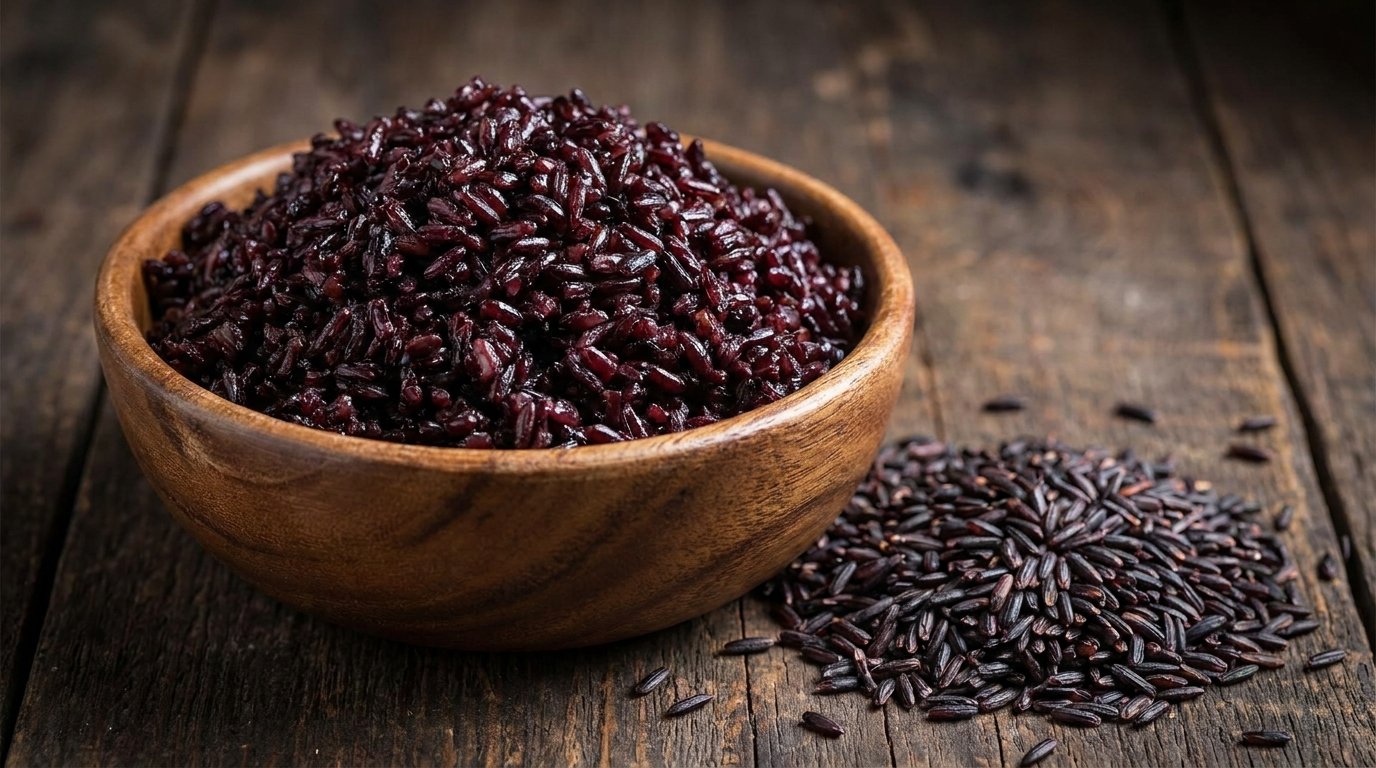
Bulk Pack Sizes, Visualised
Bulk pack sizes for black rice scale enormously depending on who's buying — from a single carton through to a full shipping container. Seeing that range side by side makes it easier to work out which tier actually fits your order volume.
Common bulk black rice pack sizes (approximate net weight)
Shown on a logarithmic scale so small and large formats fit on one chart. Container figures are approximate net weights for bagged rice and vary by bag size and stowage — always confirm exact figures with your freight forwarder.
In practice, smaller buyers such as health food shops and cafés tend to start around the 25kg carton level. Mid-size distributors and regional manufacturers commonly work in jumbo bags. National distributors and larger manufacturers move to part- or full-container loads once volume justifies it. Minimum order quantities vary by supplier, so it's worth asking whether a supplier can scale with you across that range rather than offering a single fixed pack size.
Importing Black Rice into Australia: Biosecurity & Labelling
Australia runs one of the stricter food biosecurity systems in the world, and rice — as an agricultural commodity — sits squarely inside it. Two government bodies matter here. The Department of Agriculture, Fisheries and Forestry (DAFF) manages biosecurity risk at the border, and Food Standards Australia New Zealand (FSANZ) sets the food safety and labelling rules under the Australia New Zealand Food Standards Code.
Before a shipment leaves origin, it's worth checking the commodity against BICON — DAFF's Biosecurity Import Conditions system — which tells you whether an import permit is required, whether treatment or a phytosanitary certificate is needed, and whether the shipment will be assessed on arrival. Once it lands, imported food can be referred to the Imported Food Inspection Scheme (IFIS), a risk-based border inspection regime; if your shipment is selected for testing, that can add roughly one to three weeks to clearance, so it's a good idea to build that buffer into your planning rather than treating it as a worst case.
Labelling is a separate, equally non-negotiable checklist. Under the Food Standards Code, packaged food sold in Australia needs a compliant product name, a full ingredient list and a declaration of any of the recognised major allergens. Separately, under Australian Consumer Law's country-of-origin rules, imported black rice needs a clear statement of where it was grown, produced or packed — a straightforward "Product of India" style declaration is the norm for imports, rather than the more detailed logo-and-bar-chart labelling reserved for Australian-grown or Australian-made claims.
- BICON outcome. Check your exact product and packaging format in BICON before shipping — conditions are assessed case by case and can change.
- Phytosanitary certificate. Issued at origin, and commonly required to support the biosecurity assessment.
- FSANZ labelling compliance. Product name, ingredient list and allergen declarations need to meet the Food Standards Code before goods reach a shelf.
- Country-of-origin statement. A clear, accurate origin declaration under Australian Consumer Law.
- Certificate of Analysis. Not always mandatory, but worth requesting for your own quality assurance and to support any inspection under IFIS.
None of this is a reason to avoid importing black rice — thousands of food shipments clear Australian biosecurity every year — but it is a reason to build a realistic timeline and, for a first shipment especially, to work with a customs broker or freight forwarder who already knows the rice import pathway.
From Paddy to an Australian Warehouse
It helps to see the whole journey a bulk Chak-Hao shipment makes, from harvest in Manipur to a pallet in an Australian distribution centre.
- 1Harvest & light milling. Chak-Hao is harvested in Manipur's Imphal valley and lightly milled so the bran and germ stay largely intact, then batched for testing.
- 2Lab testing & documentation. Each batch is checked for moisture content, broken grain percentage and foreign matter, and a Certificate of Analysis is issued alongside GI and organic paperwork.
- 3Export paperwork. A phytosanitary certificate, commercial invoice, packing list and origin documentation are assembled specifically for Australian customs and biosecurity assessment.
- 4Containerised sea freight. Bagged or jumbo-bagged rice is loaded into a container and shipped from an Indian port toward Australia, typically via a transhipment hub such as Singapore or Port Klang.
- 5Australian biosecurity & food safety clearance. DAFF assesses the shipment against BICON conditions, and it may be referred to the Imported Food Inspection Scheme for testing before release.
- 6Delivery to your warehouse. Once cleared, the cargo is trucked to your distribution centre, ready for storage and first-in, first-out stock rotation.
Nutrient Snapshot: Black Rice vs. White Rice
If you're positioning black rice on a menu, a shelf or a private-label pack, the nutrition story is one of the easiest ways to justify it over standard white rice. Because Chak-Hao keeps most of its bran and germ, it holds on to meaningfully more fibre, protein and iron per serve.
Approximate nutrient comparison, per 100g cooked
Approximate values per 100g of cooked rice, based on general nutrition composition data; actual figures vary by variety, harvest and cooking method. Ask your supplier for a batch-specific Certificate of Analysis if you need lab-verified numbers for labelling.
Black rice's pigmented bran also carries anthocyanins — the same antioxidant pigment family found in blueberries and purple cabbage — which are essentially absent once white rice has been milled. It's a genuine point of difference worth putting on pack copy or a menu description, alongside the GI-tag origin story, rather than relying on colour alone to do the selling.
Quality Checks Before You Buy in Bulk
A GI tag and an attractive photo aren't quality assurance on their own. Before committing to a bulk order, run the batch past these checks.
Moisture content
Bulk black rice should sit around 12–14% moisture at the point of packing; anything higher raises the risk of mould and pest activity in transit and storage.
Broken grain %
Ask for the broken grain percentage on the batch you're buying — a lower figure generally means better milling and a more consistent cooked texture.
Foreign matter
A reputable supplier will state the maximum allowable foreign matter — husk, stones, other grains — as a percentage, not just describe the rice as "clean."
Colour & aroma
Genuine Chak-Hao is a deep, even purple-black with a natural aroma even before cooking; patchy colour or no scent at all is worth questioning.
Certification
Look for GI documentation tying the batch to Manipur, plus any organic certification relevant to your market, rather than taking origin claims on trust.
Certificate of Analysis
A recent CoA covering moisture, foreign matter and microbiological testing gives you something concrete to check against on arrival, not just at the point of order.
Who Buys Black Rice in Bulk Across Australia
Bulk black rice moves through a fairly consistent set of buyer types, each with slightly different priorities.
Health food & wholefoods distributors
Stocking black rice as a differentiated whole-grain line alongside quinoa, buckwheat and pulses, usually in 5–25kg retail-ready or bulk-bin formats.
Restaurants, cafés & catering
Using bulk black rice as a menu point of difference — in grain bowls, sides or traditional preparations like Chak-Hao Kheer — where consistent cooking behaviour across bags matters as much as flavour.
Food manufacturers & private label
Building black rice into muesli, crackers, ready meals or their own packaged retail line, where a documented, traceable origin supports the claims on their own packaging.
Independent & specialty grocers
Selling loose or repacked black rice to health-conscious and diaspora customers who already know the ingredient and are comparing suppliers on quality and origin, not just availability.
Storing Bulk Black Rice in Australian Conditions
Australia's climate range makes bulk grain storage a bigger consideration than it might seem. Humidity in the tropical north — Queensland, the Northern Territory and northern Western Australia — behaves very differently to the drier conditions typical of the southern states, and black rice's bran layer is sensitive to both moisture and light.
- Keep it cool, dark and dry. An opaque, airtight bulk container or bag in a temperature-stable warehouse space protects both food safety and the rice's pigment.
- Watch humidity closely in tropical regions. Consider desiccants or climate-controlled storage where ambient humidity runs high for extended periods.
- Rotate stock FIFO. First-in, first-out rotation matters more for whole-grain rice than for polished white rice, given its shorter practical shelf life.
- Monitor for pest activity. Treat black rice like any other whole-grain commodity in bulk storage — regular inspection catches problems before they spread through a pallet.
Handled this way, bulk Chak-Hao typically holds its quality for 8–12 months in raw form. Once cooked, treat it like any cooked rice: refrigerate promptly and use within a few days.
Shipping & Ports: Getting Bulk Orders to Australia
Sea freight is the standard way bulk black rice reaches Australia, almost always via a transhipment service rather than a direct sailing — containers from Indian ports are typically routed through a hub such as Singapore or Port Klang before continuing on to Sydney, Melbourne, Brisbane or Fremantle. Port-to-port transit commonly runs around two to three weeks, though it can extend depending on vessel schedules and the specific port pairing.
Two Incoterms come up constantly for first-time importers: FOB (Free On Board), where the buyer arranges and pays for freight from the origin port onward, and CIF (Cost, Insurance and Freight), where the supplier arranges freight and insurance to the destination port. Neither is inherently better — it depends on whether you already have a freight forwarder relationship you trust, or would rather have the supplier handle that leg. Either way, factoring in biosecurity clearance and inland delivery, a realistic door-to-door timeframe from Manipur to an Australian warehouse is closer to five to eight weeks than the port-to-port figure alone suggests.
How to Place a Bulk Order With Confidence
Whether it's your first 100kg order or a scaled-up container programme, the same checklist applies.
-
Request a sample and a spec sheet. Confirm moisture, broken grain percentage and grain length before you talk quantities.
-
Verify GI and organic certification. Ask for a recent Certificate of Analysis alongside the paperwork, not just a certificate scan from a previous shipment.
-
Agree pack size, Incoterm and lead time in writing. This is what your freight forwarder and customs broker will work from.
-
Check labelling against the Food Standards Code before goods ship. It's far cheaper to fix a label file than to relabel a cleared container.
-
Start with a trial order. Test a smaller quantity before scaling to jumbo bags or container volumes with a new supplier.
-
Track the shipment through to biosecurity clearance. Confirm the container has cleared BICON and IFIS checks before it leaves the wharf, not after it's already on a truck to you.
Buying black rice in bulk for the Australian market? Get pack size options and export documentation from our trade desk in minutes.
Frequently Asked Questions
The Bottom Line
Buying black rice in bulk for Australia isn't complicated once you know the shape of it: verified origin, biosecurity and labelling sorted early, pack sizes that match your actual volume, and a supplier who can back every claim with paperwork rather than a photo of a paddy field. Get those right and black rice becomes just another dependable line on your purchase order — with the added benefit of a genuinely different, GI-protected story behind it. For more on the rice itself, including its history and how to cook it, see our full guide to Manipur black rice, or head to our product page to start a wholesale enquiry.