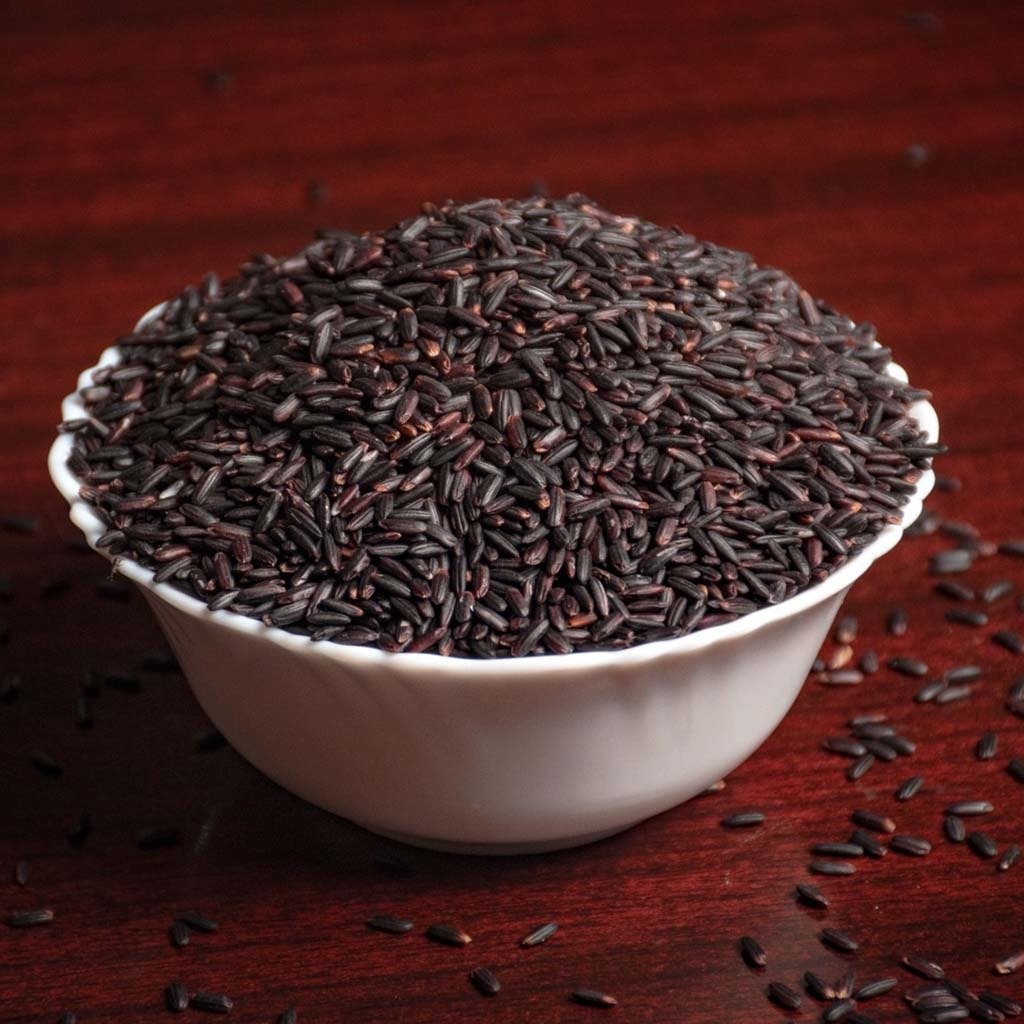
Search "black rice GI" and you'll find a lot of pages describing black rice in general — its colour, its antioxidants, its history. Far fewer explain what the GI tag itself actually is: a specific legal registration, filed on a specific date, examined against specific criteria, and granted to a specific group of producers. This guide stays on that side of the story: the registration itself, what it protects, and what it means if you're farming, buying, or simply trying to tell a genuine bag from an imitation.
What "Black Rice GI" Actually Means
A Geographical Indication, or GI, is a form of intellectual property recognised under India's Geographical Indications of Goods (Registration and Protection) Act, 1999. It doesn't protect a recipe, a brand, or a company — it protects a name, by tying that name permanently to a defined place and to qualities that place is responsible for. Darjeeling tea became the first Indian product to receive one back in 2004; since then the register, kept by the Geographical Indications Registry in Chennai under the Department for Promotion of Industry and Internal Trade, has grown to cover well over 600 products, from textiles and spices to sweets and stone carving.
"Black rice GI" isn't a crowded category. Search the register for black rice specifically and one name comes up: Chak-Hao, also written Chakhao or Chak-Hao Amubi, registered to producers across Manipur and neighbouring Nagaland. Every other black rice sold in India — repacked forbidden rice, generic "black rice" with no origin claim at all — sits outside that registration, regardless of what the label says about colour or antioxidant content.
Timeline: From Application to Registration
The registration took roughly two and a half years to clear — longer than most GI applications, largely because of a dispute over who was allowed to apply for it in the first place.
The North Eastern Regional Agricultural Marketing Corporation (NERAMAC) files the original application with the GI Registry, seeking protection for Chak-Hao under Class 30 (foodstuffs).
The Examiner of Trade Marks and Geographical Indications objects: under Section 11 of the GI Act, a registered GI can only be held by an association genuinely representing the producers, not a marketing corporation acting on their behalf. NERAMAC is asked to step aside as applicant.
The Consortium of Producers of Chak-Hao (Black Rice), based in Imphal, is formed and substituted in as the applicant, supported by documentation from Manipur's Department of Agriculture on the rice's history, growing area, and distinguishing traits.
The GI Registry in Chennai formally registers Chak-Hao. It becomes the first rice variety from either Manipur or Nagaland to hold a GI tag, and the only registered black rice anywhere in India.
The current ten-year registration term — calculated from the original filing date rather than the registration date — comes up for renewal.
Who Actually Holds the Chak-Hao GI Registration
On paper, the Chak-Hao GI belongs to the Consortium of Producers of Chak-Hao (Black Rice) — not to any single company, cooperative, or government department. That distinction matters more than it sounds. Under the GI Act, a registered proprietor is meant to represent the community of producers collectively, which is exactly why the Examiner rejected NERAMAC's original application. A state marketing body could gather the evidence, fund the process, and make the case, but it couldn't be the rights-holder itself.
In practice, this means individual farmers and small mills don't need to register anything personally to be covered. Anyone genuinely growing and processing Chak-Hao within the registered districts falls under the Consortium's registration as what the GI Act calls an "authorised user" — though formal authorised-user registration, where an individual producer applies to be listed against the GI by name, remains a separate, optional step that adds an extra layer of documented traceability for anyone who wants it.
What the GI Tag Protects — and What It Doesn't
A GI tag is often talked about as if it were a quality stamp, but legally it's narrower and more specific than that: it protects a name, not a promise about every bag that carries it. It's worth being precise about where that line actually sits, especially if you're buying rather than farming it.
What the GI tag actually protects
- Exclusive right to the name "Chak-Hao" for rice grown within the registered districts of Manipur and Nagaland
- Legal grounds to challenge black rice grown elsewhere and sold under the Chak-Hao name
- A documented, government-recognised link between the name and its geographic origin
- A basis that can support stronger protection claims in export markets
What it doesn't automatically guarantee
- Organic status — that requires a separate certification, not the GI registration itself
- A fixed grade or quality in every single bag — that still depends on the individual grower or mill
- Any particular price point — the GI protects the name, not what it's sold for
- Automatic protection outside India — recognition abroad generally needs separate registration or trade agreements
The Protected Geographical Area
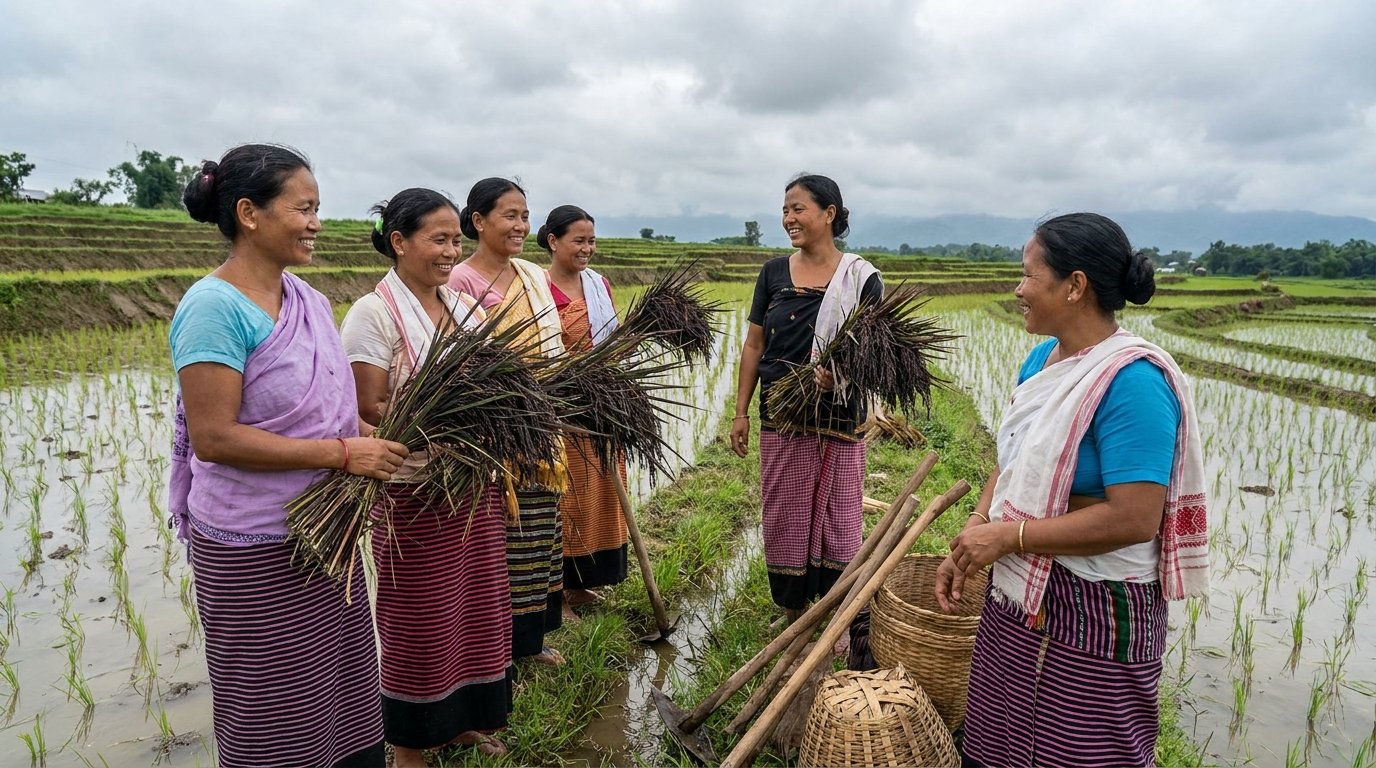
The registered geography isn't confined to Manipur, which surprises a lot of buyers. It covers four districts of the Imphal valley — Imphal East, Imphal West, Bishnupur and Thoubal — plus Peren district, just across the state line in Nagaland. Rice from Peren shares the same hill-ringed valley ecology and has been grown by communities there long enough to be included in the same registration, making Chak-Hao one of the few Indian food GIs to formally span two states rather than sit inside just one.
That cross-border reach is also why "Manipur black rice" and "black rice GI" aren't perfectly interchangeable phrases. Every GI-registered Chak-Hao is grown to the same aromatic, glutinous, black-bran standard associated with Manipur, but not every registered grain of it, strictly speaking, comes from within Manipur's own state line.
Black Rice GI vs. Other GI-Tagged Rice in India
Chak-Hao is one of roughly two dozen Indian rice varieties with GI protection, but each covers different territory, a different grain type, and a different corner of India's agricultural map. Seeing them side by side makes it clearer what's actually unusual about the black rice GI: cross-state coverage, a glutinous grain, and no other black rice anywhere on the list.
| Rice | Registered area | Grain & character | GI year |
|---|---|---|---|
| Chak-Hao (Black Rice) | Manipur & Nagaland | Aromatic, glutinous, black bran | 2020 |
| Basmati | 7 states, Indo-Gangetic Plain | Long-grain, white, aromatic | 2016 |
| Joha Rice | Assam | Short-grain, aromatic "winter rice" | 2017 |
| Gobindobhog | West Bengal | Short-grain, white, sticky & aromatic | 2017 |
| Kalanamak | Uttar Pradesh (Siddharthnagar & Tarai belt) | Aromatic, black-husked "Buddha rice" | ~2013 |
| Koraput Kalajeera | Odisha | Small-grain, aromatic | 2024 |
Years reflect each variety's formal GI Registry entry. Chak-Hao's own application, filed in December 2017, took nearly two and a half years to clear examination before registration in 2020.
Where Black Rice GI Fits in India's Wider GI Story
Chak-Hao didn't arrive into an empty register. By 2020, India already had roughly 370 Geographical Indications on the books — a number that's kept climbing steadily since, past 600 by the middle of this decade. Black rice's GI sits inside that much larger story of India using the same legal tool for tea, textiles, sweets, and spices.
Figures are rounded from public reporting on India's national GI register and are meant to show scale, not an exact count for any single date.
Why the GI Tag Matters for Farmers
For the smallholders who've grown Chak-Hao for generations, the GI tag is less about prestige and more about a fairly narrow, practical problem: outside traders using the name for rice that never touched Manipur or Nagaland soil. Before 2020, nothing in law stopped a seller anywhere in India from labelling ordinary black rice "Chak-Hao." The GI closes that gap, at least on paper, by giving the Consortium legal standing to challenge it.
There's a second, less obvious benefit: export credibility. Other GI-tagged Indian rice varieties show what that can look like in practice — shipments of Assam's GI-tagged Joha rice to the UK and Italy earlier in 2026 were facilitated specifically because of the traceable, government-recognised origin the GI tag provides. That's the same kind of door a GI tag opens for Chak-Hao, even if walking through it still depends on producers, exporters and buyers doing the legwork.
Why It Matters for Buyers, Retailers & Exporters
For anyone importing, retailing or private-labelling black rice, the GI tag is mostly a due-diligence tool rather than a marketing one. It gives you a specific, checkable claim — "grown within the registered Chak-Hao districts of Manipur or Nagaland" — instead of a vague one, and it puts a legal backstop behind that claim. Misusing a registered GI in India isn't just a labelling issue; under the GI Act it can be treated as both a civil wrong and a criminal offence, with penalties the Act itself sets out. None of this is legal advice — if a specific sourcing or labelling question matters to your business, it's worth checking with counsel — but it's a real deterrent that a generic "black rice" label simply doesn't carry.
It's also worth knowing what the tag doesn't do for you. A GI registration doesn't replace an organic certificate, a phytosanitary certificate, or the export documentation a destination country requires — it sits alongside those, as one more piece of paper confirming where the rice actually came from.
Need the GI registration reference for an import filing or retail listing? Our trade desk can share it directly.
How to Verify Genuine GI Black Rice
- Ask for the GI reference, not just the word "GI." A supplier who genuinely sources from the registered area should be able to point to the Chak-Hao registration, or name the Consortium of Producers of Chak-Hao or its member growers directly.
- Confirm the growing district. Genuine GI-registered Chak-Hao comes from Imphal East, Imphal West, Bishnupur, Thoubal, or Peren in Nagaland — not just "Manipur" as a general, unsupported claim.
- Separate the GI claim from the organic claim. The two are different certifications. A bag can be genuinely GI-registered without being organic-certified, or the reverse.
- Treat physical traits as a second signal, not proof. Deep, even purple-black bran, a noticeable natural aroma before cooking, and a stickier texture than most black rice are consistent with authentic Chak-Hao, but they support a documentation check rather than replace one.
- Be cautious with unqualified "black rice" labelling. If a product is marketed only as generic black rice, with no district or state named anywhere, there's no way to connect it back to the registered GI at all.
Renewal, and What Happens If the Name Is Misused
A GI registration in India isn't permanent by default. It's granted for ten years, calculated from the original application date rather than the date the certificate is actually issued — which is why Chak-Hao's current term, despite being registered in April 2020, runs from the December 2017 filing date through to 25 December 2027. Renewal isn't automatic; the registered proprietor has to file for it before the term lapses, and can keep renewing in further ten-year blocks indefinitely.
If the term is allowed to lapse, active legal protection lapses with it until someone renews it. For a product with as much cultural and commercial identity riding on the name "Chak-Hao" as this one, that renewal date is arguably as important to the black rice GI story as the original 2020 registration was.
Frequently Asked Questions
The Bottom Line
Black rice GI, in the end, describes one specific legal fact: since 20 April 2020, the name "Chak-Hao" has belonged to the producers of Manipur and Nagaland, and to nobody else. It doesn't certify organic status, set a price, or guarantee every bag is flawless — but it does mean the name on the label has to mean something. Whether you're a farmer relying on that protection, a buyer trying to verify a supplier, or simply curious why this particular black rice carries a tag most others in the world don't, the paperwork behind it is now as much a part of the rice's story as the paddy fields are. For the fuller picture — nutrition, cooking, and the cultural history behind the grain itself — see our complete Manipur black rice guide.
Further reading
- Wikipedia — Chak-Hao black rice
- Intellectual Property India (GI Registry) — Chak-Hao application details
- ZeusIP Advocates LLP — Manipur's traditional Black Rice 'Chak Hao' obtains the Geographical Indication
- North East Today — Manipur Black rice Chak-Hao gets GI tag
- European Commission Newsroom — Geographical Indication Tag Registrations in India Surpass 600