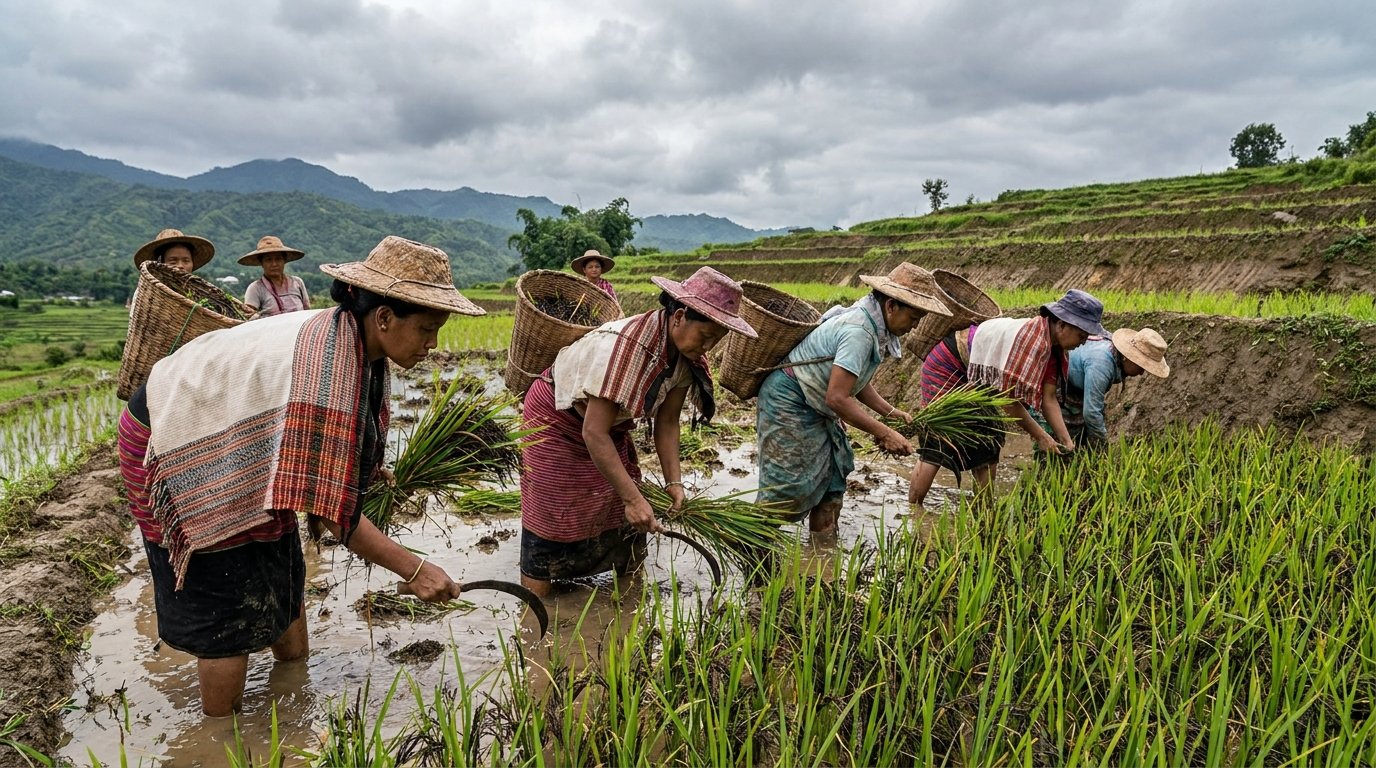
"Black rice grown in which state" is one of the most common ways people search for this grain, and it's a fair question — most of us grow up thinking rice is just white, or maybe brown. This guide answers it properly: which Indian states actually grow black rice, why Manipur is the name that comes up again and again, and how Manipur's Chak-Hao holds up next to the black rice grown in China, Thailand, Indonesia and Italy.
Quick Answer: Black Rice Is Grown in Which State?
In India, black rice is grown mainly in Manipur, a state in the country's far north-east, where farmers call it Chak-Hao Amubi. Smaller quantities also come out of Assam, Meghalaya, Odisha, West Bengal, Jharkhand, Tamil Nadu, Maharashtra and Karnataka. But Manipur is the one state whose black rice is protected by a Geographical Indication (GI) tag, and it's the variety most people mean when they talk about "the best black rice in the world."
The rest of this guide unpacks that answer properly — starting with what black rice actually is, then working through every state that grows it, and finally putting Manipur's Chak-Hao up against the black rice grown elsewhere in the world.
What Is Black Rice, Exactly?
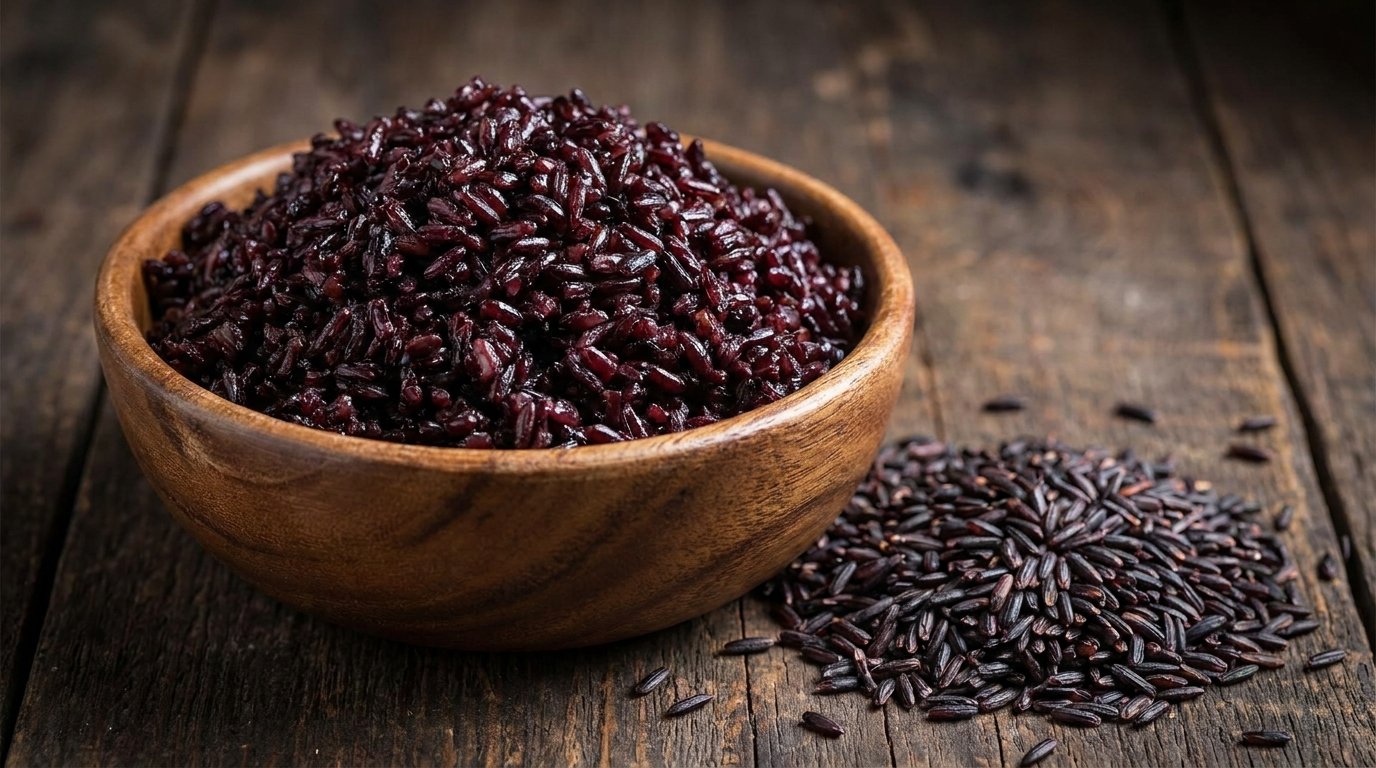
Black rice is a pigmented variety of Oryza sativa — the same species as ordinary white and brown rice — but the bran layer carries a heavy concentration of anthocyanins, the plant pigment also responsible for the colour in blueberries and purple cabbage. That pigment is what turns the raw grain a deep charcoal-purple and, once cooked, a rich violet. Because the bran is left largely intact rather than polished away, black rice keeps far more of its natural fibre and nutrients than white rice does.
It picked up the nickname "forbidden rice" in China, where imperial-era accounts describe it as a grain reserved for the emperor's table rather than sold openly to commoners. Some black rice varieties are glutinous and sticky when cooked; others, grown in different countries, stay firm and separate. That single difference in texture is one of the clearest ways to tell one country's black rice apart from another's — and it's a big part of why Manipur's version stands out, as you'll see below.
Which States Grow Black Rice in India?
Black rice isn't grown everywhere in India — it needs warm, humid growing conditions and a long season, which is why it's concentrated in the country's wetter, monsoon-fed regions. Here's how the states line up, ranked by how closely each one is identified with the grain:
Manipur GI-tagged
Centred on the Imphal valley, Manipur is the state most people mean when they ask where black rice comes from. It's the only Indian state whose black rice carries legal Geographical Indication protection, and it's the source of most of what's exported internationally as "Manipur black rice."
Assam
Grown in pockets of Goalpara and Nagaon districts. Assam's black rice farming is newer and smaller in scale than Manipur's, but it's expanding as more farmers take it up.
Meghalaya & Mizoram
Both hill states grow black rice on a limited scale, largely for local consumption rather than commercial sale outside the region.
Odisha
A purple-husked, black-grained landrace grown once a year in the Kharif season — unlike Manipur's Chak-Hao, which some farmers manage to harvest twice in a single year because of its shorter growing cycle.
West Bengal & Jharkhand
Long considered part of black rice's native range in eastern India, though production here stays small and largely local.
Tamil Nadu
A glutinous black rice with deep roots in Tamil cuisine, traditionally cooked into sweet, milk-based dishes rather than eaten plain.
Maharashtra & Karnataka
Grown in small, scattered pockets — often by native-seed conservation farms preserving old black paddy varieties rather than large commercial growers.
Uttar Pradesh Emerging
Farmers in districts such as Chandauli, Sonbhadra and Mirzapur have started planting black rice in recent years, chasing the rising demand for it.
So while the honest answer to "black rice grown in which state" includes a handful of names, only one of them — Manipur — has built an entire identity, a GI tag and an export trade around the grain.
Why Manipur Is the State Everyone Means
Manipur's black rice is grown across the low-lying, monsoon-fed valley around Imphal — mainly in the districts of Imphal East, Imphal West, Bishnupur and Thoubal — where generations of smallholder farmers have kept the crop largely unchanged by industrial breeding. In Meitei, the state's principal language, the grain is called Chak-Hao Amubi: "Chak" for rice, "Amubi" for black, part of a wider Chak-Hao family that also includes purple, red and white aromatic siblings.
Manipuri oral history places Chak-Hao at weddings, community feasts and festivals like Lai Haraoba — not on the everyday dinner plate. That "special-occasion" status runs through several of Asia's black rice traditions, most famously China's own forbidden rice, though Chak-Hao's story belongs to Manipur rather than borrowing from it. What sets the Manipuri grain apart on the plate is a combination of a natural aroma that develops as it cooks and a stickier, more glutinous bite than most other black rice varieties grown around the world.
The GI Tag That Locks the Name to Manipur
Chak-Hao was granted a Geographical Indication tag on 20 April 2020, after the Consortium of Producers of Chak-Hao filed the application with support from Manipur's Department of Agriculture and NERAMAC, the region's agricultural marketing body. In practical terms, that means the name "Chak-Hao" can legally only be used for black rice actually grown within the registered zone — the same principle that protects names like "Darjeeling tea."
One detail that often gets left out: the registration also extends to the Peren district of neighbouring Nagaland, so the legal GI zone isn't limited to Manipur alone. Even so, the overwhelming majority of Chak-Hao cultivation, and virtually all of the crop's cultural identity, remains centred on Manipur's Imphal valley — which is exactly why "Manipur black rice" and "Chak-Hao" are used interchangeably almost everywhere outside the region.
Manipur's Black Rice vs. the World's Other Black Rice
Zoom out from India and the picture changes. By sheer volume, China dominates global black rice production, growing far more than any other country:
Global Black Rice Production, by Volume
Share of estimated worldwide output
"Rest of world" is made up mainly of India, Indonesia, Sri Lanka, Thailand and the Philippines — no single one of them comes close to China's share, and reliable country-by-country breakdowns beyond China aren't publicly available.
Volume is only part of the story, though. Once you compare the actual eating experience — aroma, texture, grain shape — Manipur's Chak-Hao looks a lot less like a smaller player and a lot more like a distinct category of its own:
Manipur Chak-Hao
Large, aromatic, glutinous grain. Traditionally used for Chak-Hao Kheer and feast rice.
Forbidden Rice
Long, firm grain, milder scent. Sold worldwide under the "forbidden rice" name.
Black Jasmine Rice
Floral, jasmine-derived scent. Often blended with white rice for everyday bowls.
Ketan Hitam
Very glutinous, mostly used in coconut-milk porridge (bubur ketan hitam).
Riso Nero (Venere)
A Chinese-Italian hybrid with a buttery, nutty note, bred for firm, risotto-style dishes.
Put plainly: China grows more black rice than anywhere else, but Manipur grows the black rice that most closely fits the description people usually have in mind when they imagine the "best" version — fragrant, sticky, large-grained, and legally tied to one specific place. Independent testing of Chak-Hao landraces has recorded anthocyanin levels above 390 mg per 100 g in some genotypes — a concentration that, gram for gram, has been measured higher than what's typically reported in blueberries.
Nutrition: How Black Rice Compares to White and Brown
Because Chak-Hao is milled lightly, the bran and germ stay mostly intact, which is where nearly all of black rice's nutritional edge over white rice comes from. Here's roughly how the three compare:
White vs. Brown vs. Manipur Black Rice
Relative levels per typical serving — illustrative, based on published nutrition research
Bar lengths represent relative levels, not exact lab measurements — actual values vary by harvest, milling and preparation. The antioxidant gap is the standout: it's almost entirely down to the anthocyanin-rich bran that white rice loses in polishing.
Health Benefits Worth Knowing About
None of this makes Chak-Hao a substitute for medicine, but there's a reasonable body of nutrition research pointing to real advantages over refined white rice:
- Antioxidant support. The anthocyanins packed into the bran show strong antioxidant activity in laboratory studies, helping counter the free radicals linked to cellular ageing.
- Steadier blood sugar. The fibre and starch structure in black rice slows digestion, producing a gentler rise in blood sugar after eating compared with white rice.
- Heart-friendlier profile. Diets built around whole grains like black rice are generally linked to better cholesterol markers than diets heavy in refined grains.
- More filling. The extra fibre and protein digest more slowly, which tends to make a bowl of black rice feel more satisfying for longer.
- Naturally gluten-free. Like every rice variety, black rice contains no gluten, making it a safe whole-grain choice for people avoiding it.
How Black Rice Is Actually Grown in Manipur
Chak-Hao is a monsoon-season crop, transplanted into flooded paddies across Manipur's alluvial valley floor and harvested once the rains ease. Cultivation has stayed largely smallholder — small, family-run plots rather than large mechanised farms — which keeps yields modest compared with commercial white rice varieties bred for volume.
One detail that separates Manipur from most of India's other black-rice-growing states: because several Chak-Hao landraces have a shorter growing cycle than typical paddy, some Manipuri farmers are able to take two harvests a year rather than the single Kharif-season crop that states like Odisha rely on for their black rice. That, combined with generations of seed-saving rather than industrial breeding, is a big part of why Manipur's supply — while still limited compared with China's — has stayed consistent enough to support a genuine export trade.
Sourcing genuine Manipur black rice for retail, food service or export? Our trade desk can talk you through packaging, certifications and documentation — no pricing details needed to get started.
How to Cook Black Rice From Manipur
- 1Rinse well. Wash the grain two or three times in cold water until it runs mostly clear. Some pigment will keep bleeding out — that's normal, not a sign of anything wrong.
- 2Soak if you can. A few hours, or overnight, softens the thick bran layer and cuts down the cooking time noticeably.
- 3Use roughly 1:2. Start with 1 cup of black rice to about 2–2¼ cups of water, adjusting slightly based on whether it was soaked.
- 4Simmer low and slow. Bring to a boil, then cover and reduce to a gentle simmer for 40–45 minutes, longer than most other rice because of the fibrous bran.
- 5Rest, then fluff. Leave the covered pot off the heat for about 10 minutes before fluffing with a fork, so the last of the moisture settles evenly.
Buying Black Rice? Check the State of Origin First
Now that you know black rice is grown in a handful of Indian states, buying it well mostly comes down to confirming where a particular bag actually came from — rather than assuming any dark-coloured rice is the same thing:
- Look for clear origin labelling. A bag that names Manipur specifically, or references the Chak-Hao GI tag, is a stronger signal than one that simply says "black rice, product of India."
- Check the colour and finish. Genuine Chak-Hao looks deep, even purple-black with a matte bran layer, not a glossy, over-polished shine.
- Trust your nose. Authentic Manipuri black rice carries a natural aroma even before cooking; a completely scentless bag is often a sign it's been blended or isn't from Manipur at all.
- Ask which state it's from. A reputable supplier should answer that question specifically — "Manipur" or "Imphal valley," not a vague "the north-east" — and be able to share sourcing details on request.
Frequently Asked Questions
The Bottom Line
So, black rice grown in which state? In India, the honest answer starts and mostly ends with Manipur — a handful of other states grow it too, but none of them have built the same aroma, texture, history and legal protection into a single grain the way Manipur has with Chak-Hao. Globally, China still grows more black rice than anyone, but scale and character aren't the same thing, and on character, Manipur's Chak-Hao is hard to beat. For the deeper story on the grain itself, see our complete guide to Manipur black rice, or explore the nutrition and buying options for our own Chak Hao.