Type "black rice price" into a search bar and you'll land on marketplace listings, mandi rate tables, wholesale directories and blog posts that all quote different figures — sometimes for the same country, in the same month. That's not a data error. Black rice price is genuinely a moving target, because "black rice" covers everything from a mass-market forbidden rice grown at scale to a small-batch, GI-protected heritage grain from a single valley. This guide breaks down the actual levers behind the number, so you can read any quote you're given and understand what it does — and doesn't — include.
Why "Black Rice Price" Isn't One Number
Most people searching for black rice price expect something close to a fixed rate, the way you'd expect white rice to trade in a fairly narrow band. Black rice doesn't behave that way, and it's worth understanding why before you compare any two quotes side by side.
Unlike commodity white rice, black rice sits in a smaller, more fragmented market. Supply is split across several producing regions with very different growing conditions, yields and processing traditions, and demand is split between industrial buyers purchasing at scale and specialty buyers paying for a specific origin or certification. That fragmentation is exactly why one supplier's number can look nothing like another's, even for rice that looks identical in a photo.
The rest of this guide walks through each of the individual factors that combine to produce whatever figure ends up on a quote — starting with the single biggest one: where the rice actually comes from.
The Type & Origin of the Rice
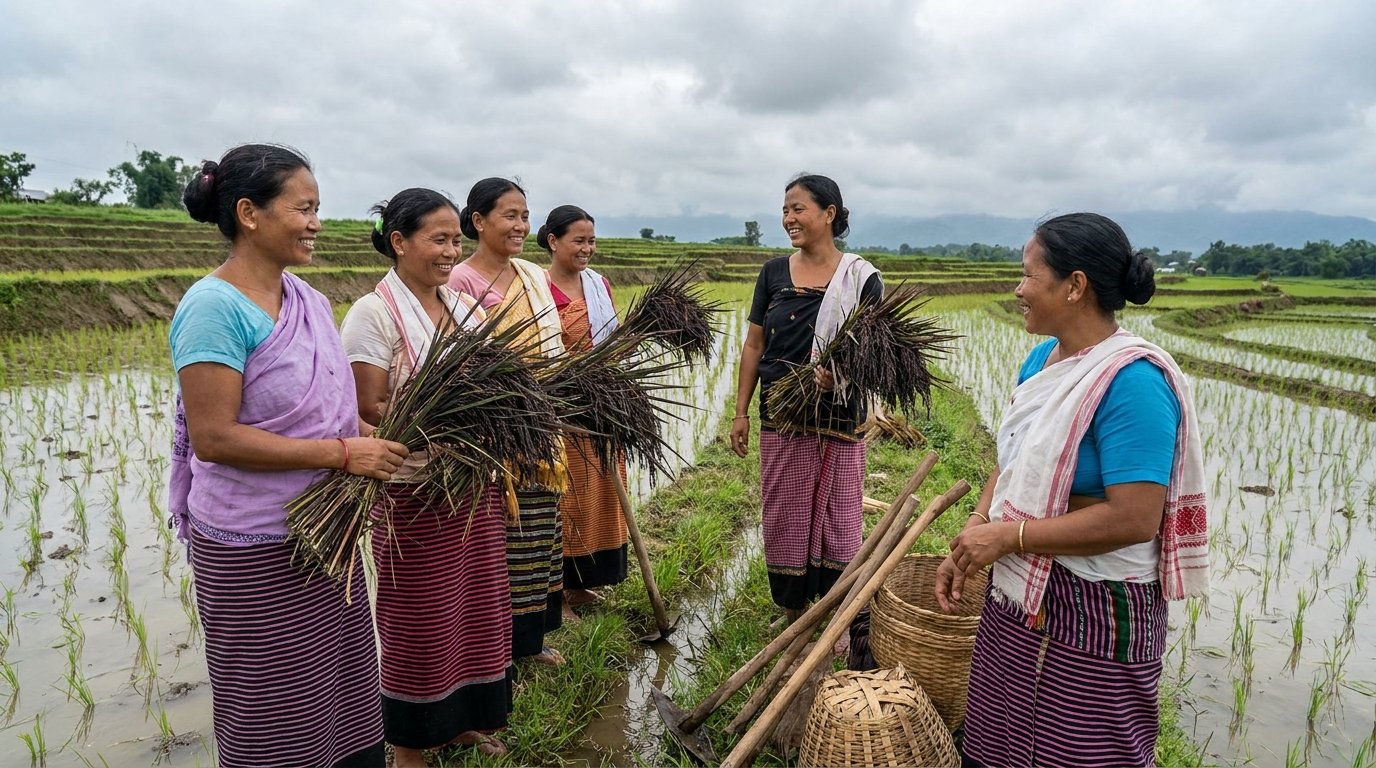
"Black rice" is a description, not a single variety. Chinese forbidden rice, Thai black jasmine and riceberry, Indonesian ketan hitam, and Manipur's Chak-Hao are all sold under the same broad label internationally, but they come from different growing regions, different seed lines and different farming scales — and that shows up directly in cost.
Rice grown at large commercial scale, with mechanised planting and harvesting, tends to sit at the more affordable end of the black rice category. Rice grown by smallholder farmers on traditional, low-yield paddies — which describes most heritage black rice, including Chak-Hao — costs more to produce per kilogram simply because there's less of it coming off each hectare, and because more of the process still relies on manual labour rather than machinery.
Origin also affects price indirectly, through reputation. A region known for a specific black rice tradition can command a premium over an unbranded equivalent grown elsewhere, in much the same way a named wine region trades differently than an unlabelled blend — even when the underlying grain is agronomically similar.
Organic Certification & Its Effect on Price
Organic status is one of the clearer, more consistent levers on black rice price, and it's worth understanding regardless of which origin you're buying from.
Certified organic cultivation involves audited farming practices, restrictions on synthetic inputs, and separate handling and storage to prevent cross-contamination with conventionally grown grain. Maintaining that separation and passing annual audits both cost money, and suppliers build those costs into the price rather than absorbing them. As a result, certified organic black rice generally sits above conventionally grown black rice of a similar origin and grade.
It's also worth being specific about what "organic" means on a given bag. Traditional cultivation without synthetic fertiliser is common across smallholder black rice regions, including much of Manipur, simply because it's how farming has been done there for generations — but that's a different claim from a bag carrying a recognised organic certification mark. Only the latter has been independently audited, and only the latter should carry the certification-driven price difference in a genuine comparison.
GI Tags, Provenance & the "Scarcity Premium"
A Geographical Indication tag doesn't set a black rice price directly, but it changes the supply side of the equation in a way that almost always pushes price upward. Once a name like Chak-Hao is legally tied to rice grown in a specific part of Manipur, that name can no longer be used for black rice grown anywhere else — which caps how much genuinely GI-eligible supply can ever exist, no matter how much demand grows.
This is the same mechanism behind price gaps in other GI-protected foods: Darjeeling tea and true Basmati rice both trade above their unprotected equivalents, not because the protection itself adds flavour, but because it guarantees origin and limits the pool of rice legally entitled to the name. Chak-Hao, as India's only GI-tagged black rice, sits in exactly this position.
Where this becomes genuinely useful for a buyer is in separating three different tiers of product that often get compared as if they were interchangeable:
Commodity Black Rice
Grown at scale, usually blended from multiple farms or regions with no single verified origin. Typically the most affordable tier, with price driven mostly by yield and processing scale rather than provenance.
Organic-Certified Black Rice
Carries an audited organic certification but no geographic protection. Sits above commodity black rice on price, reflecting certification and handling costs rather than any single-origin guarantee.
GI-Tagged, Origin-Verified Black Rice
Legally restricted to a defined growing region, such as Manipur's Imphal valley for Chak-Hao. The supply-limiting effect of GI protection, combined with traceability back to specific paddies, generally places this tier at the top of the black rice price range.
Milling & Processing Method
How black rice is milled after harvest is another factor that rarely shows up in a quick price comparison, but it changes both the cost and the nutritional profile of what ends up in the bag.
Black rice can be lightly milled, keeping most of the pigmented bran and germ intact, or polished more heavily, which produces a cleaner-looking grain but strips away some of the anthocyanins, fibre and protein that make black rice worth choosing in the first place. Lighter milling is typically a slower, lower-yield process per batch, and it tends to sit at a higher price point than heavily polished black rice — even when both bags come from a similar growing region.
Some black rice is also still hand-pounded or processed on a smaller scale rather than run through fully automated mills. That method preserves quality well but is inherently slower and more labour-intensive, and suppliers using it will generally price accordingly.
Grain Quality, Grading & Moisture Content
Once milled, black rice gets graded against a handful of technical specifications, and these grading outcomes move price just as much as origin or certification do:
- Broken grain percentage. A batch with a higher proportion of broken or fragmented grains is generally priced lower than a batch of predominantly whole, intact grains, since broken rice is treated as a lower grade regardless of origin.
- Moisture content. Rice held near an ideal moisture range stores longer and travels better than rice that's too wet or too dry, and suppliers who consistently hit that range can generally justify a firmer price than those who don't.
- Grain length and uniformity. A batch of consistently sized, long grains is usually valued above a mixed batch, particularly for buyers who need a uniform look for retail packaging.
- Anthocyanin concentration. Because the pigment is the whole reason buyers choose black rice, batches that test higher for anthocyanin content are often marketed and priced as a premium grade over visually similar but less pigment-dense rice.
- Purity of the batch. Genuine black rice with no admixture of other rice types or colours commands a more consistent price than a blended batch, which buyers should always be able to ask a supplier to confirm.
Harvest Yield & Seasonal Supply
Black rice generally yields less per hectare than commercial white rice, and heritage varieties like Chak-Hao — grown on traditional, unhybridised landraces rather than high-yield modern seed — yield less again. Lower yield per hectare means the fixed costs of farming a paddy get spread across a smaller harvest, which raises the effective cost per kilogram before any milling or certification is even considered.
Because black rice is typically a single monsoon-season crop rather than something harvested year-round, supply also tightens in the months before a new harvest comes in, and eases once it does. Buyers placing large orders close to the end of a harvest cycle, or during a poor monsoon year, should expect price to reflect that tighter supply rather than treating any single quote as fixed year-round.
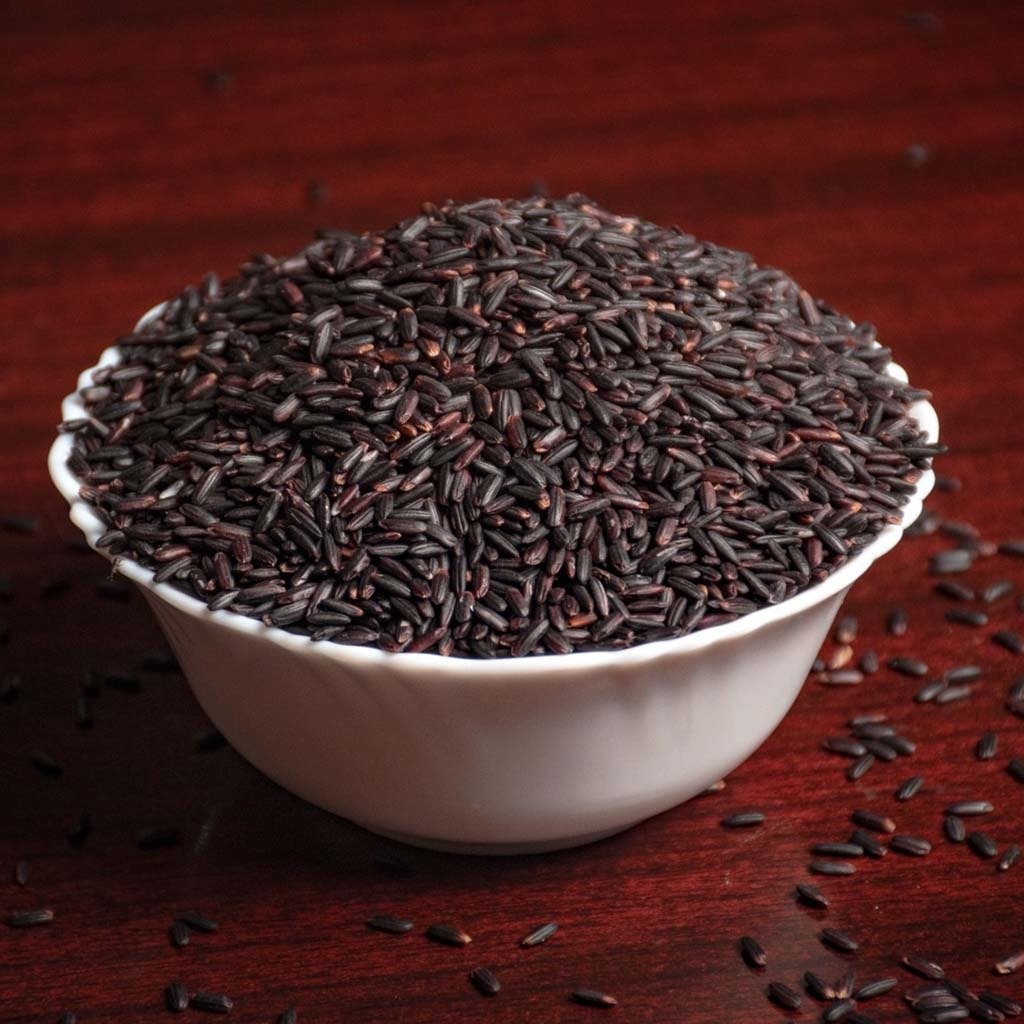
It's also worth noting that heritage black rice often carries cultural and ceremonial demand on top of its everyday culinary use — served at festivals and community feasts in producing regions like Manipur — which adds a further, less predictable pull on available supply during certain seasons.
Packaging Format: Retail Pouches vs. Bulk Sacks
The same rice, from the same harvest, can carry noticeably different per-kilogram pricing depending purely on how it's packaged. A small retail pouch — printed, sealed, and designed to sit on a shelf — carries packaging, branding and handling costs that a plain bulk sack simply doesn't.
This is why comparing a retail-pack price per kilogram against a bulk or wholesale quote rarely gives an apples-to-apples answer. Bulk buyers are generally paying closer to the cost of the grain itself, plus basic packaging suited to large-volume handling, while retail buyers are also paying for the packaging format, smaller unit convenience, and typically a longer supply chain between farm and shelf.
Bulk & Wholesale Pricing vs. Retail Pricing
Per-kilogram cost generally falls as order size rises, since fixed costs — packaging, handling, documentation, a supplier's margin — get spread across more volume. That's true across almost every agricultural commodity, and black rice is no exception.
That said, the drop isn't identical from one supplier to the next, and it isn't unlimited. A few things affect how much bulk pricing actually improves on retail pricing for black rice specifically:
- Minimum order quantity. Wholesale pricing tiers usually only kick in above a defined minimum order, so a quote that looks attractive at a high volume may not apply below that threshold.
- Whether the quote is ex-works or delivered. A bulk price quoted ex-works (picked up at the origin) will look lower than one that already includes freight to your destination — comparing the two without adjusting for this is one of the most common mistakes buyers make.
- Certification requirements at volume. Sourcing certified organic or GI-verified black rice in bulk can be more constrained than sourcing commodity black rice in bulk, simply because there's less certified supply available at scale.
Freight, Duties & Landed Cost
For any buyer sourcing black rice internationally, the quoted per-kilogram price is only part of what actually lands at the destination. A handful of additional factors determine the real, final cost:
Shipping Mode & Distance
Sea freight in a shared or full container generally costs far less per kilogram than air freight, but takes considerably longer — a trade-off worth weighing against how urgently the order is needed.
Customs Classification & Tariffs
Import duty on rice varies by destination country and by how the shipment is classified on entry, and can meaningfully change the landed cost even when the supplier's quoted price stays the same.
Exchange Rate & Payment Terms
Quotes issued in a foreign currency carry exchange-rate exposure between agreement and payment, which buyers on tighter margins should factor into any comparison between suppliers.
Insurance, Certification & Paperwork
Phytosanitary certificates, organic or GI documentation, and cargo insurance all add a small but real cost on top of the rice itself, particularly for first-time import shipments.
How to Get an Accurate Black Rice Price Quote
Given everything above, the fastest way to a genuinely useful black rice price isn't another search — it's a conversation with a supplier who can quote against your exact specification. Here's the order that tends to produce the cleanest, most comparable quote:
- 1Define the exact product spec. Variety, colour, whether you need organic certification or GI-verified origin, and how lightly or heavily it should be milled.
- 2Confirm your quantity band. Retail-scale, bulk, or full export container — pricing tiers and minimum order quantities differ meaningfully between them.
- 3Decide your delivery terms. Ask specifically whether a quote is ex-works, FOB or CIF, since these three will never be directly comparable numbers otherwise.
- 4Ask for grading and lab documentation. Moisture content, broken grain percentage and, where relevant, anthocyanin testing — this lets you compare quality, not just price.
- 5Compare total landed cost, not just the per-kilogram figure. Add freight, duties and documentation before judging whether one quote genuinely beats another.
Sourcing black rice in bulk and want a price quote built around your exact order? Our trade desk can put one together in minutes.
Frequently Asked Questions
The Bottom Line
There's no single, correct answer to "what is black rice price" — and any page that gives you one flat number without asking about origin, certification, grading or order size is oversimplifying a genuinely fragmented market. The useful question isn't "what does black rice cost," but "what does black rice that meets my specification cost, delivered the way I need it." Once you know the origin, certification, milling standard, quantity and delivery terms you actually need, getting a number that means something is simply a matter of asking the right supplier the right questions. To explore the grain itself before you request a quote, see our complete guide to Manipur black rice, or head straight to our product page.