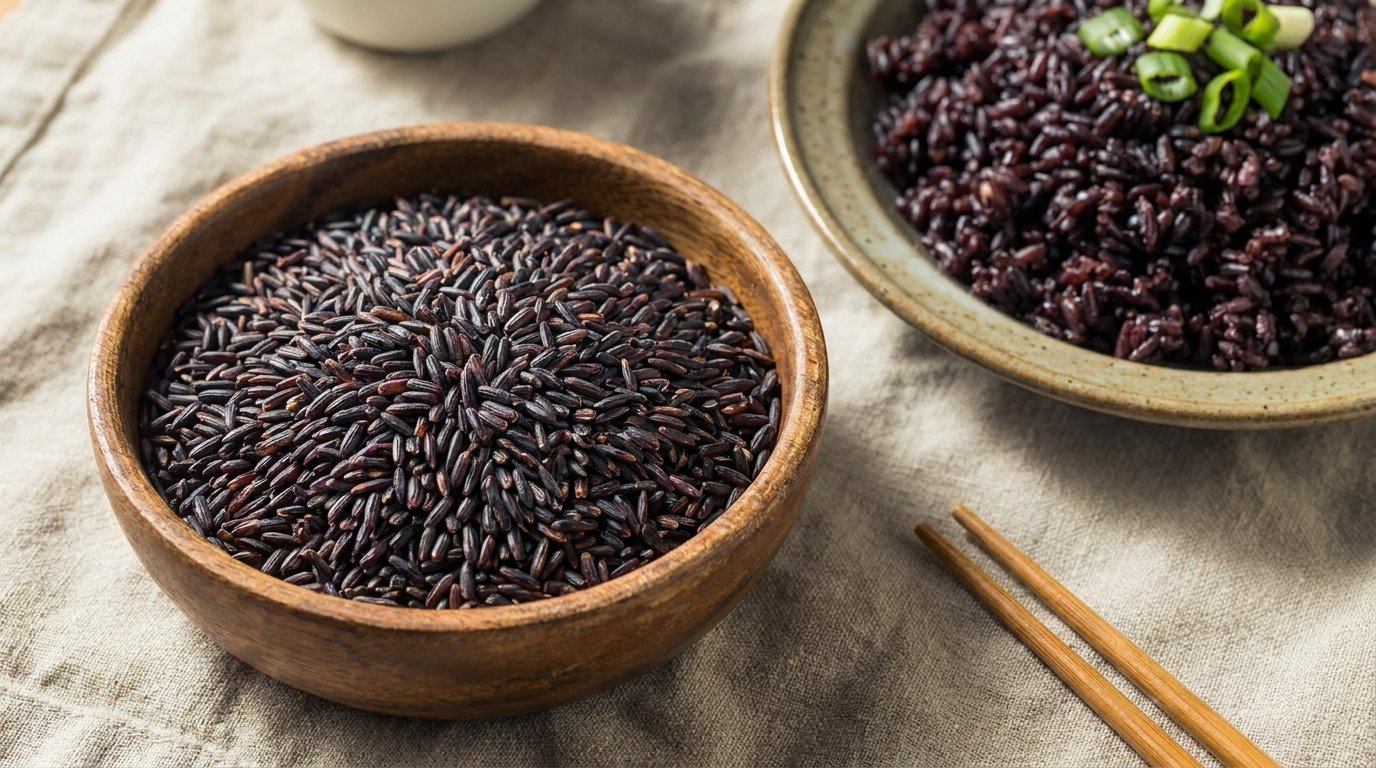
Black rice has moved from a specialty item to a genuine wholesale category in India over the last few years, and the number of businesses calling themselves a "black rice supplier" has grown just as fast. Some are growers or grower cooperatives working directly with paddy in Manipur or Chhattisgarh. Others are traders sourcing grain from wherever it's cheapest and repacking it under a fresh label. Both can end up on the first page of a search result, which makes it worth understanding what actually separates a reliable source from a reseller before you commit to an order.
Why the Right Supplier Matters More Than It Seems
Black rice is graded, marketed and sold almost entirely on things a buyer can't verify just by looking at a bag — where it was grown, how it was milled, and whether the label actually matches what's inside. Two suppliers can offer rice that looks nearly identical on a product photo and differ hugely in aroma, cook time, nutrient retention and, if it's being sold specifically as Manipur's Chak-Hao, the legal right to use that name at all.
Getting the sourcing question right at the start avoids re-doing due diligence after a container has already landed at port, or after a retail customer has already noticed the grain doesn't smell or cook the way it should.
Where Black Rice Is Actually Grown in India
Black rice cultivation in India isn't spread evenly across the country. It's concentrated in a handful of regions, with genuinely established, large-scale production in only one of them.
Black Rice Cultivation by Region
Bar lengths are an illustrative comparison of how established cultivation is in each region — not official production statistics. Treat them as a starting point for questions, not a sourcing decision on their own.
Manipur remains the only state where black rice cultivation carries a formal Geographical Indication tag, granted in 2020. That's one reason it's worth asking any supplier — regardless of where they're based — exactly which state their grain was grown in, rather than accepting "Northeast India" or "premium hill farms" as a full answer.
Manipur Chak-Hao vs. Black Rice From Other Sources
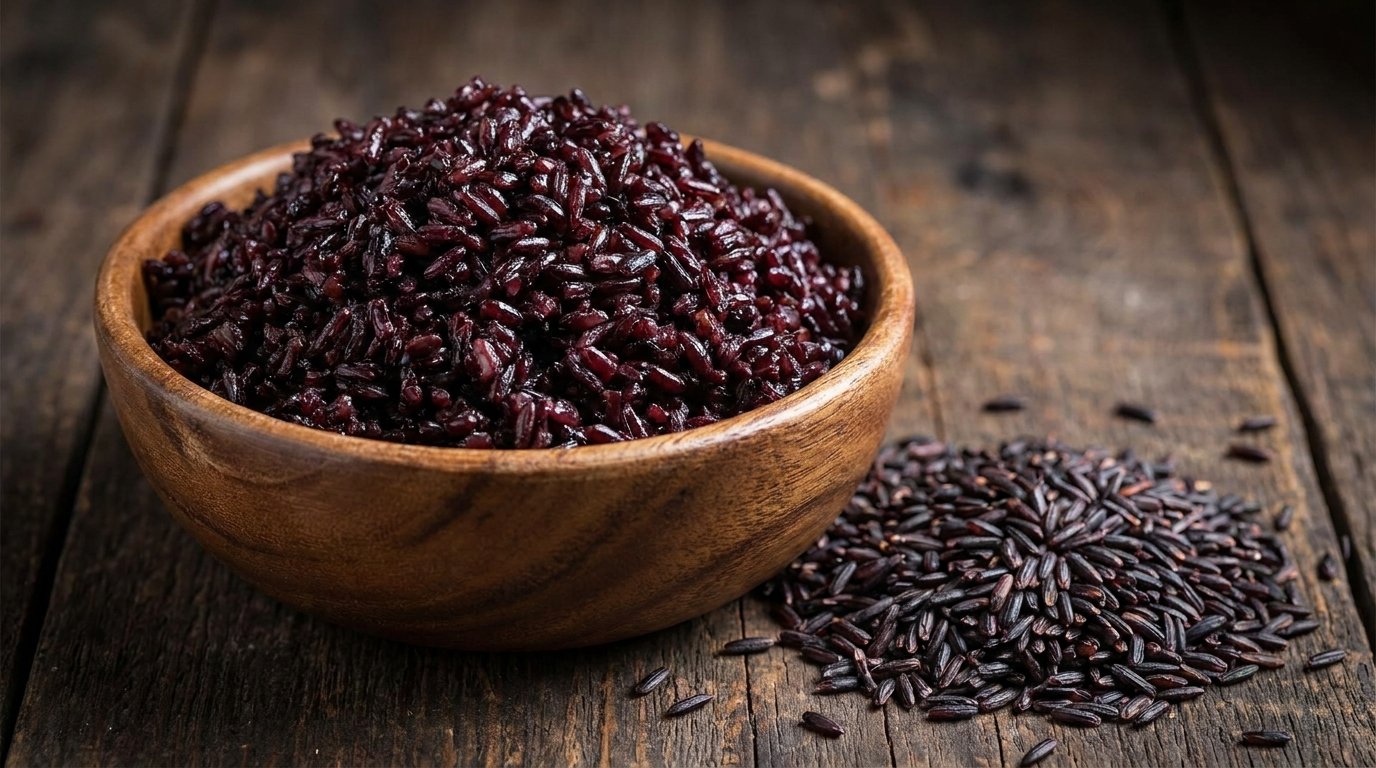
Not every black rice sold by an Indian supplier was actually grown in India, and not every Indian black rice was grown in Manipur. Knowing which category you're buying from changes what you should reasonably expect from the grain.
Manipur Chak-Hao (GI-Tagged)
Grown in the Imphal valley, aromatic and distinctly glutinous, and the only Indian black rice legally allowed to carry the Chak-Hao name. A supplier offering this should be able to point to GI documentation and a Manipur-based growing origin.
Black Rice From Other States
Chhattisgarh, Odisha and a few other states grow their own black and purple rice varieties, often through local cooperatives or agricultural startups. It's a legitimate product on its own terms — it simply isn't Chak-Hao, and shouldn't be labelled that way.
Imported Grain, Repacked Domestically
Some "Indian" black rice sold online is imported, commonly from China or Southeast Asia, and repackaged after arrival. That isn't dishonest by default, but it should be disclosed clearly, and it should never be sold under a Manipur-specific name.
How Black Rice Compares Nutritionally
One reason black rice commands attention from bulk buyers is nutrition, not just novelty. Because the bran layer is largely left intact during milling, black rice retains far more of the pigment, fibre and protein that polishing strips out of white rice.
Relative Nutrient Comparison — Black, Brown & White Rice
Illustrative relative comparison based on published nutrition research, not exact laboratory figures for any single batch. Actual values vary by variety, milling degree and growing conditions.
The difference in antioxidant content isn't subtle. The anthocyanin pigment responsible for black rice's colour is essentially absent from white rice and present in only trace amounts in most brown rice, which is part of why buyers in the health-food and nutraceutical space specifically seek out black rice rather than substituting a cheaper whole grain.
What Separates a Genuine Supplier From a Reseller
None of these signals are hard to check for, but they're the ones that consistently separate a supplier who actually handles the grain from one who's simply forwarding an order to somebody else.
- Names the exact growing region and season, rather than a vague phrase like "premium hill farms" or "Northeast India."
- Sends a sample before asking for a bulk commitment, and doesn't push back on a reasonable sample request.
- Explains milling and polishing practices in specific terms, rather than just quoting "unpolished" or "handpicked" as a marketing line.
- Has documentation ready — licensing, GI reference, organic certificate — without needing to be chased for it repeatedly.
- Is upfront about lead times and current stock, rather than promising unlimited quantity on demand regardless of season.
Certifications & Documentation a Credible Supplier Should Offer
Certification requirements depend on whether you're buying domestically or importing, but a few documents are worth asking about no matter the order size.
FSSAI License
The baseline food-safety licence for any business selling food in India. A supplier without one shouldn't be handling food-grade grain at all.
APEDA Registration
Required for exporting agricultural products from India. If a supplier claims export capability, this registration is what backs that claim up.
GI Documentation (Chak-Hao)
Relevant only when the grain is sold specifically as Chak-Hao. The supplier should be able to show how their product connects back to the registered GI.
Organic Certification (NPOP)
If "organic" appears anywhere on the packaging or listing, ask for the NPOP certificate rather than taking the claim at face value.
Phytosanitary Certificate
Confirms the shipment meets plant-health requirements for cross-border movement. Non-negotiable for any international order.
Certificate of Analysis
A lab report covering moisture, foreign matter and broken-grain percentage for the specific batch you're buying, not a generic spec sheet.
Quality Parameters Worth Asking About
Beyond paperwork, a handful of physical grain characteristics are worth confirming directly, since these are what actually determine how the rice cooks and how long it stores.
| Parameter | What to Ask About |
|---|---|
| Moisture content | Kept low enough to prevent spoilage in storage and transit; a supplier should be able to state a figure, not just say "dry." |
| Broken grains | Lower percentages matter more for retail-grade packaging; processing-grade orders can usually tolerate a higher share. |
| Foreign matter | Should be close to nil. Ask for a certificate of analysis if the answer is vague. |
| Milling degree | Lightly milled, so the bran layer — and the pigment inside it — stays largely intact rather than polished away. |
| Grain uniformity | Consistent grain length within a batch; mixed lengths cook unevenly and can signal blended stock. |
| Aroma | A distinct natural fragrance before cooking. A flat smell can point to old stock or a heavily blended product. |
How to Vet a Black Rice Supplier in 6 Steps
- 1Verify the growing origin. Ask exactly which state and district the rice came from, and request harvest-season details instead of accepting a generic regional answer.
- 2Request documentation. FSSAI licensing at minimum, APEDA registration for export orders, and GI documentation if it's being sold as Chak-Hao.
- 3Order a sample first. Check colour, aroma, moisture and broken-grain percentage against what was promised before committing to bulk.
- 4Ask about traceability. A credible supplier can usually connect a shipment back to a harvest batch or grower group, not just a stock number.
- 5Clarify packaging and lead times. Confirm available bag sizes, private-label options, and realistic timelines for both bulk and custom-packed orders.
- 6Check export experience. For international orders, ask about prior shipping lanes and familiarity with the destination country's import requirements.
Red Flags to Watch For
No documentation on request
A repeated "we'll send it later" for basic licensing or GI reference is rarely a scheduling issue.
Vague or shifting growing origin
An origin story that changes between conversations, or that stays deliberately general, is worth pausing on.
No sample before bulk order
A supplier unwilling to send even a small sample is asking for trust they haven't earned yet.
Unlimited stock, any season
Black rice is a seasonal monsoon crop. A supplier who never runs low, regardless of month, is worth double-checking.
Who Sources Black Rice From Indian Suppliers
Bulk buyers approach sourcing differently depending on what they're building, and it's worth knowing which category you fall into before you start comparing suppliers.
Retail & FMCG Brands
Need consistent grain quality batch to batch and packaging that holds up on a retail shelf, along with clear labelling around origin and certification.
HORECA & Food Service
Prioritise cook consistency and reliable lead times over packaging aesthetics, since the grain is going straight into a kitchen rather than onto a shelf.
Private Label Brands
Look for suppliers who can handle custom packaging and smaller production runs, alongside the same sourcing documentation as a bulk buyer.
Health-Food & Nutraceutical Companies
Care most about anthocyanin content and milling degree, and are usually the buyers most likely to ask for a certificate of analysis upfront.
Packaging, MOQ & Export Logistics
Most established suppliers can pack black rice across a range of formats — bulk PP or jute bags for further processing, and retail-ready pouches with custom branding for private-label buyers. It's worth confirming minimum order quantities and lead times for custom packaging separately from bulk raw grain, since the two often run on different production schedules.
Because Manipur is landlocked, shipments typically move by road to a nearer transport hub before onward routing for export, which can add lead time compared with rice grown closer to a port. A realistic timeline, stated upfront, is usually a better sign than a supplier who promises the fastest turnaround in every conversation.
Comparing black rice suppliers in India for a wholesale or export order? Get documentation and packaging options from our trade desk in minutes.
Frequently Asked Questions
The Bottom Line
"Black rice supplier in India" covers a wider range of businesses than the search results suggest — from grower cooperatives working a single valley in Manipur to traders repacking imported grain with a new label. The difference usually isn't visible in a product photo. It shows up in the documentation a supplier can produce, the sample they're willing to send before you commit, and how specific they can get about where the rice actually came from. Asking those questions early costs a few emails; skipping them tends to cost a lot more once a shipment has already arrived. For more on the flagship GI-tagged grain itself, read our complete guide to Manipur black rice (Chak-Hao), or get in touch with our trade desk to discuss a wholesale or export order.
Sources & Further Reading
- Food Safety and Standards Authority of India (FSSAI) — fssai.gov.in
- Agricultural and Processed Food Products Export Development Authority (APEDA) — apeda.gov.in
- Geographical Indications Registry, Intellectual Property India — ipindia.gov.in