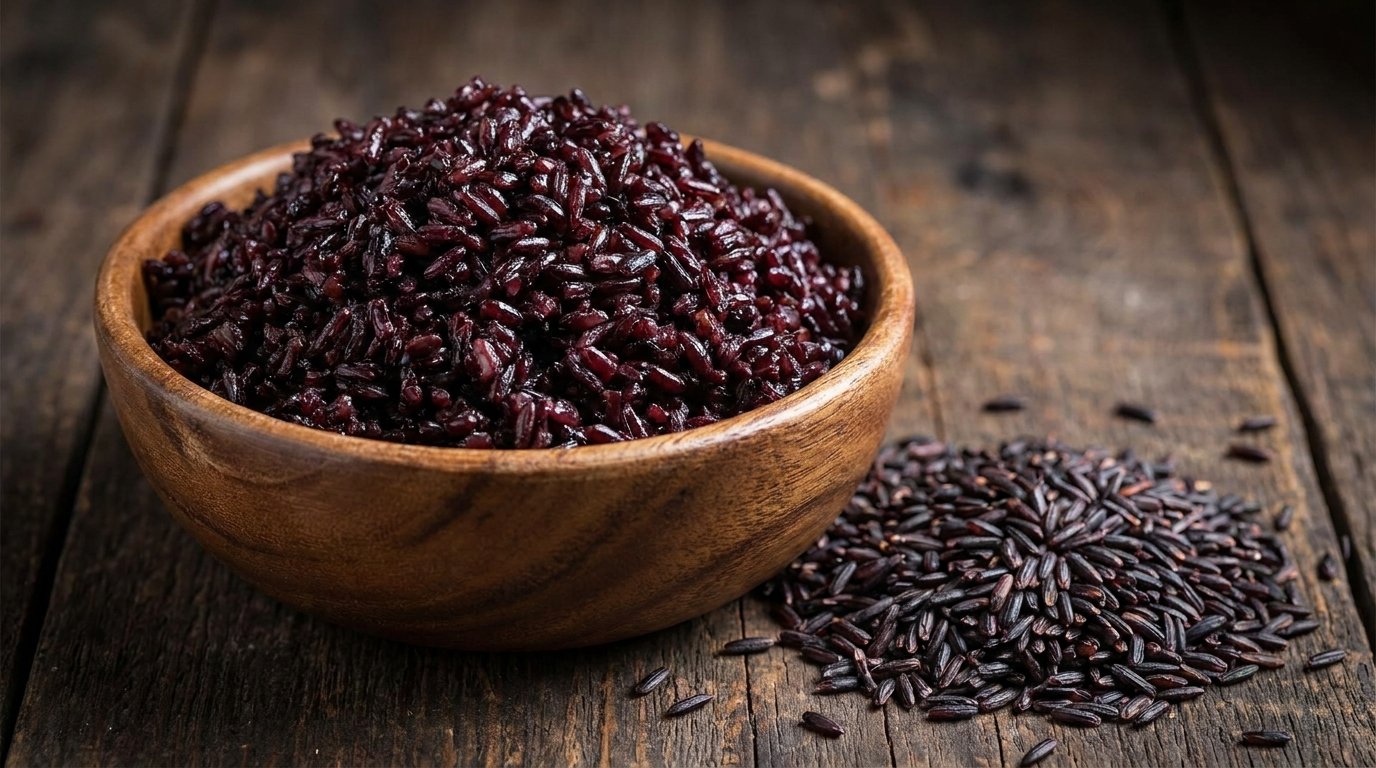
Search for "black rice variety in India" and you'll quickly notice the answer isn't as tidy as it first seems. There isn't a single black rice grown across the country — there's a scattered family of landraces, each shaped by its own soil, rainfall and generations of farmer selection. This guide sorts through that family properly: every black rice variety grown in India, how they differ from one another, and why Manipur's Chak-Hao keeps getting singled out as the best black rice in the world.
Quick Answer: What Black Rice Variety Is Grown in India?
India grows several black rice varieties, not one. The headline name is Chak-Hao Amubi, farmed in Manipur's Imphal valley and the only Indian black rice with legal Geographical Indication protection. Alongside it sit regional landraces like Kalabati (Odisha), Karuppu Kavuni (Tamil Nadu), Kola Bora (Assam) and Kalabhat (Maharashtra), plus smaller plantings in West Bengal, Jharkhand, Karnataka and now Uttar Pradesh. Of all of them, Chak-Hao is the variety most widely regarded as the best black rice in the world.
The rest of this guide breaks that answer down properly — what actually separates one black rice variety from another, where each one is grown, and how Manipur's Chak-Hao stacks up once you look past the shared black colour.
What Actually Makes a Rice Variety "Black"?
Every black rice variety belongs to the same species as ordinary white and brown rice, Oryza sativa. What sets them apart is a single trait bred into the bran layer: a heavy concentration of anthocyanins, the same pigment family that colours blueberries, purple cabbage and aubergine skin. Different landraces carry different amounts and shades of that pigment, which is part of why one region's black rice can look, smell and cook so differently from another's grown just a few states away.
Because the bran is left mostly intact rather than polished off, every black rice variety keeps more fibre and nutrients than white rice — but the resemblance mostly ends there. Some varieties are sticky and glutinous when cooked; others stay firm and separate. Some carry a natural aroma; others are close to scentless. That variation is exactly why lumping "black rice" together as one thing misses the point — and why the specific variety matters more than the colour alone.
Every Black Rice Variety Grown in India
Black rice needs warm, humid conditions and a fairly long growing season, so its cultivation in India stays concentrated in wetter, monsoon-fed pockets rather than spreading evenly across the map. Here's how the country's main varieties compare:
Chak-Hao Amubi
Grown across the Imphal valley. Large, aromatic, glutinous grain — the only Indian black rice with a GI tag, and the variety behind most exports labelled "Manipur black rice."
GI ProtectedKalabati
A single-season Kharif crop, firmer and milder-scented than Chak-Hao, traditionally grown in tribal belts of the state's interior districts.
Karuppu Kavuni
Deep roots in Tamil cuisine, almost always cooked into a sweet, milk-based payasam rather than served as a plain side.
Kola Bora
Grown in pockets of Goalpara and Nagaon districts. A newer, smaller-scale crop than Manipur's, but expanding as more farmers take it up.
Kalabhat
Preserved mainly by native-seed conservation farms in the Konkan belt rather than large commercial growers.
Indigenous black paddy
Long considered part of black rice's native range in eastern India, though grown in small, largely local quantities.
Heritage black landraces
Kept alive largely through native-seed conservation networks rather than mainstream commercial cultivation.
Emerging black rice
Districts such as Chandauli and Sonbhadra have started planting black rice in recent years, chasing rising demand for the grain.
EmergingEight regions, eight different growing stories — and only one of them, Manipur, has turned its black rice variety into a legally protected, internationally recognised identity.
Inside the Chak-Hao Family: Manipur's Own Variety Cluster
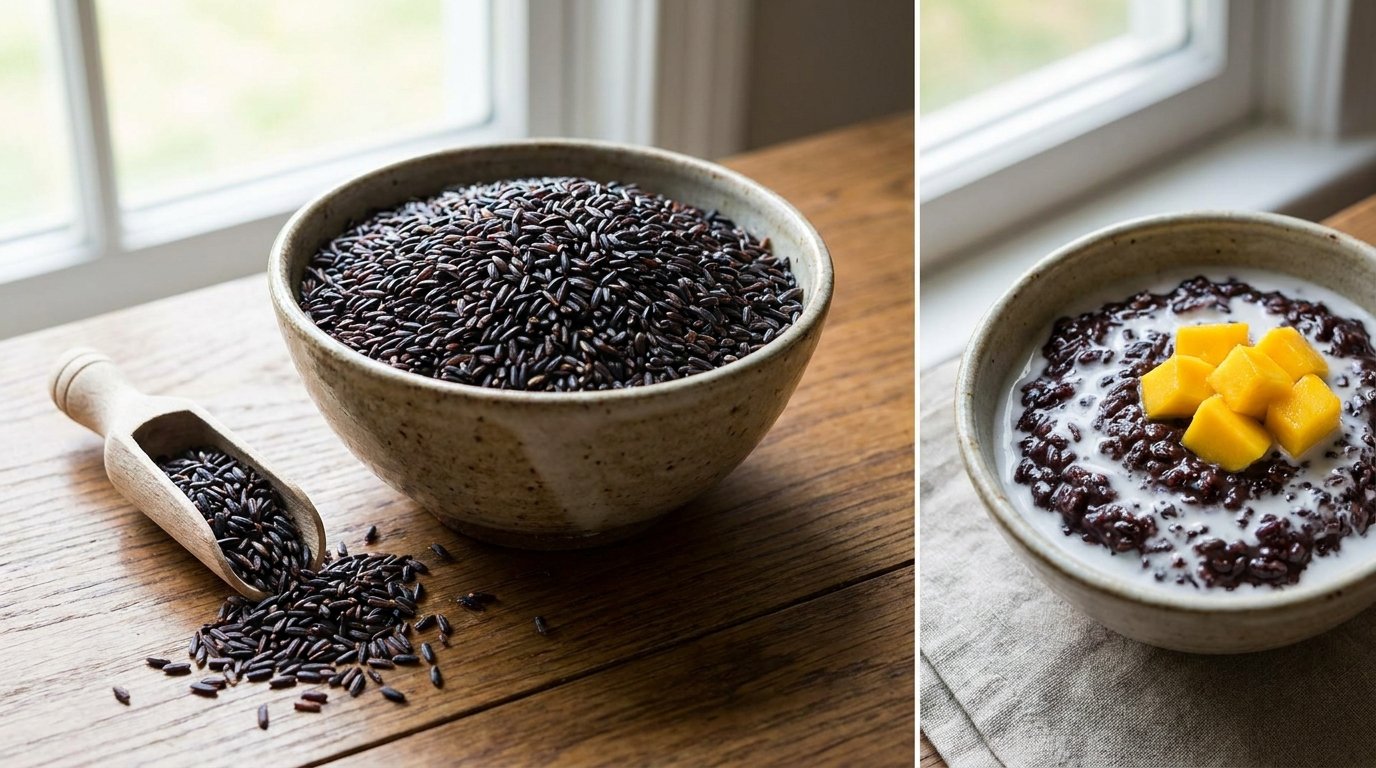
Here's a detail that gets missed in most "which state" answers: even within Manipur, black rice isn't a single variety either. Chak-Hao is really a small cluster of related landraces. The two headline members are Chak-Hao Amubi, the deep black grain most people picture, and Chak-Hao Poireiton, a purple-toned sibling named after the legendary Meitei king Poireiton. Both are grown by the same smallholder farmers, harvested from the same valley, and used in overlapping ways — but they're genetically and visually distinct landraces, not two names for one grain.
Manipuri oral history places Chak-Hao at weddings, community feasts and festivals such as Lai Haraoba, rather than on the everyday dinner plate. What sets the family apart from other Indian varieties on the plate is a combination of a natural aroma that develops as it cooks and a stickier, more glutinous bite than most black rice grown elsewhere in the country.
Where India's Black Rice Actually Comes From
There's no single, independently audited production census that breaks India's black rice output down state by state — most of what's grown moves through small, local supply chains rather than centralised mandis. But based on how cultivation is documented region by region, here's a rough illustrative picture of where the country's black rice varieties are concentrated:
Illustrative Regional Split of India's Black Rice Cultivation
Approximate distribution across growing regions, not an audited production figure
This split reflects how consistently each region's black rice appears in agricultural documentation and trade — not a verified tonnage count, since no official state-wise figure for India's black rice exists publicly.
Manipur's Chak-Hao vs. Black Rice Varieties From the Rest of the World
India isn't the only country growing black rice. China's "forbidden rice," Thailand's black jasmine rice, Indonesia's ketan hitam and Italy's Venere rice are all well-known varieties in their own right — and by sheer volume, China grows far more black rice than any other country on earth. Scale, though, isn't the whole story. Once you compare the actual eating experience — aroma, stickiness, and how tightly the variety's identity is protected — Manipur's Chak-Hao holds up as more than a smaller player in a bigger field:
Chak-Hao Amubi: Comparative Strengths
How Manipur's variety is typically described relative to other black rice varieties worldwide
Consistently described as more fragrant than China's forbidden rice or Italy's Venere.
More glutinous than most firm-grain varieties like Chinese or Italian black rice.
Anthocyanin levels reported in independent lab testing rank among the highest of any black rice landrace studied.
The only black rice variety anywhere with a Geographical Indication tag protecting its name.
Scores are illustrative comparative indices based on descriptive characteristics reported in agricultural and food-science literature — not standardised laboratory measurements.
Put plainly: China still grows the most black rice by volume, and that's unlikely to change. But "most grown" and "best variety" aren't the same claim, and on aroma, texture and legal identity, Manipur's Chak-Hao is the variety most consistently pointed to as the best black rice in the world.
Nutrition: How India's Black Rice Varieties Compare to White and Brown Rice
Because black rice varieties keep their bran layer largely intact, the nutritional gap between them and polished white rice is where most of the grain's appeal comes from. Here's roughly how the three compare:
White vs. Brown vs. Black Rice (Chak-Hao)
Relative levels per typical serving — illustrative, based on published nutrition research
Bar heights represent relative levels, not exact lab measurements — actual values vary by harvest, milling and preparation. The antioxidant gap is the clearest one: it comes almost entirely from the anthocyanin-rich bran that white rice loses during polishing.
Health Benefits Worth Knowing About
None of this makes black rice a substitute for medicine, but there's a reasonable body of nutrition research pointing to real advantages over refined white rice — advantages that apply across most Indian black rice varieties, not just Chak-Hao:
- Antioxidant support. The anthocyanins packed into the bran show strong antioxidant activity in laboratory studies, helping counter the free radicals linked to cellular ageing.
- Steadier blood sugar. The fibre and starch structure in black rice slows digestion, producing a gentler rise in blood sugar after eating compared with white rice.
- Heart-friendlier profile. Diets built around whole grains like black rice are generally linked to better cholesterol markers than diets heavy in refined grains.
- More filling. The extra fibre and protein digest more slowly, which tends to make a bowl of black rice feel more satisfying for longer.
- Naturally gluten-free. Like every rice variety, black rice contains no gluten, making it a safe whole-grain choice for people avoiding it.
Sourcing a genuine Indian black rice variety for retail, food service or export? Our trade desk can walk you through packaging, certifications and documentation.
The GI Tag: What Legally Separates Chak-Hao From Every Other Variety
Of every black rice variety grown in India, only one carries formal legal protection. Chak-Hao received a Geographical Indication tag on 20 April 2020, after the Consortium of Producers of Chak-Hao filed the application with backing from Manipur's Department of Agriculture and NERAMAC, the region's agricultural marketing body. In practice, that means the name "Chak-Hao" can legally be used only for black rice actually grown within the registered zone — the same principle that protects names like "Darjeeling tea."
A detail that often gets left out: the registered zone also extends to the Peren district of neighbouring Nagaland, so the legal GI boundary isn't limited to Manipur alone. Even so, the overwhelming majority of Chak-Hao cultivation — and virtually all of its cultural identity — stays centred on Manipur's Imphal valley, which is exactly why no other Indian black rice variety has managed to build the same recognised, exportable identity.
How to Spot a Genuine Black Rice Variety When You Buy
Since more than one variety now shares the "black rice" label, buying well mostly comes down to confirming which one you're actually getting, rather than assuming any dark-coloured rice is interchangeable:
Named state of origin
A bag that specifies Manipur, or references the Chak-Hao GI tag directly, is a stronger signal than one that just says "black rice, product of India."
Colour and finish
Genuine Chak-Hao looks deep, even purple-black with a matte bran layer — not a glossy, over-polished shine that suggests heavy processing.
Aroma before cooking
Authentic Manipuri black rice carries a natural scent even raw. A completely odourless bag often signals blending or a different-origin variety.
A supplier who can answer
Ask which state and district the rice came from. A reputable seller should name it specifically — "Manipur" or "Imphal valley" — not a vague "north-east India."
Does Cooking Change by Variety?
Yes — noticeably. Because each variety carries a different amount of bran and a different starch structure, water ratios and cooking times shift from one region's black rice to another. As a rough starting point:
Whichever variety you're cooking, two habits help every time: rinse the grain two or three times until the water runs mostly clear (some pigment bleed is normal), and soak it for a few hours or overnight if you have the time — it softens the thick bran layer and shortens the cooking time noticeably.
Frequently Asked Questions
The Bottom Line
So, what black rice variety is grown in India? More than one — Kalabati in Odisha, Karuppu Kavuni in Tamil Nadu, Kola Bora in Assam and several smaller regional landraces all carry the name. But none of them have built the same aroma, texture, cultural history and legal protection into a single grain the way Manipur has with Chak-Hao. Globally, China still grows more black rice by volume than anyone, but scale and character aren't the same measure — and on character, Manipur's Chak-Hao remains the black rice variety most consistently called the best in the world. For more on the grain itself, see our guide to which state grows black rice, or explore the nutrition and buying options for our own Chak Hao.