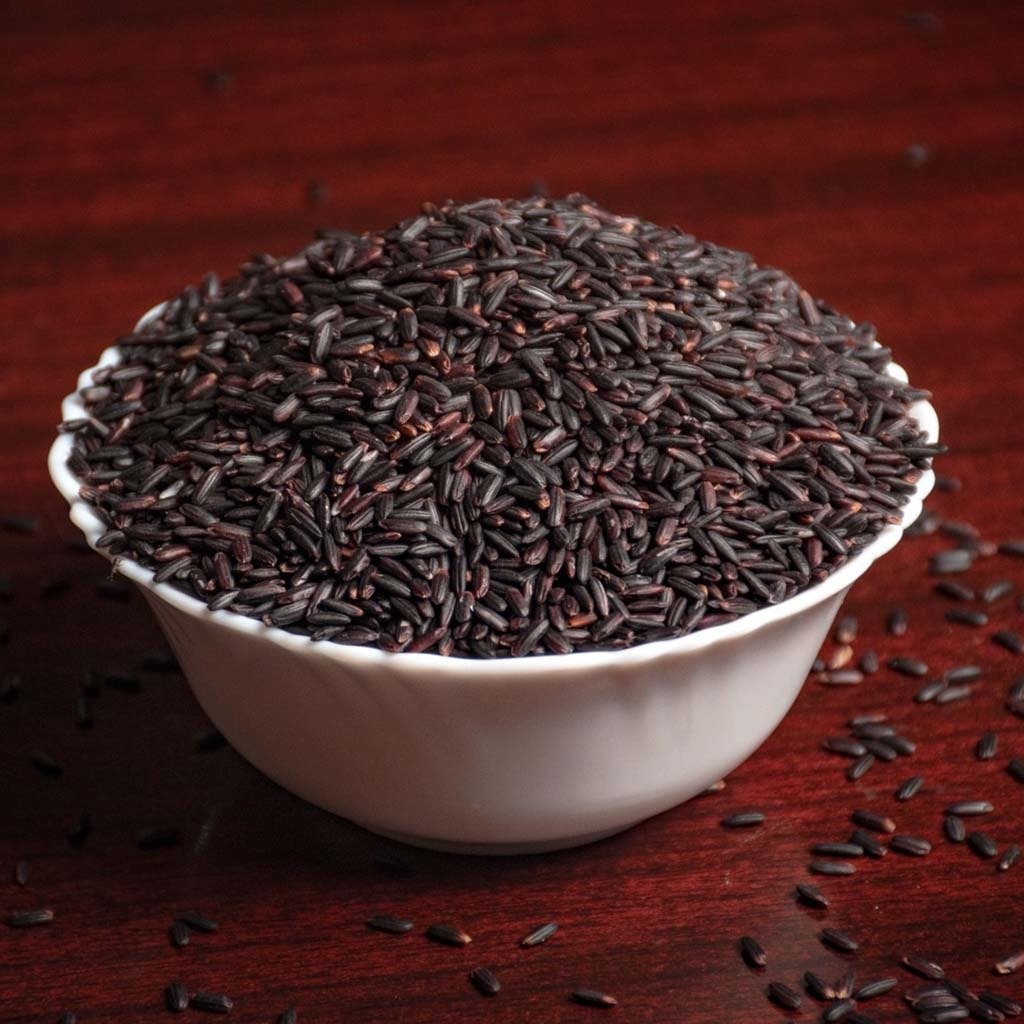
Search "black rice wholesale supplier" and you'll find everything from small home-based repackers to large export trading houses, all using roughly the same language to describe very different businesses. Some of them grow the rice themselves. Some buy it from a broker who bought it from another broker. A few can tell you exactly which valley, which season and which lot your order came from — and a few can't get much more specific than "India." This guide is about telling those apart: what wholesale black rice sourcing actually involves, what a supplier worth working with should be able to show you, and where Manipur's GI-tagged Chak-Hao fits into that picture.
What Is a Black Rice Wholesale Supplier?
A black rice wholesale supplier sells black rice in bulk, business-to-business, rather than in small retail packs to individual shoppers. That's the plain definition, but it doesn't say anything about quality, origin or reliability — which is exactly why the term gets used so loosely. "Black rice" isn't one grain; it's an umbrella label covering several unrelated rice families grown in different countries, including Chinese forbidden rice, Thai and Indonesian black glutinous varieties, and Manipur's Chak-Hao. A supplier could be sourcing any one of these, blending several together, or simply reselling whatever black rice happened to be available that season.
For a buyer, that ambiguity is the real risk. Two companies can both advertise themselves as a "black rice wholesale supplier" while offering grain that differs completely in aroma, stickiness, nutrient retention and, increasingly, the legal right to use certain regional names. Before comparing order sizes, packaging or lead times, it's worth pinning down which black rice a supplier is actually selling — and where it was grown.
Why Origin Matters at Wholesale Volume
At retail scale, a vague origin claim is a minor letdown for one customer. At wholesale scale, the same claim scales with the size of your order. If you're reselling under your own brand, supplying a hotel or restaurant group, or exporting into a market with its own labeling rules, the sourcing claims your supplier makes to you effectively become the claims you're making to everyone downstream of you.
This is where Manipur's Chak-Hao has an edge that most black rice on the wholesale market doesn't: a Geographical Indication (GI) tag, granted in 2020, that legally restricts the name to rice actually grown in Manipur. A GI tag doesn't automatically make every supplier trustworthy, but it does give a wholesale buyer something concrete to verify — a registered name tied to a specific place, rather than a marketing description that could be attached to any black rice at all.
Wholesale Supplier Types, Compared
Wholesale suppliers tend to sit at one of three points in the supply chain, and each comes with its own trade-offs. None is automatically the "right" choice — a fast-moving private-label brand and a specialty retailer buying small, fully-traceable lots often want different things from a supplier.
- Farm-gate / GI-registered grower cooperative. Sources rice directly from Manipur paddies, sometimes under its own GI registration. Closest link to origin, but often smaller volumes and longer lead times.
- Trading house / aggregator. Consolidates grain from multiple growers or regions to offer flexible volume. Convenient for large or urgent orders, but traceability and consistency vary by aggregator.
- Private-label repacker. Buys already-milled rice and focuses on packaging, branding and turnaround rather than growing or sourcing directly. Fast for launching a new SKU, but the weakest link back to origin unless it can show its own upstream sourcing documents.
Sourcing Channel Scorecard
A general guide to how each channel tends to perform on the things wholesale buyers usually care about most. Individual suppliers vary — always verify directly rather than assuming from the category alone.
Farm-Gate / GI-Registered Grower Group
Trading House / Aggregator
Private-Label Repacker
None of these categories is inherently better across the board. A private-label repacker with strong sourcing documentation from its own suppliers can be perfectly reliable, and a farm-gate cooperative can still struggle with a rush order. Treat the scorecard as a starting point for questions to ask, not a substitute for asking them.
What a Reliable Wholesale Supplier Should Offer
- Verifiable origin documentation. A GI registration reference, farm or cooperative details, or another concrete way to confirm where the rice was grown.
- Batch-level traceability. The ability to tie a specific shipment back to a specific harvest lot, not just a general country or region of origin.
- Consistent grain quality. Similar color, size and moisture content from one order to the next — inconsistency between batches is one of the most common complaints wholesale buyers have.
- Flexible packaging formats. Bulk sacks for distributors, and retail-ready or private-label options for brands, without forcing every buyer into the same format.
- A transparent MOQ policy. A clear answer to "what's your minimum order," rather than a vague "it depends" with no follow-up detail.
- Willingness to send samples. A supplier confident in its product should have no issue sending a trial quantity before you commit to a larger order.
- Real export experience. Comfort discussing shipping documents, Incoterms and destination-country requirements, not just domestic sales.
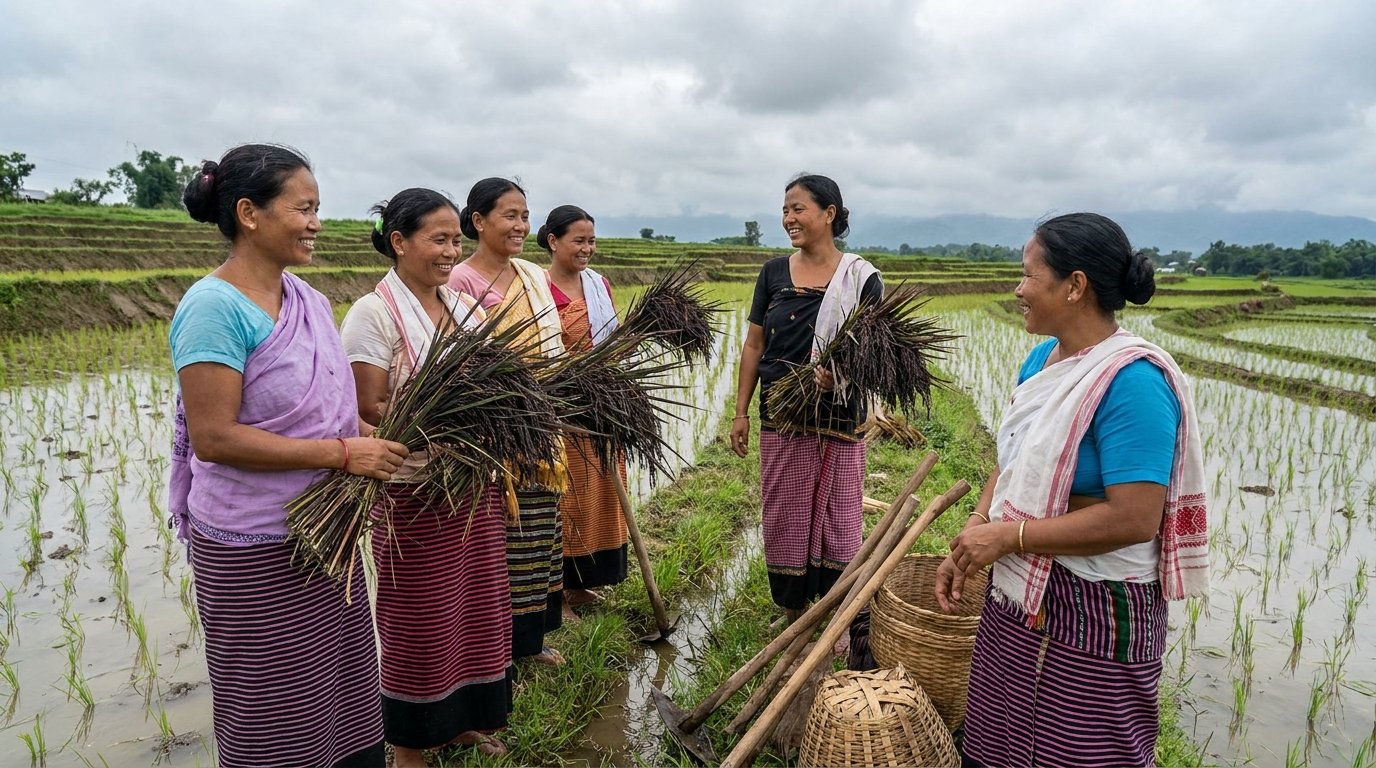
Certifications & Compliance for Bulk Buyers
None of this paperwork guarantees a good product on its own, but its absence is one of the fastest ways to spot a supplier who isn't set up for serious wholesale business.
- FSSAI license. Required for food businesses operating in India, including suppliers selling rice domestically or preparing it for export.
- APEDA registration. India's Agricultural and Processed Food Products Export Development Authority registration is standard for legitimate agricultural exporters.
- Organic certification. Look for a recognized certifying body rather than an unverified "organic" label, especially if you plan to resell into a market with its own organic standards.
- GI registration reference. For genuine Chak-Hao specifically, a supplier should be able to point to its standing within the GI framework rather than just using the name.
- Phytosanitary certificate. Issued per shipment for most international orders, confirming the grain meets the destination country's plant-health requirements.
- Lab test reports. Moisture content, foreign matter, broken grain percentage, and pesticide residue or heavy metal testing where the destination market requires it.
Need a supplier that can produce this documentation without back-and-forth? Our trade desk can share certifications and sample reports directly.
Milling Depth & Grain Consistency at Scale
Chak-Hao is milled lightly rather than deeply polished, which is what allows it to keep most of its bran and germ intact. At wholesale volume, the degree of milling matters more than it might seem: over-polish a batch and you strip away the anthocyanins and fiber that make the grain worth buying in the first place; under-mill it and you leave husk fragments that show up as inconsistent grain in a customer's bag. A supplier producing at scale needs to hold that milling setting steady across every batch, not just get it right once.
Milling Depth: Lightly Milled vs. Fully Polished
A conceptual illustration of how much of the bran layer is removed during milling — not a lab measurement. Actual retention depends on the mill's own settings.
germ
retained
Chak-Hao, lightly milled — most of the pigmented bran layer stays on the grain.
germ
retained
Conventional polished white rice — most of the bran and germ is milled away.
Bulk storage adds a second variable: moisture. Rice kept above roughly 14% moisture is far more prone to mold and insect activity during long storage or shipping, so a supplier moving container-scale volume should be actively managing and testing for this, not just bagging the grain and hoping for the best.
Packaging & Private-Label Options
Wholesale packaging generally falls into a few standard formats, and the right one depends on who's buying and what happens to the rice next.
- Bulk woven or PP sacks (25 kg, 50 kg). The default for distributors and food manufacturers who will repack the rice themselves.
- Jumbo (FIBC) bags. Used for full container loads where the rice will be handled by machine rather than by hand at the receiving end.
- Retail-ready pouches. Smaller, food-grade sealed bags sized for shelf sale, typically requested by brands buying wholesale to resell directly to consumers.
- Custom branding and printed labels. Available from suppliers set up for private label, usually with a minimum quantity per design and a lead time for artwork approval.
- Batch or lot coding. Printed or stamped codes that tie a specific pack back to a harvest lot — worth asking for even on stock packaging, since it's what makes traceability actually usable later.
Typical Wholesale Order Tiers
Most wholesale suppliers structure their offering around a handful of order tiers, each suited to a different kind of buyer and a different point in a business's growth.
Order Scale by Buyer Type
Illustrative scale, not an exact ratio — actual thresholds vary by supplier and packaging format.
Sample orders exist to let you check quality before you commit to anything larger — treat any supplier who resists sending one as a signal to ask why. Distributor and container-level orders usually move by sea freight, while smaller restock orders are more often shipped by air or domestic courier when speed matters more than cost.
The Wholesale Ordering Process, Step by Step
Enquiry & sample request
Share your target volume, packaging needs and destination so the supplier can quote accurately, and request a sample before discussing anything further.
Sample review
Check the sample against your own standards, and ask for the accompanying lab report so you know it reflects what a full batch will actually look like.
Terms & quotation
Confirm MOQ, packaging format, lead time and shipping terms (such as FOB or CIF) before any purchase order is raised.
Purchase order & agreement
Put the agreed specification, quantity and packaging in writing, so both sides are working from the same reference point.
Production, packing & inspection
The supplier packs to your specification; for larger orders, a pre-shipment inspection is worth arranging independently rather than relying solely on the supplier's own sign-off.
Documentation & dispatch
Export paperwork is prepared and the shipment moves out — this is the stage where a supplier's actual export experience shows, one way or the other.
Delivery & reorder feedback
Confirm the shipment matches the sample and agreement, and use that feedback to refine the next order rather than starting the vetting process from scratch each time.
Export Documentation & Shipping Basics
Rice generally falls under HS code 1006 in most customs systems, though the exact subheading can vary by country and by how the rice is processed. Beyond the HS code, a handful of documents come up in nearly every international bulk order:
- Commercial invoice & packing list. The baseline documents for any cross-border shipment, listing value, quantity and packaging detail.
- Certificate of origin. Confirms the country the rice was grown or processed in, which can affect duties and eligibility under trade agreements.
- Phytosanitary certificate. Verifies the shipment meets the destination country's plant-health import requirements.
- Fumigation certificate. Required by some destination countries for grain shipments, particularly for container loads.
- Agreed Incoterm. Terms like FOB, CIF or EXW determine exactly where responsibility for freight, insurance and risk shifts from supplier to buyer.
Sea freight, as a full container load (FCL) or shared less-than-container load (LCL), is the standard for distributor and export-scale orders, while air freight covers smaller or time-sensitive shipments at a higher cost per kilo.
Red Flags to Watch For
- No samples, no lab reports. A supplier unwilling to send either before you commit to an order is not one to commit to.
- Vague origin claims. "Sourced from Northeast India" without a specific state, district or GI reference is worth pressing on further.
- Unclear MOQ or packaging policy. If a supplier can't describe its own order tiers clearly, expect that same vagueness to carry through the rest of the relationship.
- No export documentation experience. Hesitation or confusion around Incoterms, certificates of origin or phytosanitary requirements usually means you'll be doing that homework yourself, under time pressure.
- Quotes that swing wildly with no explanation. Large, unexplained variation between quotes for the same specification is often a sign of undisclosed differences in grain quality or origin.
Frequently Asked Questions
The Bottom Line
"Black rice wholesale supplier" describes a business model, not a guarantee of quality or origin — and at bulk volume, that distinction is worth more than it looks. The suppliers worth working with are the ones who treat traceability, certification and documentation as routine rather than an inconvenience: they'll send a sample without being asked twice, explain their own supply chain in plain terms, and handle export paperwork like something they've done many times before. For Manipur Chak-Hao specifically, a GI reference and clear batch traceability are the closest thing to a guarantee you'll get. To go further, explore our complete guide to Manipur black rice, or reach out to our trade desk directly.
Further reading
- Wikipedia — Chak-Hao black rice
- Press Information Bureau, Government of India — Manipur unveils high-yielding black rice variety RC Manichakhao-1
- MyGov Blogs — GI-tagged agricultural products of Manipur
- APEDA — Agricultural & Processed Food Products Export Development Authority
- FSSAI — Food Safety and Standards Authority of India