
Most people who type "buy black rice in bulk" into a search bar aren't looking for a recipe — they're looking for a supplier they can actually order from at volume. That's a different job: instead of comparing flavour notes, you're comparing minimum order quantities, packaging formats, certifications and lead times. We supply GI-tagged Manipur black rice, known locally as Chak-Hao, directly to wholesale and export buyers, and this guide covers exactly what we walk new buyers through before their first order goes out.
Who Buys Black Rice in Bulk
Bulk black rice buyers aren't one group — the reason for buying in volume changes what "the right order" even looks like. Here's roughly how the demand breaks down on our end:
Retail & specialty grocery
Chains and independent stores stocking a heritage or organic grain aisle, ordering enough to keep shelves full between restocks.
Hotels, restaurants & catering
Kitchens using it as a signature menu ingredient — often the single biggest recurring line item once it's on a menu.
Private label & D2C food brands
Brands that want to repack under their own label — usually the group with the most questions about packaging and certification.
Distributors & importers
Buyers reselling into a secondary market, ordering by the container and re-distributing to smaller regional accounts.
Health-food & nutraceutical brands
Companies building products around the anthocyanin-rich bran, usually starting with a smaller trial batch before scaling.
What "Buying in Bulk" Actually Means for Rice
"Bulk" gets used loosely, so it's worth separating two things: order volume and packaging format. A buyer placing their first wholesale order might mean anything from a 25 kg trial pallet to a 20-tonne export container — and the two require completely different lead times, paperwork and logistics. Packaging format is a separate decision on top of that: a distributor buying by the tonne might still want it split into 25 kg retail-ready bags rather than one giant sack. Working out which of these you actually need, before you request a quote, saves a lot of back-and-forth.
Chak-Hao vs. Other Bulk Black Rice Sources
Most black rice sold internationally is grown at scale in China or Southeast Asia and traded as a fairly interchangeable commodity. Chak-Hao works differently, and it matters for a bulk buyer specifically. Because the name is Geographical Indication–protected, "Chak-Hao" legally can't be applied to black rice grown outside Manipur — which lowers the risk of a wholesale lot being quietly blended or substituted somewhere down the supply chain, a real concern once you're ordering by the tonne rather than the bag.
The trade-off is volume. Chak-Hao is still grown mostly by smallholder farmers across a fairly small valley, on landraces that weren't bred for high yield the way commodity rice was. That means supply is real but finite, and it follows the harvest calendar closely rather than sitting in unlimited stock year-round — which is exactly why planning your order timing matters more here than it would for a generic grain purchase.
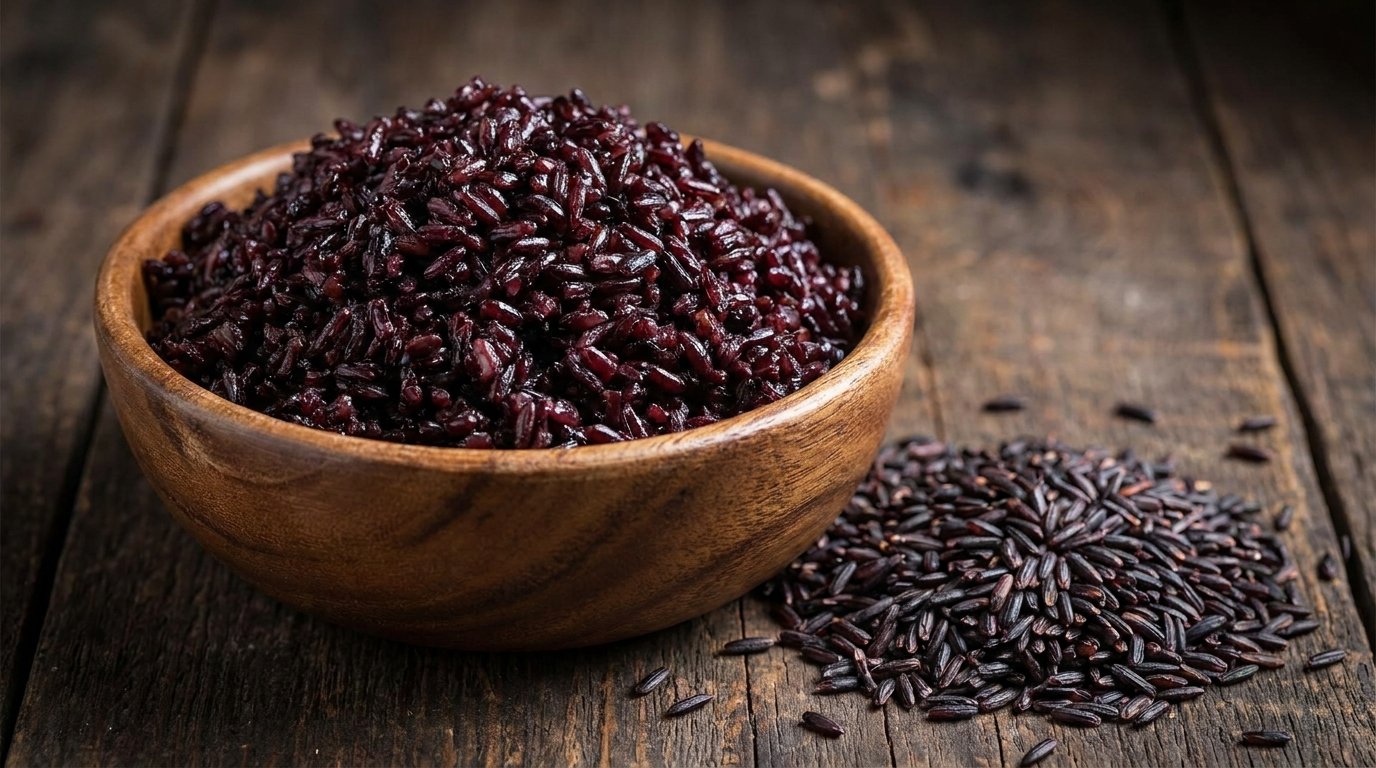
Quality Specifications to Check Before You Order
Before committing to a wholesale volume, it's worth knowing the handful of specs that actually determine whether a lot of black rice will perform well in storage and in the kitchen. These are the ones we'd expect any serious bulk buyer to ask about:
Typical benchmarks used to grade milled rice for bulk trade. Ask any supplier for a certificate of analysis or lab test report against these before confirming a large order.
Moisture is the one that catches most first-time buyers off guard. Rice milled and packed above roughly 14% moisture is far more prone to mould and pest activity once it's sitting in a warehouse for months, which matters a lot more at pallet or container scale than it does for a kitchen bag.
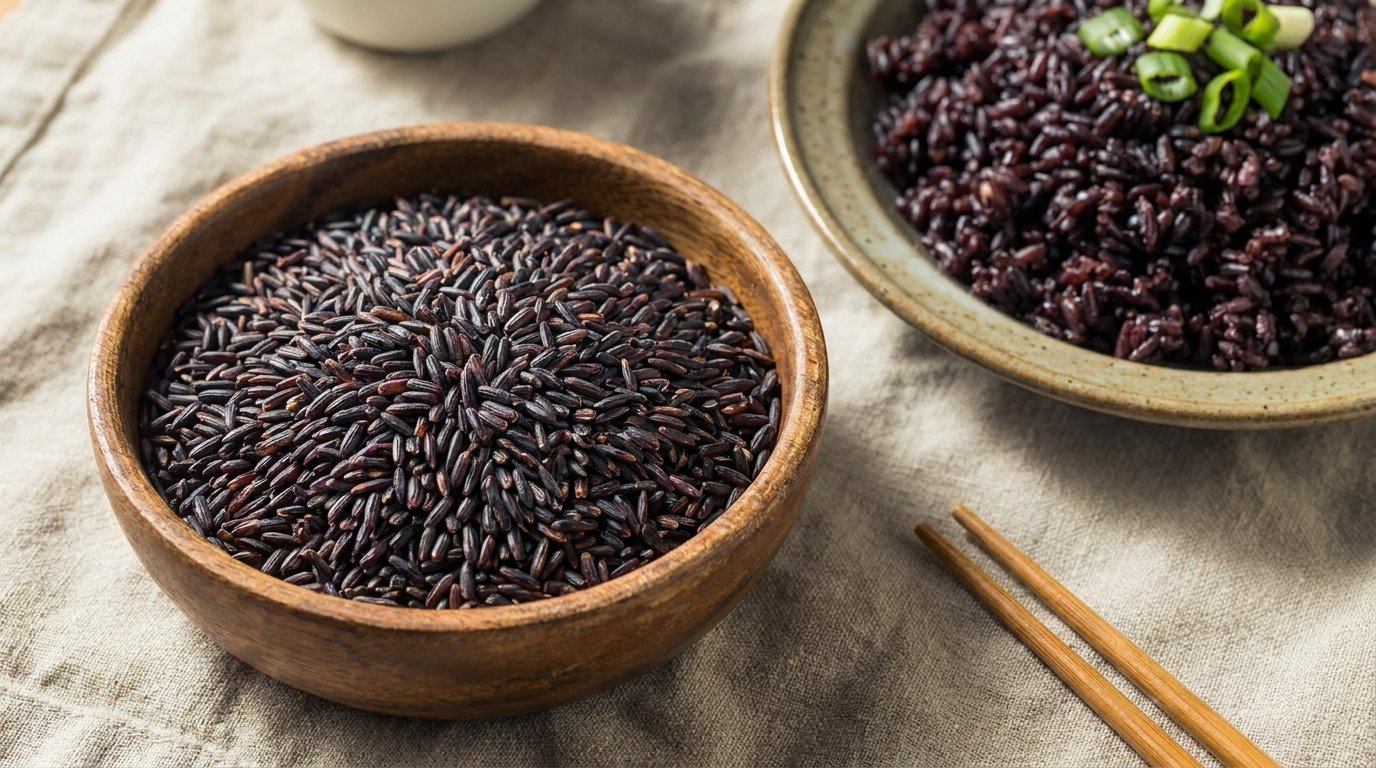
Order Tiers: From Sample to Full Container
We generally see bulk enquiries fall into three tiers. None of these are rigid — if you need something in between, our trade desk can usually structure it — but they're a useful starting point for figuring out where your order sits.
Trial Sample
- 1–5 kg, for quality evaluation
- Ships within a few days
- No wholesale commitment required
Wholesale & Retail Bulk
- 100 kg – 1,000 kg
- Typical lead time: 1–2 weeks
- Fits retail chains, HoReCa & private label
Export / Container Load
- 1 MT – 24 MT
- Lead time: several weeks, incl. documentation
- For distributors & importers
Bulk Packaging Formats
How the rice is packed matters almost as much as the volume itself, especially once it's travelling by pallet or container. We offer a handful of standard formats, plus custom options for buyers repacking under their own brand:
Wholesale bag
Standard PP-lined sack, the most common format for retail and HoReCa buyers.
Bulk sack
Traditional woven or PP format, still requested by many distributors.
FIBC jumbo bag
The standard unit for container-load and export orders.
Private label pouch
Smaller retail-ready pouches printed or sleeved to your own branding.
Because black rice's pigment fades gradually under light, every format we ship uses an opaque or light-blocking liner rather than clear packaging — worth checking for if you're sourcing from anywhere else, since it's an easy detail to miss on a spec sheet.
Certifications & Paperwork a Bulk Buyer Should Ask For
The single biggest difference between a smooth bulk order and a delayed one is usually paperwork, not the rice itself. Before confirming a large order, it's reasonable to ask any supplier for:
- GI / origin traceability documentation. Confirms the lot was actually grown within Manipur under the Chak-Hao GI protection, rather than sourced and relabelled.
- Organic certification, where relevant to your market — ask for the certificate tied to the specific lot, not a general claim.
- FSSAI licence or equivalent food-safety registration for buyers sourcing within India.
- Certificate of Origin and phytosanitary certificate for any order crossing an international border.
- A lab test report or certificate of analysis covering moisture, pesticide residue and basic contaminant screening, especially for container-scale orders.
Lead Times, Seasonal Stock & Storage
Because Chak-Hao is still a smallholder, monsoon-season crop, stock availability isn't flat across the year the way a commodity grain's might be. Paddy is transplanted around the monsoon and harvested later in the year, so fresh-milled stock is at its fullest shortly after harvest and gradually tightens as the next season approaches.
Illustrative stock rhythm across a typical year — exact availability shifts with each harvest, so it's worth checking in before placing a time-sensitive bulk order.
Once it arrives at your end, storing bulk stock well is mostly about keeping it cool, dark and dry, and rotating older lots out first. Pallets should sit off the floor rather than directly against concrete, and bags are best kept away from direct sunlight or damp walls — the same pigment that makes the rice valuable is also what fades fastest under poor storage conditions.
Private Labelling for Bulk & Wholesale Buyers
A good share of our wholesale enquiries come from brands that want to sell Chak-Hao under their own name rather than ours — a specialty grocer building a house-brand grain range, or a D2C food company adding it to an existing product line. For these buyers, we can pack into smaller retail-ready pouches carrying your own branding rather than our standard wholesale bags, on top of the base bulk order. It's generally the same underlying stock and grading, with the packaging run treated as a separate step once the bulk volume is confirmed.
How to Vet a Bulk Black Rice Supplier
Whether you order from us or elsewhere, a few checks go a long way before you commit to a pallet or container order:
Ask for documentation upfront
GI traceability, lab reports and any relevant certifications should be available before you place a large order, not after.
Request a sample first
A small trial pack lets you check aroma, cooking behaviour and pigment before a pallet-scale commitment.
Ask about lot-to-lot consistency
Because it's grown by smallholder farmers, quality can vary between harvest batches — a good supplier grades and blends to keep it consistent.
Confirm export & packaging capability
Make sure they can actually produce the format and paperwork your order needs — not every supplier packs FIBC jumbo bags or handles export documentation.
Common Mistakes First-Time Bulk Buyers Make
Most sourcing problems we see are avoidable, and they tend to repeat:
- Skipping the sample stage. Ordering a full pallet or container sight-unseen, then discovering the aroma or grain length isn't what was expected.
- Assuming all "black rice" suppliers are interchangeable. The name Chak-Hao is GI-protected for a reason — plenty of black rice sold as "Manipur black rice" outside the state isn't actually grown there.
- Not accounting for moisture content. A slightly damp lot can look fine on arrival and develop mould weeks later in storage.
- Ordering right before harvest season without planning ahead. Lead times stretch when stock is tightest, so time-sensitive orders need more notice at that point in the year.
- Leaving documentation until the last minute. Certificates of origin and phytosanitary paperwork can hold up customs clearance if they're not sorted before the shipment leaves.
Not sure which order tier fits your business? Send us your rough volume and packaging needs and we'll recommend a starting point.
Frequently Asked Questions
The Bottom Line
Buying black rice in bulk comes down to the same handful of questions every time: how much do you actually need, can the supplier prove where it's grown, does the packaging match how you'll store and sell it, and is the paperwork sorted before the order ships. Get those right and sourcing Chak-Hao at wholesale or export volume is straightforward — the grain itself, and the GI tag behind it, do most of the reassurance work for you. If you want the fuller backstory on the rice itself — its GI tag, nutrition profile and how it's traditionally cooked — see our complete guide to Manipur black rice, or reach out to our trade desk with your volume and we'll take it from there.