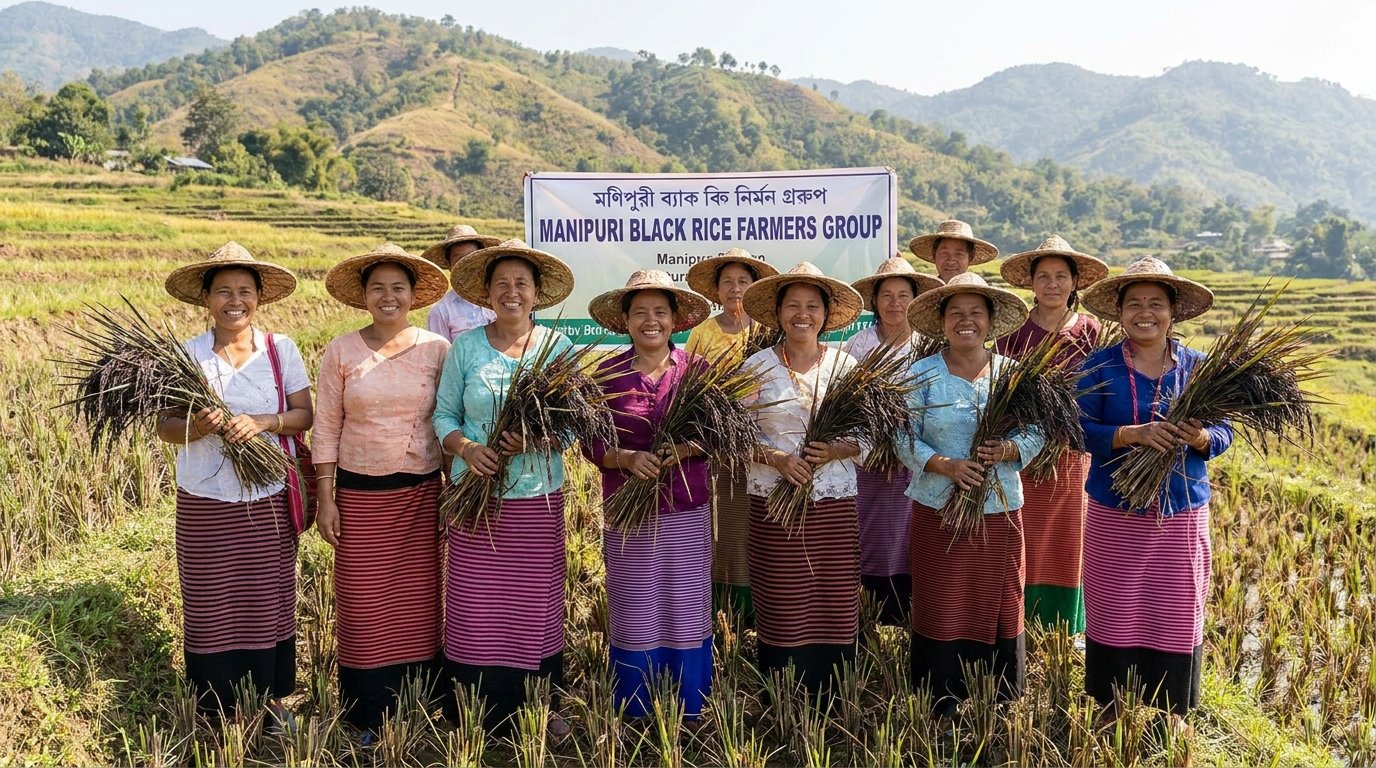
Type "Chak Hao black rice exporter" into a search bar and you'll find dozens of trading company listings, most of them reselling black rice of uncertain origin under a name that carries real legal weight. Because Chak-Hao holds a Geographical Indication tag, the exporter matters just as much as the grain itself: the name can only legitimately apply to rice grown within Manipur, by growers who can be traced back to that registration. This guide is written for wholesale buyers, private-label brands and specialty retailers who want to know what separates an authentic Chak Hao black rice exporter from a reseller of unrelated black rice.
Why Buyers Search for a Chak Hao Black Rice Exporter
Interest in Chak-Hao outside India has grown for reasons that have little to do with novelty. Specialty grocers and health-food brands are actively looking for heirloom, anthocyanin-rich grains with a genuine origin story to put on a shelf label, and a GI tag gives them exactly that — a legally defensible claim rather than a marketing one. Private-label buyers want a grain that's distinct enough to justify a premium retail placement without competing directly against the Chinese and Thai black rice already common in most markets. And hospitality buyers, particularly those building South and Southeast Asian menus, want the specific stickiness and aroma that makes Chak-Hao the right base for dishes like Chak-Hao Kheer.
All of that demand only holds up if the rice reaching the buyer is the real thing. That's the entire reason the phrase "Chak Hao black rice exporter" is worth searching carefully rather than picking the first listing that shows up.
What a Real Exporter Actually Does
Selling rice is the smallest part of the job. A working Chak Hao black rice exporter typically manages five things a buyer never sees directly: relationships with smallholder growers across the Imphal valley, quality control that catches broken grains and moisture problems before they become a shipment, batch-level lab testing, packaging built for the buyer's specific market, and the paper trail that lets customs on both ends clear the shipment without delay.
That's a meaningfully different operation from a general commodity trading firm that adds Chak-Hao to a catalogue of rice varieties it doesn't grow, test or trace itself. The difference usually shows up the first time a buyer asks a specific question about origin or certification — a genuine exporter answers it immediately; a reseller stalls.
The GI Tag Is the First Filter
Chak-Hao's Geographical Indication tag was granted in 2020, after the Consortium of Producers of Chak-Hao filed the application with support from Manipur's Department of Agriculture and NERAMAC, the region's agricultural marketing body. In practical terms, the tag does one specific thing: it legally restricts the name "Chak-Hao" to rice actually grown within the designated part of Manipur, the same protection mechanism that keeps "Darjeeling tea" tied to Darjeeling.
For an exporter, that legal protection is only useful if it's backed by real traceability. A trustworthy Chak Hao black rice exporter should be able to reference the GI registration and, ideally, point to the specific grower group or consortium the rice came from — not just print the name on a bag and hope the buyer doesn't ask further.
Where Genuine Chak-Hao Is Grown
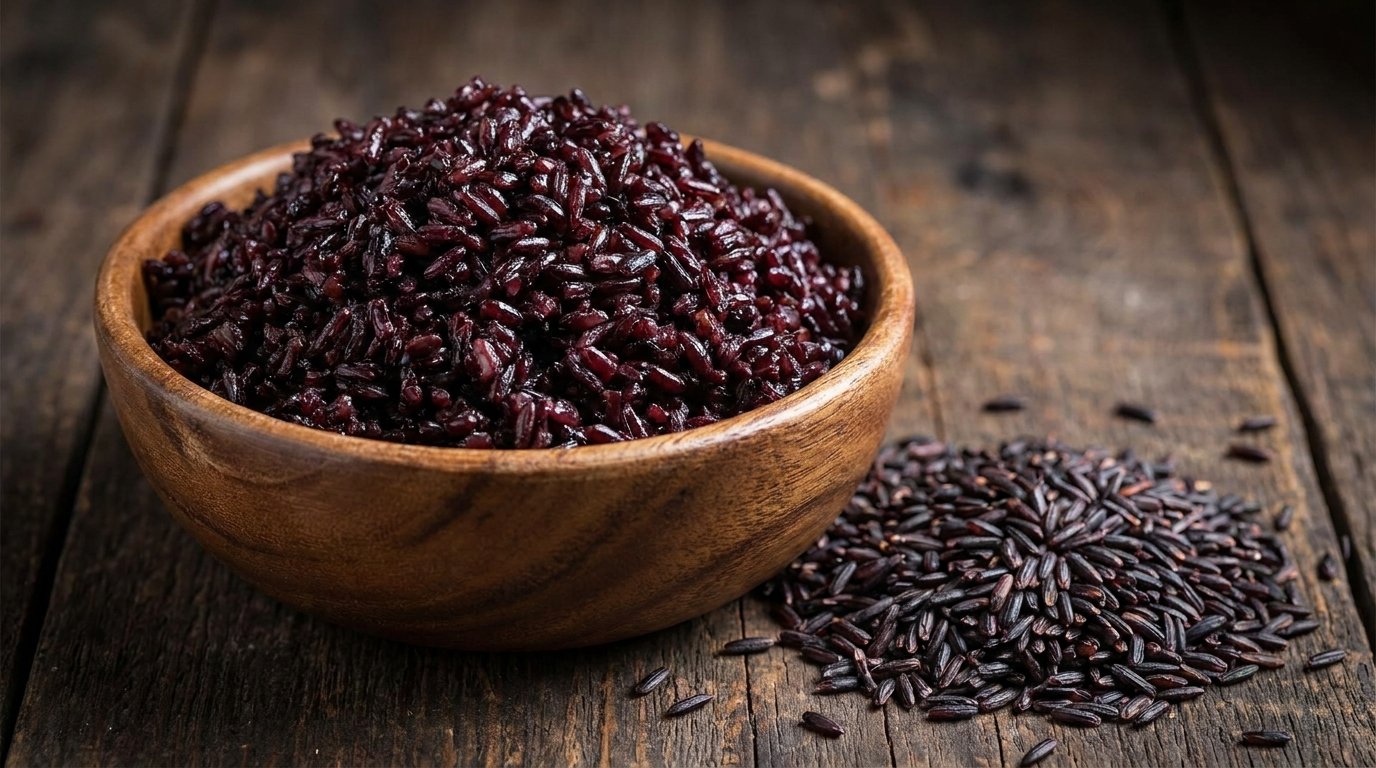
Authentic supply comes from the wetland valley around Imphal, concentrated in Imphal East, Imphal West, Bishnupur and Thoubal. Cultivation has stayed almost entirely smallholder — small, family-run paddies rather than large industrial farms — which keeps yields modest compared with commercial rice varieties bred for volume. That's a useful thing for a buyer to understand upfront: total supply is naturally limited by geography and by a single monsoon-season harvest, so an exporter who promises unlimited, any-time-of-year volume at short notice is worth questioning.
This is also why lead times and advance planning matter more with Chak-Hao than with commodity rice. A reliable exporter will generally be upfront about seasonal stock availability rather than treating it as a footnote.
From Paddy to Port: The Export Process
The path a shipment takes between a Manipuri paddy field and a buyer's warehouse involves more steps than most buyers expect. Here's roughly how it works with a properly run exporter:
Sourcing & aggregation
Paddy is procured directly from GI-registered growers across the Imphal valley districts, rather than blended with rice from unverified sources.
Cleaning, sorting & grading
Broken grains and foreign matter are removed, and moisture content is brought within the range needed for stable long-distance shipping.
Batch lab testing
Samples are checked for moisture, pesticide residue and contaminants before the batch is cleared for packing.
Custom packing
Rice is packed to the buyer's spec — bulk export sacks, retail-ready pouches, or private-label packaging carrying the buyer's own branding.
Documentation
Commercial invoice, packing list, phytosanitary certificate, certificate of origin and GI traceability notes are prepared alongside the shipment.
Loading & dispatch
Palletized and container-loaded cargo is dispatched through the nearest port, with tracking details shared through to delivery.
Certifications & Compliance to Ask For
Certifications don't make the rice taste any different, but they're the clearest paper evidence that an exporter operates properly. Before placing an order, it's reasonable to ask any Chak Hao black rice exporter to show:
APEDA registration
Registration with India's Agricultural and Processed Food Products Export Development Authority, required for exporting scheduled agricultural products like rice.
FSSAI license
India's core food safety license, confirming the exporter's handling and packing facility meets basic food-safety standards.
Organic certification
NPOP certification where organic claims are made, ideally with equivalency recognition for the buyer's target market.
Phytosanitary certificate
A per-shipment certificate from plant quarantine authorities confirming the rice is free of regulated pests and diseases.
GI traceability reference
A reference back to the Chak-Hao GI registration and, where possible, the grower group the batch was sourced from.
Batch lab reports
Current test results for moisture, pesticide residue and contaminants, specific to the batch being shipped — not a generic file from a previous season.
Packaging Formats for International Buyers
Packaging needs differ a lot between a distributor bringing in a container load and a boutique retailer testing a small batch. A capable exporter can usually cover both ends:
Bulk export sacks
25kg and 50kg PP or jute sacks for wholesale orders and full container loads, sized for pallet and container efficiency.
Retail-ready pouches
500g and 1kg formats designed for shelf display, suited to specialty grocers and health-food retailers.
Vacuum & nitrogen-flush
Extended shelf-life packing recommended for long sea freight routes, helping preserve the bran's anthocyanin content in transit.
Private label
Custom bags and cartons carrying the buyer's own branding, typically available once minimum order volumes are agreed.
Who Buys Manipur Black Rice Internationally
Demand for Chak-Hao abroad tends to come from a fairly specific set of buyer types rather than the general rice trade:
Independent grocers & wellness brands
Looking for antioxidant-rich, whole-grain rice with a clear, defensible origin story for shelf labeling.
South & Southeast Asian importers
Stocking Chak-Hao for communities already familiar with it, or expanding beyond mainstream black rice options.
Organic & gourmet food brands
Sourcing a distinct, GI-backed grain to differentiate a private-label range from generic black rice SKUs.
Restaurants & dessert kitchens
Using Chak-Hao's stickiness and aroma for dishes like Chak-Hao Kheer and other black-rice desserts.

Sourcing Chak-Hao for a wholesale order, private label range, or specialty retail line? Our trade desk can walk through packaging and documentation with you directly.
How to Vet a Chak Hao Black Rice Exporter
A short list of questions will usually tell you within one email exchange whether an exporter is the genuine article:
Ask for GI traceability. Can they point to the registered growers or consortium the batch came from?
Request current lab reports. Batch-specific, not a generic document reused across seasons.
Confirm certifications directly. APEDA, FSSAI and organic status where claimed, not just logos on a website.
Ask for a sample shipment first. A confident exporter won't hesitate before a bulk commitment.
Check packaging practices. Does storage and packing account for the pigment loss that light and heat cause over time?
Ask about lead times. Given a single annual harvest, realistic timelines matter more than same-week promises.
Chak Hao Black Rice Exporter vs. Generic Black Rice Trader
Not every listing that offers "black rice" is actually sourcing Chak-Hao. Here's what typically separates the two:
| What to check | Chak Hao black rice exporter | Generic black rice trader |
|---|---|---|
| Origin traceability | Traces to GI-registered Manipur growers | Often unverified or mixed origin |
| GI documentation | Can reference the GI registration | Rarely holds or mentions it |
| Harvest sourcing | Sourced directly each Kharif season | May resell aged or bought-in stock |
| Batch lab testing | Current, batch-specific reports | Generic or outdated, if any |
| Packaging options | Bulk, retail and private-label formats | Usually bulk-only |
| Sample availability | Offers samples before bulk orders | Often minimum-order only |
Export Documentation Buyers Should Expect
- 1Commercial invoice & packing list. Standard trade paperwork itemizing the shipment, weights and packing configuration.
- 2Certificate of origin. Confirming the shipment originates from India, typically issued via a recognized chamber of commerce.
- 3Phytosanitary certificate. Issued per shipment by plant quarantine authorities before the rice can clear customs at the destination.
- 4GI & lab documentation. Traceability notes tied to the GI registration, plus the batch's lab test certificate.
- 5Bill of lading. Issued once the container is loaded, confirming carrier, vessel and shipping terms.
Export regulations and documentation requirements can shift over time, so it's worth confirming the current requirements directly with your exporter and, where relevant, your own customs broker before finalizing an order.
Frequently Asked Questions
The Bottom Line
The rice itself is only half the story. What actually determines whether a shipment of Chak-Hao is genuine, well-tested and properly documented is the exporter behind it — how they source, test, pack and prove where the grain came from. A real Chak Hao black rice exporter should welcome every one of these questions, not deflect them. For a deeper look at the grain itself, its nutrition profile and its cultural history, see our full guide to Manipur black rice.