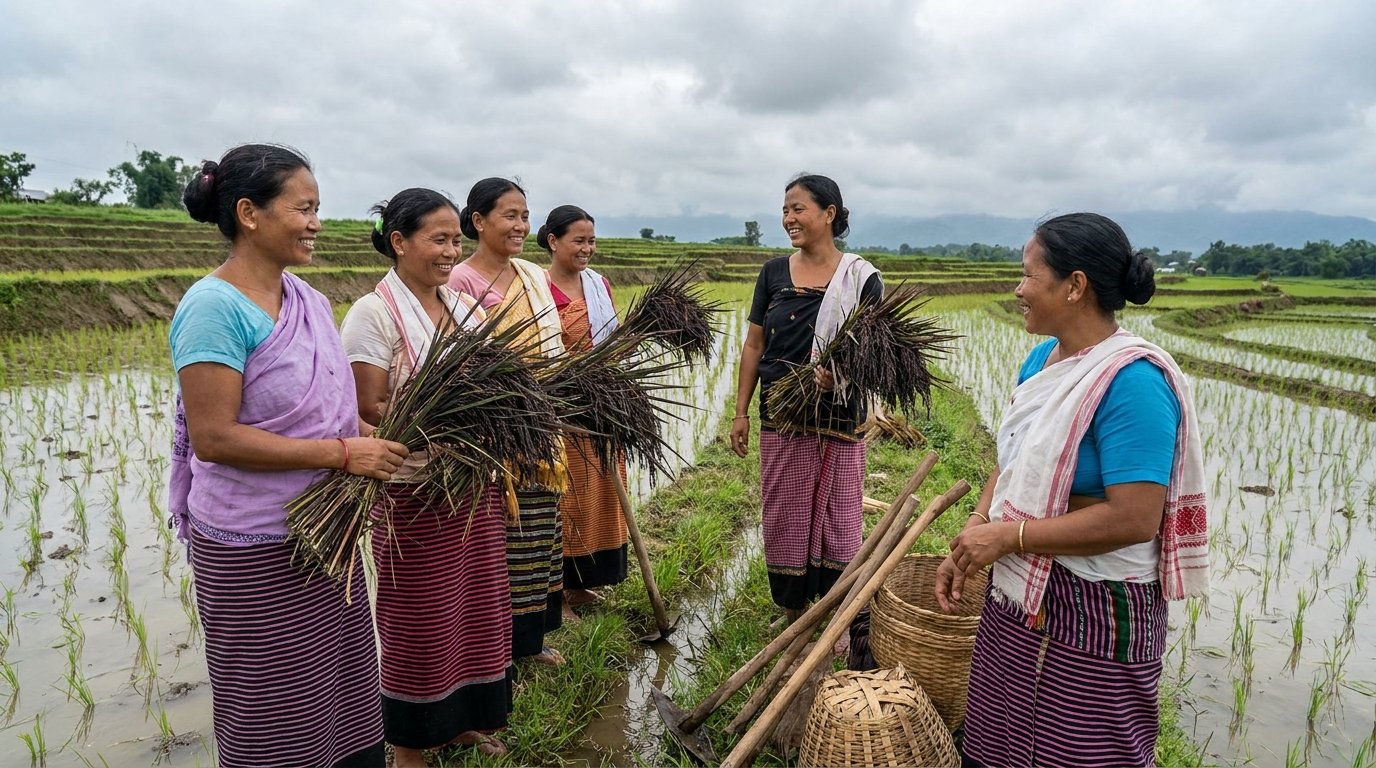
"Manipur black rice benefits" is a phrase that gets thrown around loosely online, often attached to generic black rice sold anywhere from China to Thailand. Chak-Hao is a narrower, more specific thing: a set of glutinous, aromatic landraces grown almost nowhere outside Manipur's Imphal valley, catalogued and studied as their own subject by Indian agricultural researchers rather than folded into broad black-rice marketing claims. This guide sticks to what that research actually shows.
Manipur Black Rice Benefits at a Glance
- Antioxidant-rich: among the more concentrated anthocyanin profiles of any rice, held entirely in its purple-black bran.
- ~50% more protein than white rice, gram for gram.
- Roughly 4.5x the fibre of white rice, gram for gram.
- Low glycemic index recorded in Chak-Hao Poireiton research, unlike most white rice.
- ~3x the iron of polished white rice.
- Naturally gluten-free, like every rice variety.
- Legally protected: the only Indian black rice with a GI tag, so the name always means Manipur-grown.
- Not a miracle food: the benefits add up as part of a balanced diet, not a single bowl.
Why Chak-Hao's Benefits Are Different From Generic Black Rice
Most "black rice benefits" articles are really about black rice as a category, usually the Chinese variety exported worldwide as forbidden rice, simply because it's the easiest to source and study. Chak-Hao is a different, narrower thing: landraces grown almost nowhere outside Manipur, individually catalogued and studied by Indian agricultural science rather than lumped in with black rice in general.
A 2020 genetic and anthocyanin-profiling study from ICAR's rice genetics division examined Chakhao landraces preserved in Manipur's national gene bank and identified delphinidin 3-galactoside as the dominant pigment compound in both the black Amubi and purple Poireiton varieties. That specificity matters: when this guide talks about Manipur black rice benefits, it is largely drawing on research done on this exact rice family, not on black rice as an undifferentiated category picked up at any supermarket.
Northeast India actually grows several traditions of black rice under different local names — Kola sawl in Assam, Jaiong among the Khasi and Jaintia communities of Meghalaya, Mi-gisim among the Garo. Chak-Hao is simply the one that carries a GI tag and, increasingly, the deepest body of dedicated nutrition research behind it.
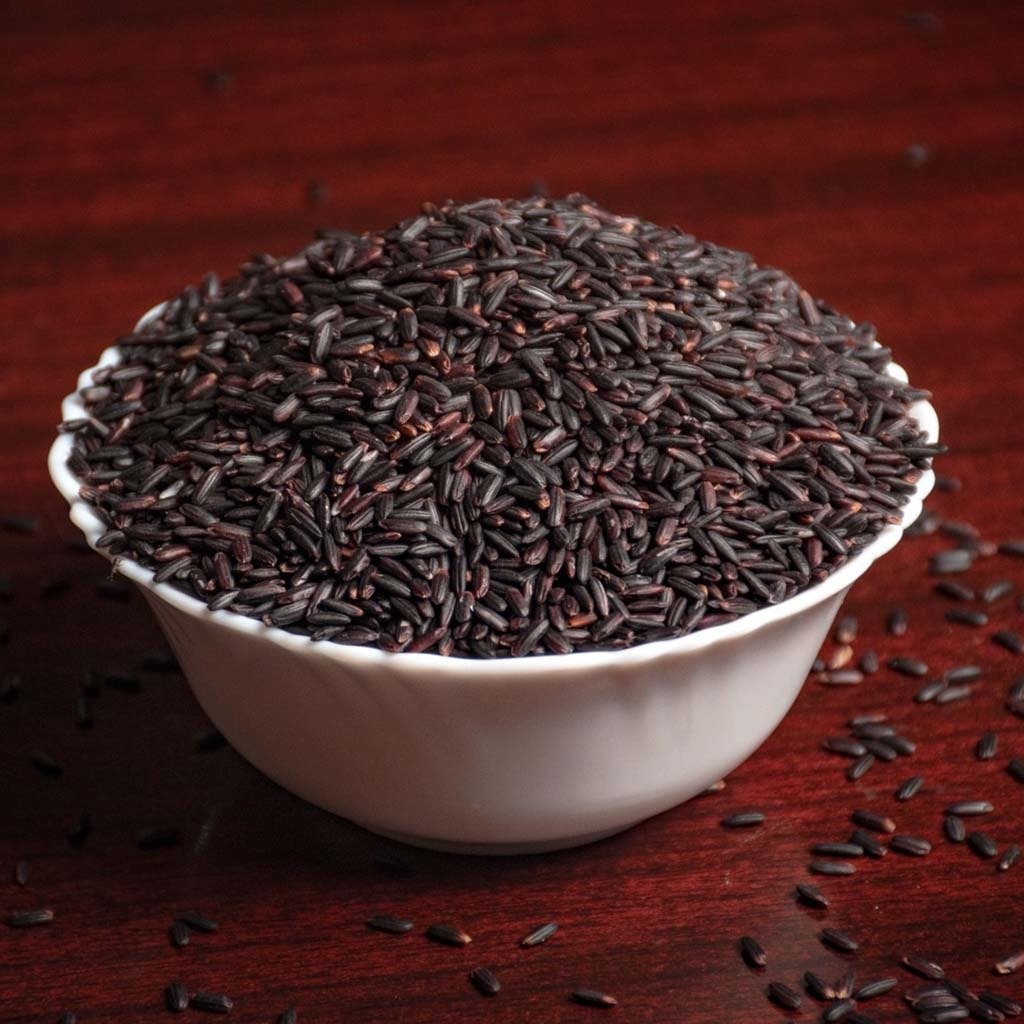
Manipur Black Rice vs. White & Brown Rice: The Nutrition Compared
The exact numbers shift a little between studies, harvests and even mills, but the shape of the comparison holds steady: Chak-Hao keeps more of its bran than white rice ever will, and that bran is where almost all of the extra nutrition — and almost all of the colour — actually lives.
Nutrient Comparison, per 100g Cooked
Typical values per 100g of cooked rice. White and brown rice figures reflect standard nutrition references; Chak-Hao figures reflect USDA FoodData Central data for cooked black rice. Individual harvests and milling will vary.
Looked at differently, a 100g cooked serving of Chak-Hao is still mostly a carbohydrate food, the same as any rice — it just carries a slightly larger, more useful protein share than white rice does.
Where the Calories Come From
Share of total calories in a 100g cooked serving of black rice, based on USDA nutrient data. White rice shows a similar split but with almost none of the fibre or anthocyanins that come bundled into Chak-Hao's carbohydrate share.
The Health Benefits of Manipur Black Rice, One by One
None of what follows turns Chak-Hao into medicine. But a reasonable, and in places genuinely Manipur-specific, body of nutrition research points to real advantages over refined white rice.
1. A Concentrated Source of Anthocyanin Antioxidants
The deep purple-black colour of Chak-Hao comes entirely from anthocyanins, the same class of plant pigment that colours blueberries, purple cabbage and aubergine skin. White rice loses this pigmented layer to polishing; brown rice keeps its bran but isn't pigmented the same way. Chak-Hao's bran, by contrast, is one of the more concentrated anthocyanin sources found in any cereal grain, with research on Chakhao landraces identifying delphinidin 3-galactoside as the dominant compound. Antioxidants like this work by neutralising free radicals, the unstable molecules linked to cellular wear over time.
2. May Support Heart Health, With Real Caveats
Several animal studies have given concentrated black rice anthocyanin extracts to mice and rabbits prone to artery disease, and found improved cholesterol balance and more stable arterial plaque compared with untreated animals. That's encouraging, but it doesn't automatically carry over to people — a placebo-controlled human trial testing isolated black rice anthocyanins in adults with high cholesterol found no significant change in LDL levels after four weeks. The fair summary: Chak-Hao is a reasonable addition to a heart-conscious, whole-grain diet, not a proven stand-alone treatment for high cholesterol.
3. Linked to a Gentler Blood Sugar Response
A study comparing thirteen traditional Indian rice varieties measured the glycemic index of Chak-Hao Poireiton at 53 — one of the lowest in the entire comparison — and found that anthocyanin extracts from the same rice reduced pancreatic α-amylase activity, an enzyme the body uses to break starch down into sugar, by 24% in lab testing. Common polished white rice, by contrast, is well documented to sit in the high-GI range, often 70 or above depending on variety and cooking method. The practical effect is that black rice tends to raise blood sugar more slowly and gently after a meal — though individual response still depends on portion size and the rest of the plate.
Where Chak-Hao Sits on the Glycemic Index
Chak-Hao Poireiton figure from a 2020 Indian study comparing thirteen traditional rice varieties, published in Current Research in Nutrition and Food Science Journal. White rice figures vary widely by variety and cooking method but commonly fall in the high-GI range.
4. A Better Source of Plant Protein Than White Rice
Rice isn't usually thought of as a protein food, but pigmented varieties close that gap more than most people expect. In the same thirteen-variety comparison, Chak-Hao Poireiton had the highest protein content of the group — useful context for anyone building meals around plant-based protein, even if rice alone won't replace lentils, beans or paneer as a primary source. Against ordinary polished white rice specifically, black rice varieties are consistently reported to carry meaningfully more protein, gram for gram — roughly 50% more, by typical published figures.
5. Higher in Fibre for Digestion and Gut Health
The fibre that milling strips out of white rice stays largely intact in Chak-Hao. In that same study, Chak-Hao Poireiton had the highest resistant starch content — 38% — of the thirteen traditional rice varieties tested, a fibre-like starch that resists digestion in the small intestine and ferments in the colon instead, feeding the gut bacteria a healthy microbiome depends on. Anthocyanin extracts from the same rice substantially increased populations of beneficial probiotic bacteria in lab cultures, an early but interesting hint that the benefit isn't fibre alone.
6. A Useful Natural Source of Iron
Pigmented, minimally milled rice like Chak-Hao generally carries more iron than its polished counterpart — roughly three times as much, by typical published figures — since iron sits mostly in the bran and germ that milling removes. It's not a substitute for iron-rich foods like leafy greens, legumes or meat, but for a grain that already makes up a regular part of many diets, that difference adds up over a week of meals.
7. Naturally Gluten-Free
Like every variety of rice, Chak-Hao contains no gluten, which makes it a straightforward whole-grain option for people with coeliac disease or non-coeliac gluten sensitivity, provided it hasn't been processed or packaged alongside gluten-containing grains.
8. May Support Healthy Weight Management
Fibre and protein both slow gastric emptying — a technical way of saying they help a meal feel filling for longer. Since Chak-Hao carries more of both than white rice, swapping it in can make portion control feel a little less effortful. It's still a calorie-containing carbohydrate, though, and weight management comes down to the whole diet, not a single ingredient swap.
9. Antioxidant Support for Skin and Cellular Ageing
Oxidative stress, the same free-radical damage anthocyanins help neutralise, is one of the processes linked to visible skin ageing. That makes an antioxidant-rich diet — Chak-Hao included — a reasonable general habit for skin health, in the same way any antioxidant-rich fruit or vegetable would be. There's no direct clinical evidence tying black rice specifically to visible skin outcomes, so it's worth treating as a supporting habit rather than a targeted remedy.
10. Backed by Region-Specific Research, Not Just Generic Black Rice Claims
Because Chak-Hao is grown almost nowhere outside Manipur, most of what's actually known about it comes from Indian agricultural and nutrition research rather than the broader black rice literature written around Chinese or Thai varieties. Landraces are catalogued at ICAR's national gene bank, and separate studies have profiled the specific anthocyanins, glycemic index and antioxidant behaviour of individual Chakhao varieties like Amubi and Poireiton. That's a meaningfully different evidence base than a bag labelled simply "black rice" with no named variety behind it.
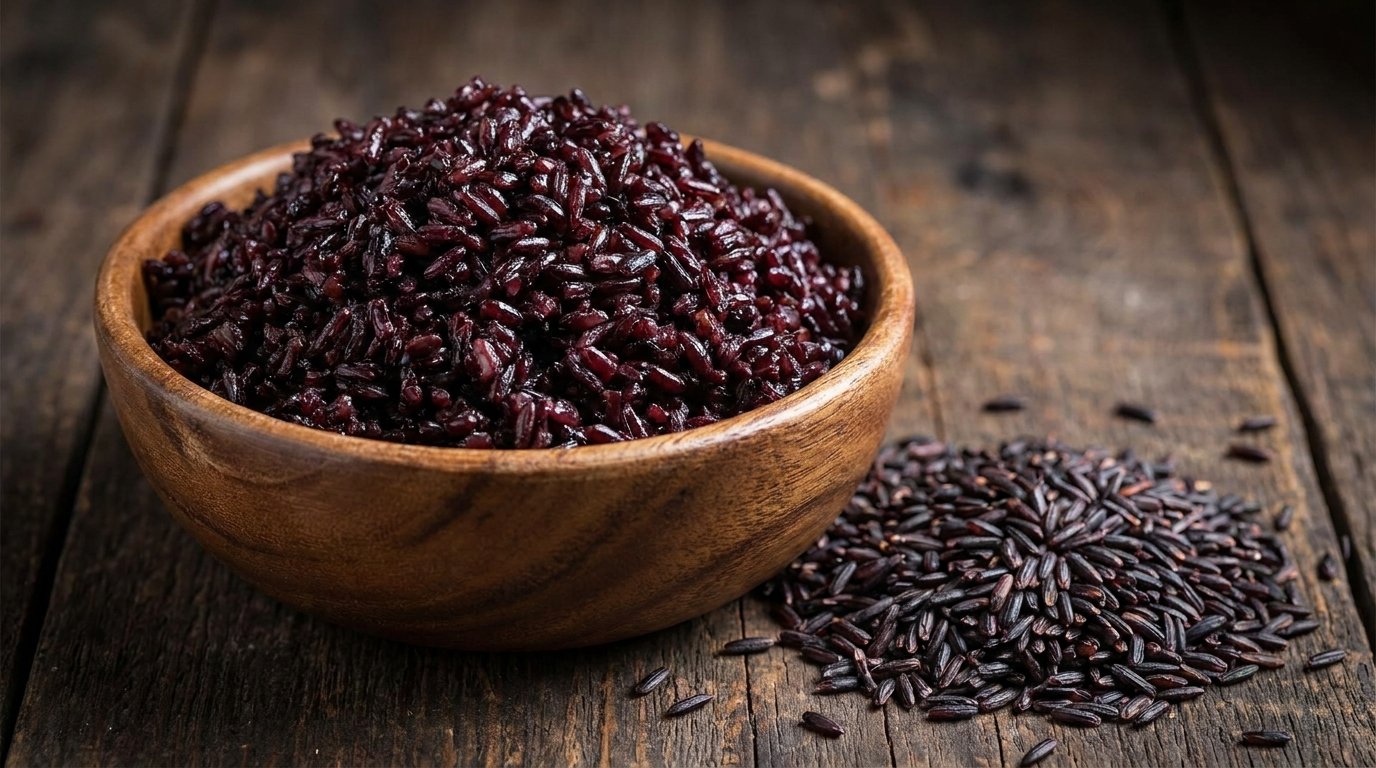
Chak-Hao's Nutrient Advantage Over White Rice, at a Glance
Put the individual benefits side by side against plain white rice, and the pattern holds consistently across every metric measured above.
Figures compare typical cooked black rice to typical cooked white rice, per 100g. See the nutrient comparison chart above for the underlying numbers.
Who Benefits Most From Eating Manipur Black Rice
Chak-Hao is a whole grain, not a treatment, but its particular nutrient profile makes it a more useful everyday choice for some eating patterns than others.
Managing Blood Sugar
Its lower glycemic response in studied varieties, alongside professional dietary guidance, can make it a sensible rice swap for people watching post-meal blood sugar.
Plant-Based & Vegetarian Eaters
The extra protein and iron help it pull a little more nutritional weight than white rice in a diet built around plants.
Heart-Conscious Eaters
Swapping refined grains for whole ones like Chak-Hao is a well-supported general habit for cardiovascular health, even where black-rice-specific human evidence is still developing.
Anyone Avoiding Gluten
A naturally gluten-free whole grain that works as a direct swap for wheat-based sides.
Athletes & Active People
Slower-releasing carbohydrates paired with more protein than white rice support steadier, longer-lasting energy.
Weight-Conscious Eaters
Extra fibre and protein support fullness, which can make portion control easier without extra effort.
Cooking It Without Losing the Benefits
Full step-by-step cooking instructions live on the main Chak-Hao guide, but if the goal is keeping as much of the benefit in the bowl as possible, three habits matter more than exact timing. Cook it by the absorption method rather than boiling and draining — anthocyanins are water-soluble, and pigment, along with some of the nutrition, is lost in drained cooking water. Avoid over-soaking or over-boiling well past the point of tenderness, since prolonged heat gradually breaks anthocyanins down. And store the raw grain away from light and heat, since both fade the pigment — and the antioxidant content behind it — over time. For the full cooking method, ratios and timings, see the complete cooking guide.
How Much Should You Eat
There's no official recommended amount for Chak-Hao specifically — it's a whole grain, not a supplement, and ordinary whole-grain guidance applies. A typical cooked serving is around one cup, roughly 150 to 180 grams, eaten a few times a week as part of a varied diet and adjusted for individual calorie and carbohydrate needs. Anyone managing a specific health condition should treat portion size as something to plan with a doctor or dietitian, not a fixed number from a blog post.
Precautions and Who Should Be Careful
Chak-Hao is a food, not a supplement, and for most people it carries the same general considerations as any other rice.
- All rice, black rice included, can contain trace amounts of arsenic depending on where and how it was grown; rinsing thoroughly and cooking with plenty of water helps reduce this, the same standard advice that applies to rice in general.
- It remains a carbohydrate-dense food, so it isn't a fit for strict low-carb or ketogenic eating patterns regardless of its other benefits.
- True rice allergies are uncommon but real; anyone with a diagnosed sensitivity to rice should avoid Chak-Hao the same way they would any other rice variety.
- People managing diabetes, heart disease or another condition through diet should treat the research in this guide as background information, not medical advice, and check in with a doctor or dietitian before changing how they eat.
Curious about wholesale packaging or export documentation for authentic, GI-tagged Chak-Hao? Our trade desk can send details in minutes.
Frequently Asked Questions
The Bottom Line
Manipur black rice benefits hold up because they're rooted in something specific: a bran layer that white rice has never had, studied on this exact grain rather than borrowed from generic black rice claims. More fibre, more plant protein, a meaningfully gentler glycemic response in the varieties tested, and one of the more concentrated anthocyanin profiles of any rice on the market — none of it makes Chak-Hao a cure for anything, but together it makes a genuinely well-evidenced case for it as a better everyday rice. For the full picture on where it comes from, its GI tag and exactly how to cook it, see the complete guide to Manipur black rice, or browse Chak Hao to try it yourself.
Further reading
- NCBI / PMC — Genetic Architecture and Anthocyanin Profiling of Aromatic Rice From Manipur (Chakhao landraces)
- Current Research in Nutrition & Food Science Journal — Grain Dimension, Nutrition and Nutraceutical Properties of Black and Red Varieties of Rice in India
- Journal of Applied and Natural Science — Nutritional and Antioxidant Profile of Black Rice-Based Traditional Foods of Manipur
- PubMed — An Anthocyanin-Rich Extract From Black Rice Enhances Atherosclerotic Plaque Stabilization in Mice
- PMC — No Effect of Isolated Anthocyanins on LDL Cholesterol: A Randomized Controlled Trial
- Wikipedia — Black rice (nutrition reference data)