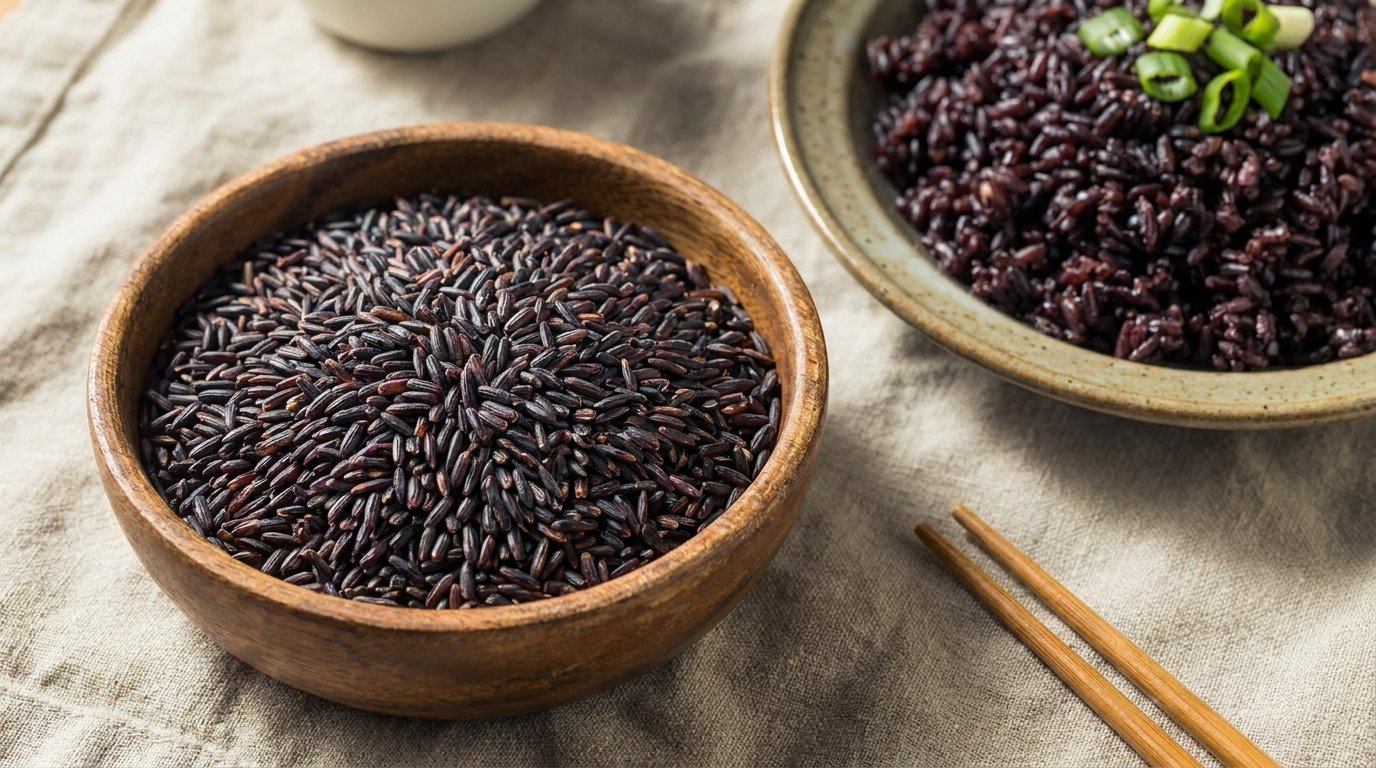
Search "black rice exporter" and nearly every listing describes itself as premium. The word has been stretched to the point of meaning almost nothing, which leaves wholesale and import buyers doing the quality-control work suppliers should already be doing for them. This guide sets out what genuinely separates a premium quality black rice exporter from a reseller with a nice product photo — measurable grading, real certification paperwork, container-ready packaging, and traceability back to a specific growing region. It's written for buyers sourcing black rice in bulk, not for a home cook choosing a bag off a shelf.
What "Premium Quality" Actually Means in an Exporter
On its own, "premium" is an adjective, not a spec. A serious premium quality black rice exporter treats it as a set of line items instead: grain uniformity and colour consistency from bag to bag, stable moisture content that won't spike mid-transit, a low broken-grain percentage, bran and pigment left largely intact rather than polished away, single-origin sourcing that isn't quietly blended with cheaper stock, and documentation that travels with the shipment rather than sitting only on a website.
None of that shows up in a product photo. It shows up in a Certificate of Analysis, a phytosanitary certificate, and an exporter's willingness to answer specific questions about where the paddy was grown and how the rice was milled. The rest of this guide walks through each of those checkpoints in order.
Why Origin Still Decides Everything
Black rice isn't one thing. Chinese "forbidden rice," Thai riceberry, Indonesian ketan hitam, and Manipur's Chak-Hao are all genetically and agronomically different, with different grain length, stickiness, aroma and pigment concentration. The category name "black rice" carries no legal protection anywhere, which is exactly why so many suppliers lean on the word "premium" instead — it's unregulated marketing shorthand for a product that varies enormously by source.
Chak-Hao is a useful contrast because its name actually is protected. It received a Geographical Indication tag in 2020, following an application by the Consortium of Producers of Chak-Hao with support from Manipur's Department of Agriculture and NERAMAC. That tag legally ties the Chak-Hao name to rice grown within a defined part of Manipur, which gives an exporter of Chak-Hao something a generic "premium black rice" seller can't offer: a documented, defensible origin claim rather than a description.
The Quality Parameters a Premium Exporter Actually Controls
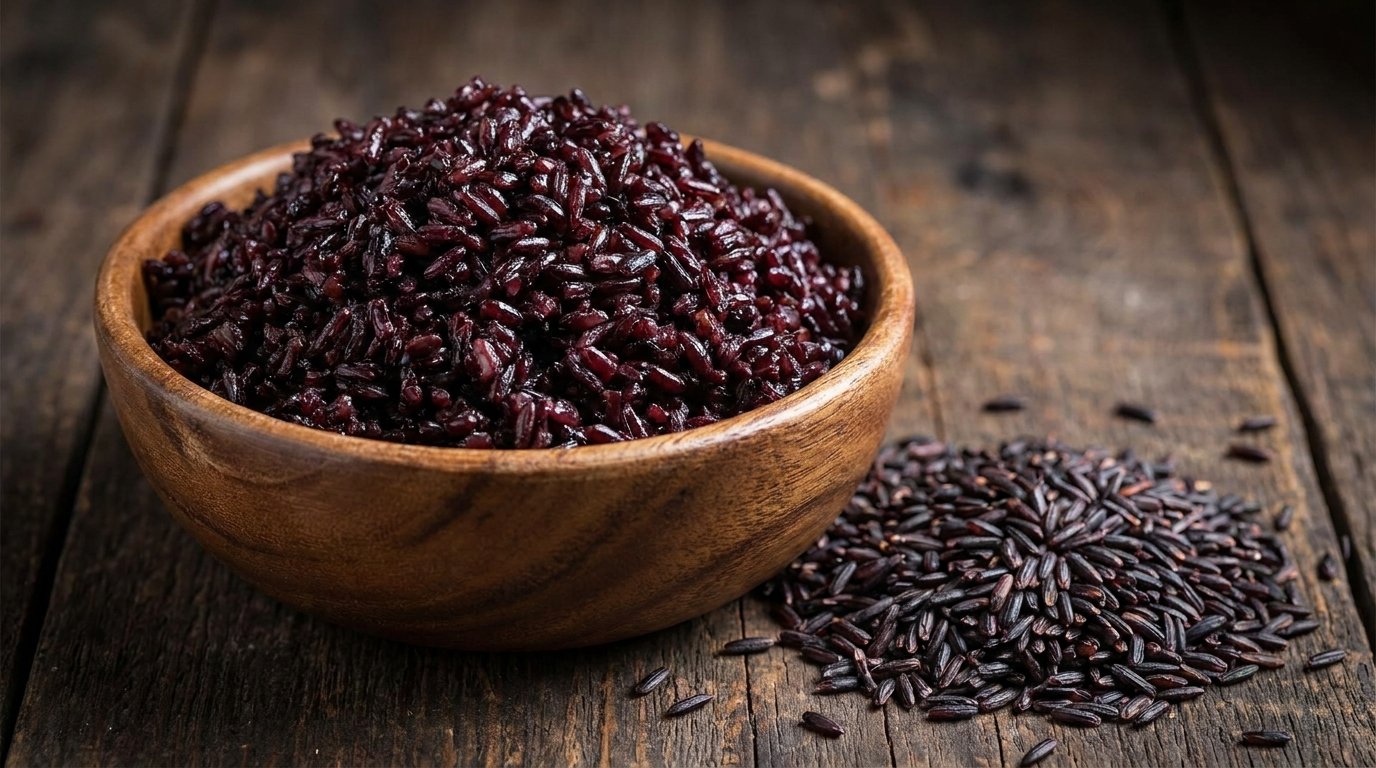
Bulk black rice often spends three to six weeks at sea before it reaches a buyer's warehouse. Small variances in moisture, breakage and admixture that look harmless in a sample bag can turn into rejected lots, mould complaints or failed customs inspections once a full container has sat through that transit. A premium quality black rice exporter controls these figures deliberately rather than accepting whatever a mixed open-market lot happens to test at.
Illustrative Export-Grade Quality Benchmarks
These are general industry benchmarks used to separate export-ready lots from unsorted, open-market rice — not a guarantee for any single shipment. Always request a lot-specific Certificate of Analysis rather than relying on published ranges alone.
None of these numbers mean much on a spec sheet alone. Ask the exporter to attach a Certificate of Analysis for the specific lot you're buying — not a generic company brochure — so you can confirm the figures were actually tested rather than assumed.
Anthocyanin Retention: The Number Most Suppliers Skip
Black rice's colour and much of its nutritional value come from anthocyanins concentrated in the bran layer. Heavier commercial polishing — often done to make the grain look glossier or cook faster — strips a large share of that layer away. Lighter, more traditional milling leaves more of the bran intact, which retains more pigment and nutrition but requires more careful post-harvest handling. Exporters rarely mention milling depth because it's harder to market than the finished colour, but it's arguably the single biggest quality lever in the entire process.
Light / Traditional Milling
Anthocyanin-rich bran layer left largely intact, at the cost of a slightly shorter recommended shelf window.
Heavy Commercial Polishing
Most pigment and bran nutrients removed to produce a glossier, faster-cooking grain.
These figures are general approximations from milling science, not a certified measurement from any single supplier's lab. When comparing exporters, ask directly what milling method they use and whether they can share bran-retention or anthocyanin test data for a recent lot, rather than taking a "rich in antioxidants" claim at face value.
Certifications & Documentation Worth Asking For
Not every certificate applies to every shipment — requirements shift depending on the destination country's import rules — but a premium quality black rice exporter should be able to produce most of the following on request.
FSSAI License
Baseline Indian food safety registration for any legitimate food exporter.
APEDA Registration
Registration-cum-Membership Certificate required to export agri and processed food from India.
ISO 22000:2018
Food safety management certification for the processing and packing facility.
HACCP
Hazard analysis and critical control point certification across production.
Chak-Hao GI Certificate
Confirms the specific lot is entitled to be sold under the Chak-Hao name.
Organic Certification
NPOP / India Organic certification where the rice is marketed as organic.
Phytosanitary Certificate
Issued per shipment by India's Plant Quarantine authority for raw agricultural exports.
ISPM-15 Packaging
Heat-treatment compliance for any wooden pallets or crates used in the container.
Ask specifically which of these apply to your destination market rather than requesting "all certifications" — an exporter that answers precisely usually understands the paperwork; one that hands over a generic PDF usually doesn't.
Export Grades Explained: A, B and C
Grade names aren't standardized across the industry, but most exporters sort black rice into roughly three tiers based on breakage, uniformity and intended use.
Grade C
Higher broken-grain content, usually redirected into rice flour, bran oil extraction or natural colorant use rather than sold as whole grain.
Grade B
Acceptable breakage for bulk catering and mid-tier retail blends, but noticeably less uniform than export-focused lots.
Grade A
Large, uniform grain with minimal breakage and deep, even colour — the only tier that genuinely earns the word "premium" on a spec sheet.
Get the grade, moisture percentage, broken-grain percentage and packaging spec confirmed in writing before production starts. A quoted "Grade A" without numbers attached is still just an adjective.
Packaging & Container Standards for Bulk Shipment
Packaging decides how well those quality parameters survive a long ocean transit. Humidity, pest ingress and odour absorption inside a sealed container can undo good grading before the rice ever reaches a buyer's warehouse.
- Moisture-barrier liners. Multi-layer PP or PE liners inside bulk bags keep humidity swings from the container air away from the grain itself.
- Vacuum-sealed retail pouches. For smaller consumer-facing units, vacuum sealing slows oxidation and protects the natural aroma during transit and storage.
- Food-grade woven outer bags. Standard 25 kg or 50 kg PP woven bags for bulk lots, sized to the buyer's handling and storage setup.
- ISPM-15 compliant pallets. Any wooden pallets or crates in the container should carry heat-treatment compliance marks to clear customs without delay.
- In-container desiccants. Silica or clay-based desiccant units placed strategically to manage condensation during temperature swings at sea.
- Batch and lot coding. Every bag should carry a lot number that traces back to a harvest season and processing batch, not just a generic product label.
How to Vet an Exporter Before You Place an Order
- 1Request a lot-specific Certificate of Analysis. Not a generic spec sheet — a lab result tied to the actual batch you'd be buying.
- 2Ask for certification copies. FSSAI, APEDA, GI and organic documents should be current and verifiable, not just referenced in passing.
- 3Ask about traceability. A serious exporter can tell you which season and, ideally, which registered paddy plots a lot came from.
- 4Request a pre-shipment sample. Confirm you're free to send it to an independent lab if you want a second opinion before committing to volume.
- 5Get specs in writing. Grade, moisture percentage, broken-grain percentage and packaging details confirmed before production starts, not after.
- 6Clarify logistics upfront. Incoterms, lead time and minimum order quantity should all be settled before you plan volumes around a supplier.
Red Flags That Signal a Non-Premium Supplier
- No Certificate of Analysis. A supplier unwilling to share lot-specific lab results for moisture, breakage or contaminants.
- Vague origin claims. Listings that say "Asian black rice" or "Indian black rice" with no state, region or GI reference.
- Inconsistent batch photos. Sample images that don't match each other in grain size or colour depth from order to order.
- Unbacked organic or GI claims. Marketing language that implies certification without an actual certificate to produce on request.
- Reluctance around traceability. Vague or evasive answers about which farms, season or region a lot actually came from.
- Pressure before proof. Pushing to confirm a large order before providing any sample, documentation or lab data.
Where Global Demand for Black Rice Is Heading
Demand for black rice has broadened well beyond specialty Asian grocery aisles. Retail buyers are stocking it as a functional whole-grain option, plant-based and clean-label food manufacturers are using it for its natural pigment and fibre content, nutraceutical and extract buyers are interested in anthocyanin-rich bran specifically, and premium hospitality menus increasingly feature it for its texture and visual appeal. As that demand grows, so does the incentive for less scrupulous sellers to relabel ordinary black rice as "premium" — which is exactly why documentation matters more than the word itself when you're sourcing at volume.
Sourcing Premium Black Rice Through Chak Hao
Chak Hao exports certified organic, GI-tagged Manipur Chak-Hao with traceability from paddy to pack. That means every lot can be tied back to a specific season and region, backed by the certification categories covered above, with documentation support built into the ordering process rather than assembled after the fact when a customs officer asks for it.
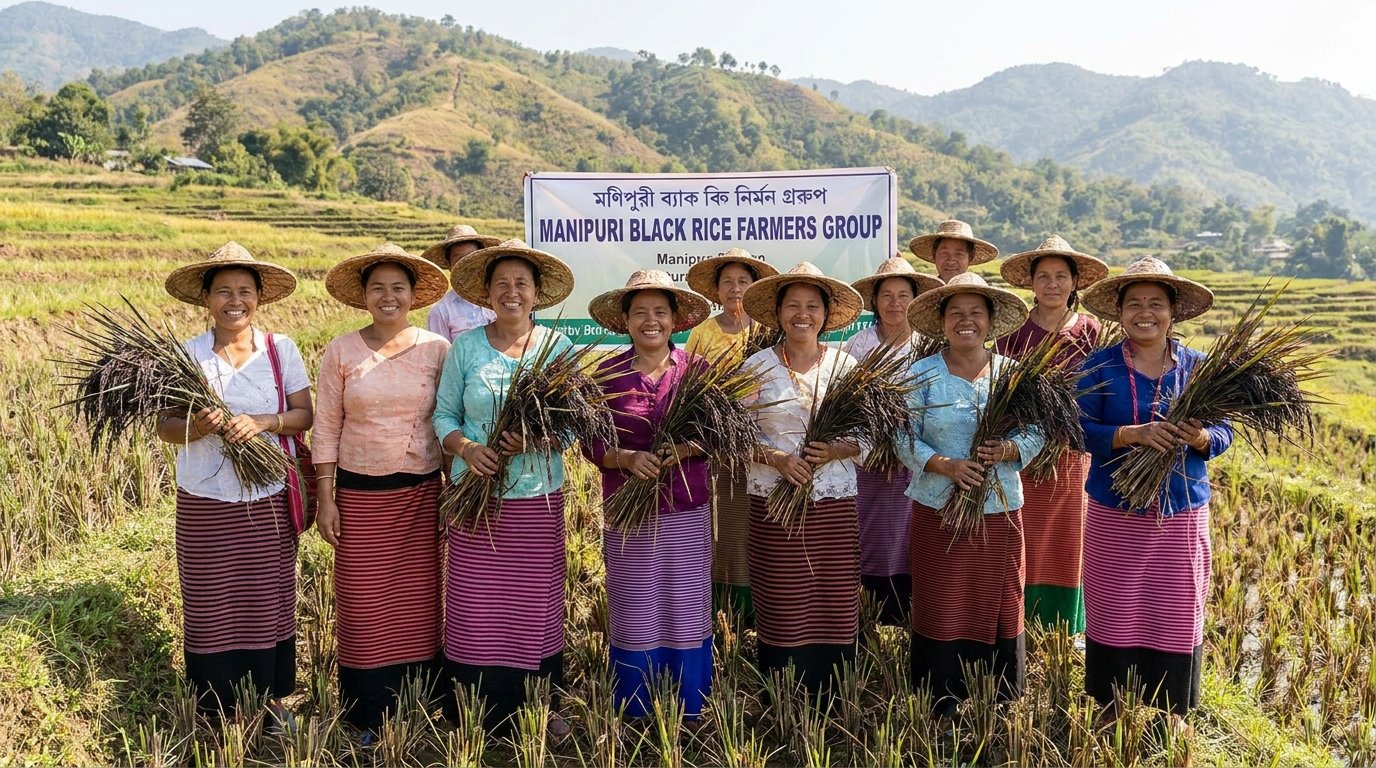
Need a Certificate of Analysis or certification copies before you commit to volume? Our trade desk can send documentation ahead of any order.
Frequently Asked Questions
The Bottom Line
A premium quality black rice exporter isn't defined by the word "premium" on a listing — it's defined by whether the numbers behind that word hold up under a Certificate of Analysis, whether the certifications are real and current, and whether the origin claim can actually be traced back to a specific region. Ask for the documentation before you ask for the price, and the rest of the sourcing decision tends to sort itself out.