Type "best quality black rice supplier" into Google from anywhere in Singapore and you'll find no shortage of listings — trading houses, wholesalers, dropshippers. Very few of them, though, can actually explain what quality means for this particular grain, or back the claim up with paperwork rather than a sales pitch. This guide is written for buyers doing the comparison properly: F&B groups, retailers, distributors and private-label brands who need to know exactly what separates a genuinely dependable supplier from one simply repackaging generic stock.
What "Best Quality" Actually Means When You're Buying Black Rice
"Best quality" isn't a marketing word — or at least it shouldn't be. For a buyer sourcing black rice in bulk, quality comes down to four things you can actually verify rather than take on trust: where the grain was grown, how intact and aromatic it is, whether it's been tested rather than eyeballed, and whether the next shipment will match the last one. A supplier who can't speak clearly to all four is really a trader passing stock along, not an actual source.
Verified Origin
A real supplier can name the exact growing region — not just "India" or "Asia" — and produce documents that prove it, not just a claim on the bag.
Grain Integrity & Aroma
Genuine black rice carries a natural scent before it's even cooked. A bag with little to no aroma is usually a sign of a blend or an old harvest.
Lab-Backed Food Safety
A supplier who can hand over a recent Certificate of Analysis is showing you data, not just a reassurance.
Shipment-to-Shipment Consistency
One great sample is easy. The real test is whether the tenth sack in your third order still smells and cooks the same as the first.
Why GI-Tagged Chak-Hao Sets the Standard
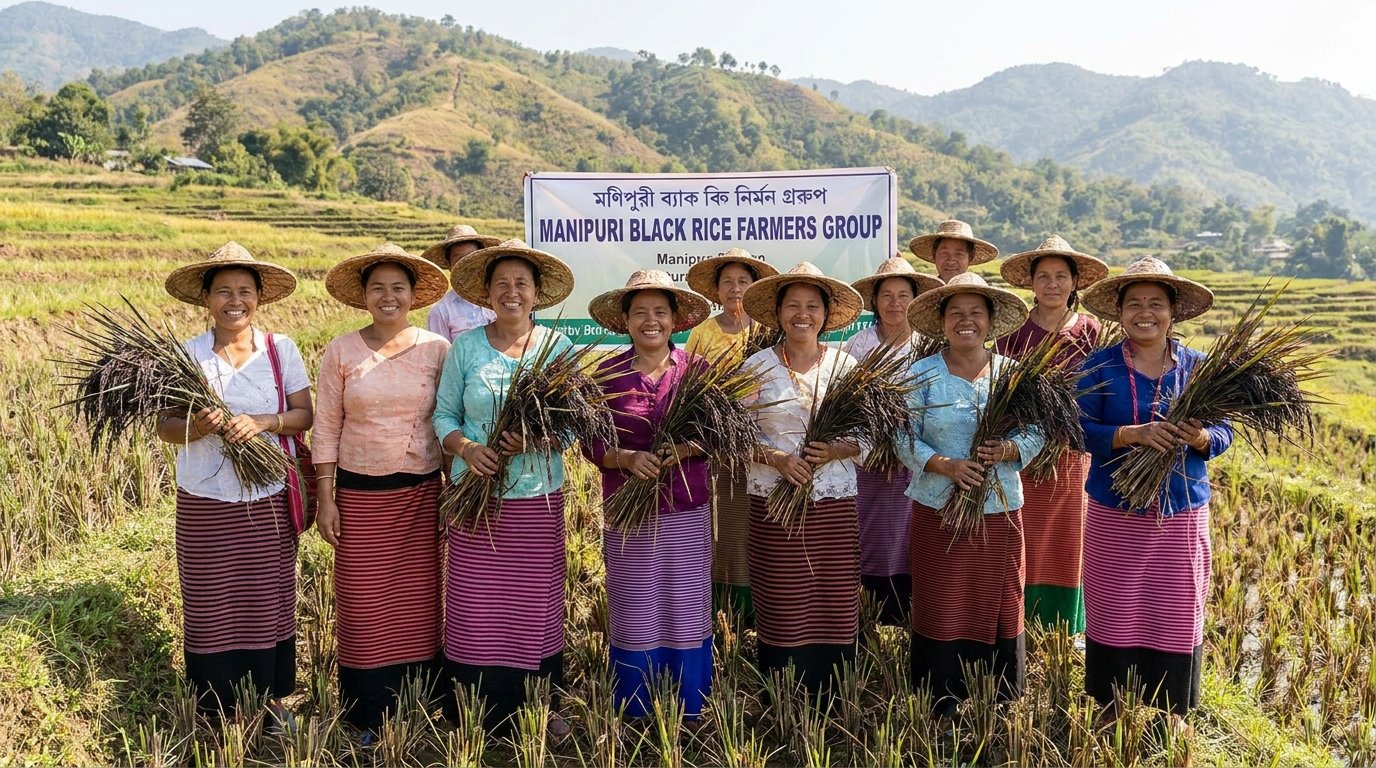
Most "black rice" sold internationally is a catch-all term for grain grown across several different countries, often blended together along the way. Chak-Hao is the exception. Grown almost entirely in the wetland paddies around Imphal in Manipur, India, it became the only black rice in the country to hold a Geographical Indication tag, granted in 2020 to the Consortium of Producers of Chak-Hao with support from Manipur's Department of Agriculture and NERAMAC. In practice, this means the name Chak-Hao can only be legally used for rice actually traced back to that valley — giving a Singapore buyer something most black rice suppliers simply can't offer: a name that's legally, not just commercially, tied to one verifiable source. For the fuller history behind the grain and the tag itself, see our Manipur black rice guide.
Chak-Hao vs. Generic Black Rice: A Quick Comparison
Where the difference actually shows up
A rough comparison across the qualities that matter most to a bulk buyer.
Illustrative comparison based on typical differences between GI-verified and unverified black rice sources. Ask any supplier for their own documentation before you order.
A Practical Checklist: How to Evaluate a Supplier Before You Commit
Before you commit to any supplier — us included — it's worth running through a short list of questions. A supplier who's genuinely confident in their own quality will usually answer every one of these without hesitation.
- 1Ask for the GI certificate and origin paperwork. Any supplier claiming to sell Chak-Hao should be able to produce documentation tracing the grain back to Manipur — not just a label that says so.
- 2Request a Certificate of Analysis (CoA). A recent lab report covering moisture content, foreign matter and basic contaminant screening tells you far more than a sample bag ever will.
- 3Check for phytosanitary and fumigation certificates. These are typically required for grain shipments clearing Singapore customs, and a supplier experienced in exporting will have them ready as a matter of course.
- 4Match the packaging to your handling capacity. Ask whether the rice ships in moisture-barrier sacks or liners, and in what unit sizes, so it fits how you actually receive and store stock.
- 5Get clear on minimum order quantity and lead time. A dependable supplier tells you upfront what's realistic to ship and how long it takes to land, rather than adjusting the answer to close the deal.
- 6Ask what happens after the first shipment. Reordering should be straightforward, with consistent grain quality and paperwork every time — that consistency is often the real test of a "best quality" supplier.
Certifications & Documents a Genuine Supplier Should Provide
Singapore's import requirements for food grains are fairly standard, but a supplier who's shipped here before should be able to hand over the following without being asked twice.
GI Certificate
Confirms the rice is genuine Chak-Hao grown within the protected Manipur region, not a blend sold under the name.
Organic Certification
Verifies the paddy was grown without heavy reliance on synthetic fertilisers or pesticides, where claimed.
Certificate of Analysis
Lab-tested results for moisture, foreign matter and basic safety screening for the specific batch you're buying.
Phytosanitary Certificate
Confirms the shipment meets plant health requirements for both export and Singapore import clearance.
Certificate of Origin
Supports customs clearance in Singapore and confirms the country and region the rice was actually grown in.
Fumigation Certificate
Documents the pest-control treatment carried out on the shipment before it leaves the port of origin.
Supplier Reliability, Benchmarked
Consistency is harder to fake than a single good sample. These are the standards we hold every Chak-Hao shipment to before it leaves Manipur — a useful yardstick when you're comparing quotes from other suppliers too.
What a dependable supplier should consistently deliver
Internal quality benchmarks maintained across recent export shipments.
Batch Consistency
Lab-Verified Shipments
On-Time Export Paperwork
Moisture Control Accuracy
Ask any supplier you're comparing to share their own figures — it's a fair and reasonable request before placing a bulk order.
Nutrition That Justifies the Choice
Quality isn't only about where the rice comes from — it's also about what's still in the grain by the time it reaches your warehouse. Because Chak-Hao is milled lightly, the bran and germ layer that carries most of its nutrition stays largely intact, unlike heavily polished white rice.
Black rice vs. polished white rice, at a glance
A general comparison, not a substitute for a Certificate of Analysis on a specific batch.
General comparison between bran-intact black rice and polished white rice. Request a Certificate of Analysis for exact figures on a specific batch.
That same bran layer also means Chak-Hao digests more slowly than white rice, producing a steadier post-meal blood sugar response — and like every rice variety, it's naturally gluten-free.
Packaging, Storage & Export-Readiness for the Singapore Market
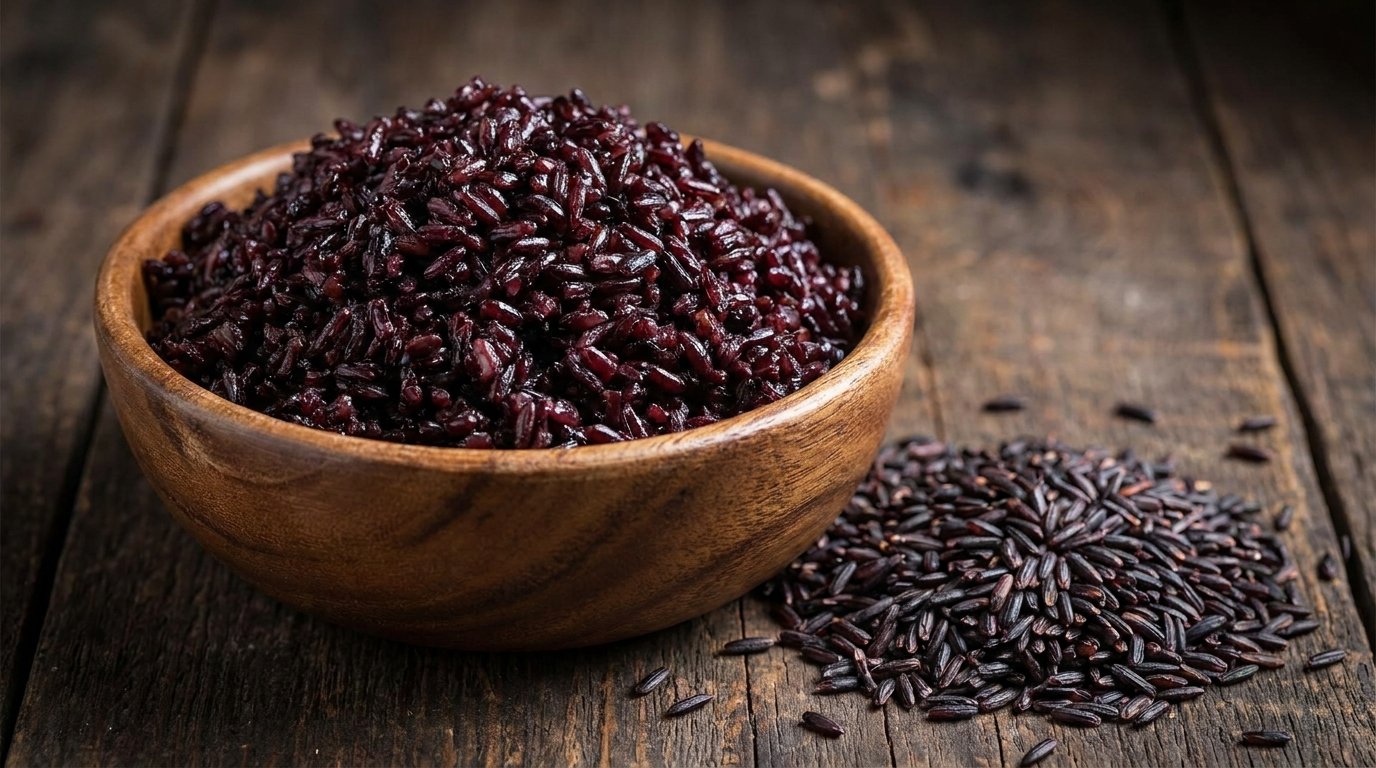
Getting the grain right is only half the job — it also needs to survive the trip and clear customs without a hitch. Chak-Hao for export is packed in food-grade, moisture-barrier sacks sized to match container loads, because Singapore's humidity will quickly undo the benefit of careful milling if the rice is packed loosely or left in a porous bag. On the paperwork side, importers typically need a valid Singapore Food Agency (SFA) import licence and permit alongside the phytosanitary and fumigation certificates covered above — and it's worth flagging early if you need halal-compliant documentation for an F&B kitchen, since this can usually be arranged with enough notice. Once landed, Chak-Hao keeps well for 8 to 12 months in a cool, dark, airtight store away from direct light and moisture, which in Singapore's climate usually means proper warehouse storage rather than open shelving.
Need SFA-ready documentation bundled with your shipment? Our trade desk can walk you through exactly what's required before you order.
Why Singapore Businesses Choose Chak Hao
We work with F&B brands, retailers and distributors across Singapore and the wider region who moved away from generic black rice once they compared it side by side with GI-verified Chak-Hao — the difference in aroma and consistency alone usually settles it. Every order ships with full batch documentation, and our trade desk handles the export side so you're not left chasing certificates after the fact.
Frequently Asked Questions
The Bottom Line
There's no shortage of sellers happy to call themselves the best quality black rice supplier in Singapore — the difference shows up in what they can actually document, not what they claim. Genuine GI-tagged Chak-Hao gives you a paper trail from a single valley in Manipur all the way to your warehouse, backed by lab testing and export documentation that holds up at customs. Whether you're placing a first trial order or comparing suppliers before renewing a contract, ask for the certificates first and let the rice confirm the rest. Explore more on the grain itself in our Manipur black rice guide, or get in touch with our trade desk to start the conversation.