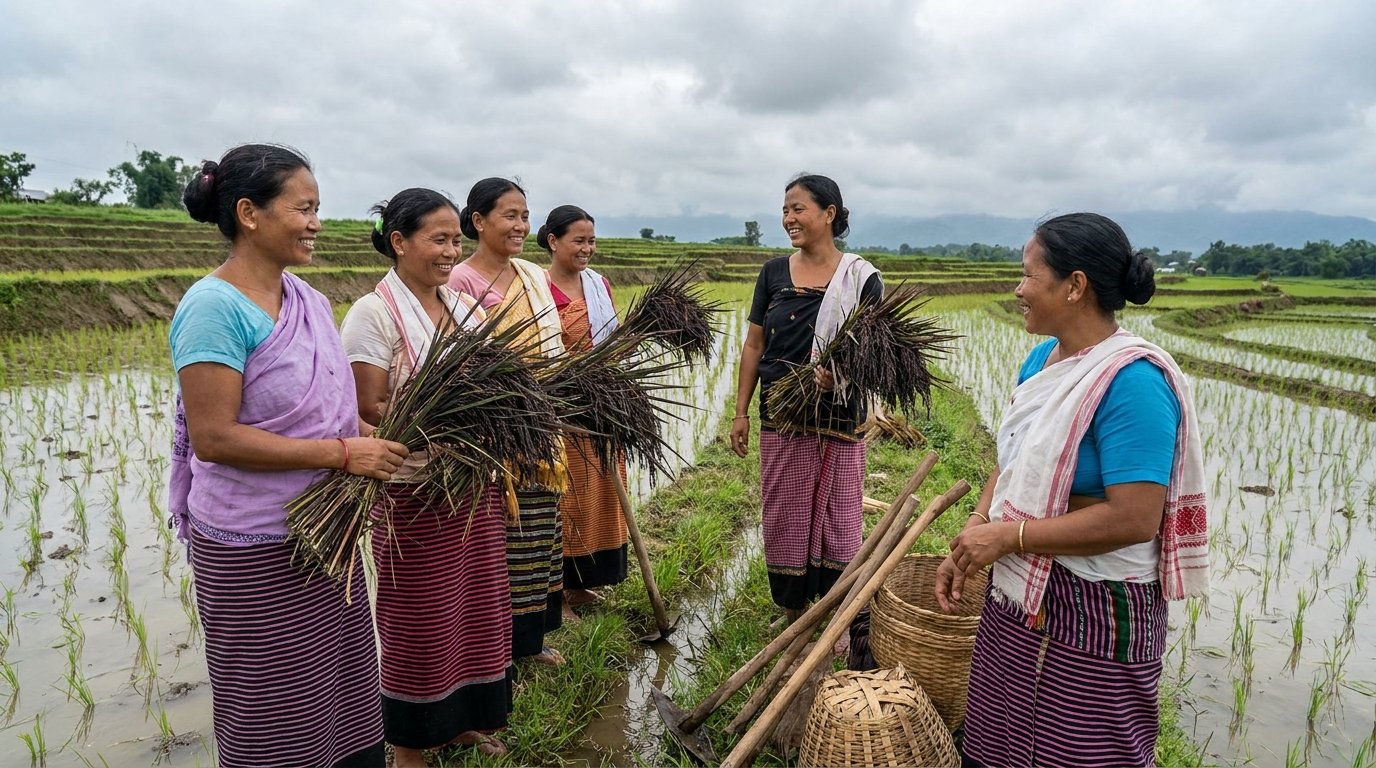
Search for a black rice exporter from India and you'll find no shortage of trading companies willing to say yes. Far fewer of them are actually shipping Chak-Hao — the aromatic, glutinous black rice grown only in Manipur's Imphal valley, and the only black rice in India to carry a Geographical Indication tag. For a Singapore buyer building out a specialty grains range, a health-food line, or a HORECA menu, that difference matters more than a nice product photo ever will. This guide sets out what a genuine exporter should offer, which certifications are worth asking for, how a shipment actually moves from Manipur to the Port of Singapore, and what Singapore's own import rules expect from you before that first container lands.
Why Singapore Buyers Are Turning to a Black Rice Exporter From India
Singapore has almost no farmland of its own, so the shelves and menus here depend heavily on what comes through the port. The Singapore Food Agency's own figures put it plainly: more than 90% of the food eaten in Singapore is imported, drawn from a network of over 180 countries and regions that keeps expanding precisely so no single supply line becomes a single point of failure. Specialty whole grains sit inside a fast-moving corner of that import mix, as cafés, health-food retailers and HORECA groups build menus around higher-fibre, lower-GI alternatives to polished white rice.
Black rice fits neatly into that shift, but the label covers a lot of ground. Chinese forbidden rice, Thai riceberry, Indonesian ketan hitam and Manipur's Chak-Hao are all marketed under roughly the same two words, with genuinely different growing origins, textures and paperwork sitting behind each one. For a Singapore importer, finding the right black rice exporter from India comes down to finding one who can actually prove where the grain came from — not just one who can supply a bag with the right colour on it.
of the food eaten in Singapore is imported, per the Singapore Food Agency
countries and regions in Singapore's diversified food-sourcing network
customs duty on rice — only liquor, tobacco, vehicles and petroleum are dutiable in Singapore
Chak-Hao vs. Generic "Black Rice"
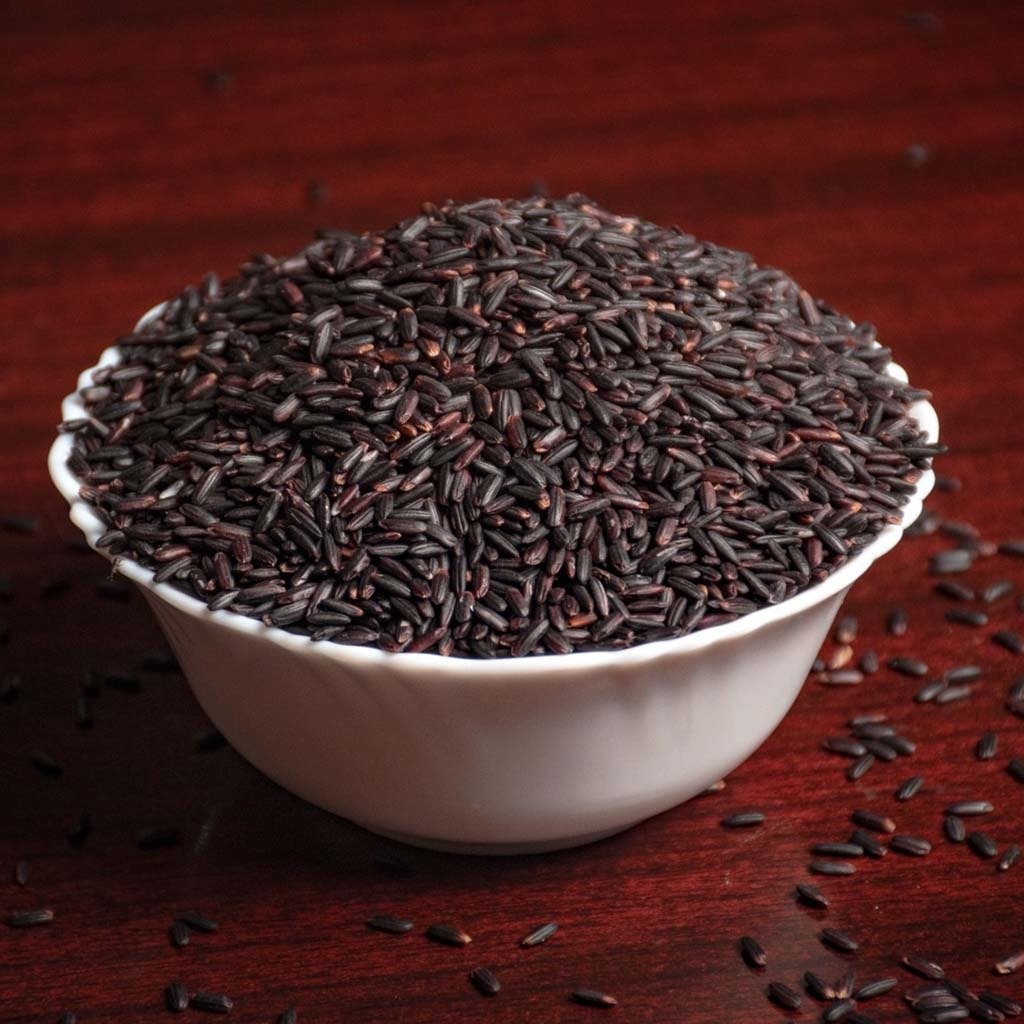
Chak-Hao is the Meitei name for the aromatic, glutinous black rice grown in the wetland paddies around Imphal. Since 2020, it's carried a Geographical Indication tag — the only one held by any black rice in India — which legally ties the name to grain actually grown in Manipur, rather than black rice grown anywhere else and sold under the same label. That's the detail separating it from the drier, less sticky forbidden rice most commonly sold out of China, and from the softer riceberry blends grown in Thailand.
None of that is a nutrition claim — it's a paperwork one, and it's the paperwork that matters most when you're the one placing the purchase order. If you'd like the fuller picture on Chak-Hao's nutrition profile and health benefits, our companion guide to Manipur black rice covers that in depth. This page stays focused on what a Singapore buyer actually needs to source, verify and bring through customs.
What a Genuine Black Rice Exporter From India Should Offer
Not every trading company that lists black rice on a product sheet is set up to export it properly. Before getting into certificates and shipping terms, it's worth checking that the basics are actually in place.
Traceability to a growing district
Should be able to show which district in Manipur a given batch came from, not just the state.
Consistent quality across batches
Colour, moisture and grain size shouldn't vary wildly between shipments — ask to see specs from more than one batch.
Flexible packaging and lot sizes
From retail-ready pouches to bulk sacks, so you're not locked into one format before you know your market.
A trade desk that responds promptly
Clear, timely English-language communication matters more than it sounds once a shipment is already in transit.
A sample-before-bulk policy
A supplier confident in their own grain will happily send a trial quantity before asking you to commit to a container.
Willingness to share lab results
Certificate of Analysis data shouldn't be treated as confidential — it's the easiest way to confirm quality claims.
Certifications & Paperwork a Serious Exporter Carries
Certifications won't tell you how the rice tastes, but they will tell you whether the business behind it is set up to export responsibly. These are the ones worth asking for by name.
FSSAI Licence
Confirms the exporter is registered with India's Food Safety and Standards Authority for the products they sell.
APEDA Registration (RCMC)
The Registration-cum-Membership Certificate required for most agricultural exporters out of India.
GI Traceability Documentation
Paperwork tied to the Chak-Hao GI tag, linking a shipment back to Manipur rather than just to India generally.
Organic Certification (NPOP)
India's National Programme for Organic Production certification, useful if you're reselling into organic-labelled retail.
Phytosanitary Certificate
Issued per shipment, confirming the grain meets plant-health requirements for export.
Certificate of Origin
Supports customs declarations and can matter for onward distribution within ASEAN.
ISO 22000 / HACCP
Signals a documented food-safety management system at the processing and packing stage, not just the farm.
Halal Certification
Worth asking for if you plan to distribute onward into Malaysia, Indonesia, or Singapore's own halal-conscious shelves.
Comparing India's Black Rice Growing Regions
Not every black rice grown in India is Chak-Hao, even when it's marketed that way. Where the paddy actually comes from changes what you're able to claim on the label — and what you can prove if a customer or regulator ever asks.
Northeast India (Outside Manipur)
Some neighbouring states grow their own glutinous or pigmented rice varieties, but none carry the Chak-Hao name or its GI protection, and the aroma and stickiness typically differ.
Other Indian States
Black rice has been trialled at research stations and by a handful of farms elsewhere in India, generally at smaller scale and without the same glutinous, aromatic character or GI standing.
Manipur — Chak-Hao
The only Indian black rice with Geographical Indication protection, grown specifically in the Imphal valley's wetland paddies. If a bag says "Manipur black rice" but the exporter can't produce GI-linked paperwork, that claim is worth questioning.
From Imphal to the Port of Singapore: How Shipments Actually Move
Manipur itself is landlocked, tucked into India's northeastern hills, so every export shipment starts with an inland leg before it ever reaches a ship. Here's roughly how it plays out.
- 1Milling and batch QC at origin. Rice is lightly milled to preserve the bran layer, then checked and lotted before it leaves Manipur.
- 2Inland transport to a gateway port. Since Manipur has no port of its own, batches move by road or rail to a container yard, typically feeding into a port on India's eastern coast.
- 3Export documentation and customs clearance in India. Export declaration, phytosanitary certificate, Certificate of Origin and bill of lading are all finalised before the container is sealed.
- 4Sea freight to Singapore. The container moves by sea to Singapore's terminals; the ocean crossing itself is short compared with the inland leg that precedes it.
- 5Singapore Customs clearance. A Cargo Clearance Permit is filed through TradeNet, aligned with SFA's food-import requirements for the shipment.
- 6Last-mile delivery. Once cleared, the container is broken down and delivered palletised to your warehouse or distribution point.
Door-to-door, most buyers should plan for several weeks rather than days. The sea crossing is quick, but the inland trucking out of a landlocked state, plus documentation and port handling on both ends, is usually what adds the time.
Singapore's Import Rules: What Buyers Need Sorted
Before the first container arrives, there's a short list of things that sit on your side of the transaction, not the exporter's.
SFA registration to import processed food
Required if you're bringing in packaged rice for resale; applied for through GoBusiness Licensing.
A Cargo Clearance Permit per shipment
Filed through Singapore Customs' TradeNet system for every consignment, not just the first one.
GST at the prevailing rate
Currently 9%, charged on the shipment's CIF value regardless of whether the goods are dutiable.
Compliant retail labelling
Country of origin, ingredient listing and net weight need to meet SFA's requirements before the product reaches a shelf.
Packaging & Private-Label Options for the Singapore Market
How the rice is packed matters almost as much as where it's grown, especially in a climate as humid as Singapore's.
Vacuum-Sealed Pouches
500g–1kg pouches, sealed to keep humidity and light away from the bran layer on the shelf.
Woven or PP Sacks
25kg and 50kg formats suited to kitchens, repackers and distributors buying by the sack rather than the pouch.
Private-Label Programmes
Custom packaging and labelling, provided the label still meets SFA's country-of-origin and ingredient requirements.
Full Container Loads
For distributors scaling beyond a trial order, with lot sizes agreed upfront rather than fixed to a single format.
Sourcing black rice for the Singapore market? Get certification copies and shipping documentation from our trade desk in minutes.
How to Vet a Black Rice Exporter From India
Once you've shortlisted a few names, this is roughly the order most experienced buyers work through.
- 1Ask for GI documentation and traceability. Request paperwork tied to the Chak-Hao Geographical Indication tag, plus batch-level traceability back to the growing district, before discussing anything else.
- 2Request an independent Certificate of Analysis. A lab-issued COA covering moisture, foreign matter and grain characteristics tells you far more than a supplier's own description.
- 3Match certifications to your market. Confirm FSSAI registration and APEDA/RCMC status at minimum, and ask about organic and halal certification if either matters for your buyers.
- 4Check their export track record. Ask how long they've been shipping into Singapore or nearby ASEAN markets, and request references from existing buyers where possible.
- 5Clarify Incoterms in writing. Confirm whether the quote is FOB or CIF, who arranges insurance, and where responsibility hands over — this avoids disputes later in the shipment.
- 6Start with a trial order. Run a smaller shipment before committing to a full container, so you can check grain quality and packaging under real conditions.
- 7Put specs and documentation in writing. Lock in agreed packaging, labelling and certificate copies in a written agreement before raising the first purchase order.
Common Mistakes Singapore Buyers Make When Sourcing
A few patterns come up often enough to flag on their own.
- Assuming any bag labelled "black rice" from India is genuine Chak-Hao, without asking for origin documentation.
- Skipping an independent lab test and relying on the exporter's own description of the grain.
- Not checking how the rice and its packaging will hold up in Singapore's humidity during storage and retail display.
- Forgetting halal certification when the plan includes reselling into Malaysia or Indonesia as well.
- Committing to a full container before running a smaller trial order first.
- Leaving it unclear whether the buyer or the exporter is responsible for SFA registration and labelling compliance.
Frequently Asked Questions
The Bottom Line
A black rice exporter from India isn't hard to find — a search turns up dozens. A genuine one, shipping GI-tagged Chak-Hao with the paperwork to prove it, is a much shorter list. For a Singapore buyer, the certificates, the traceability and a willingness to send a trial order before a full container tell you far more than any product photo. Get those right, and the rest — packaging, labelling, customs clearance — tends to follow in a fairly straightforward line. To go deeper on the grain behind the paperwork, our guide to Manipur black rice covers its nutrition, history and GI tag in full.
Further reading
- Singapore Food Agency — Food Import & Export requirements
- Singapore Customs — List of Dutiable Goods
- APEDA — Agricultural & Processed Food Products Export Development Authority
- Intellectual Property India — Geographical Indications Registry
- Enterprise Singapore — Trade & internationalisation resources