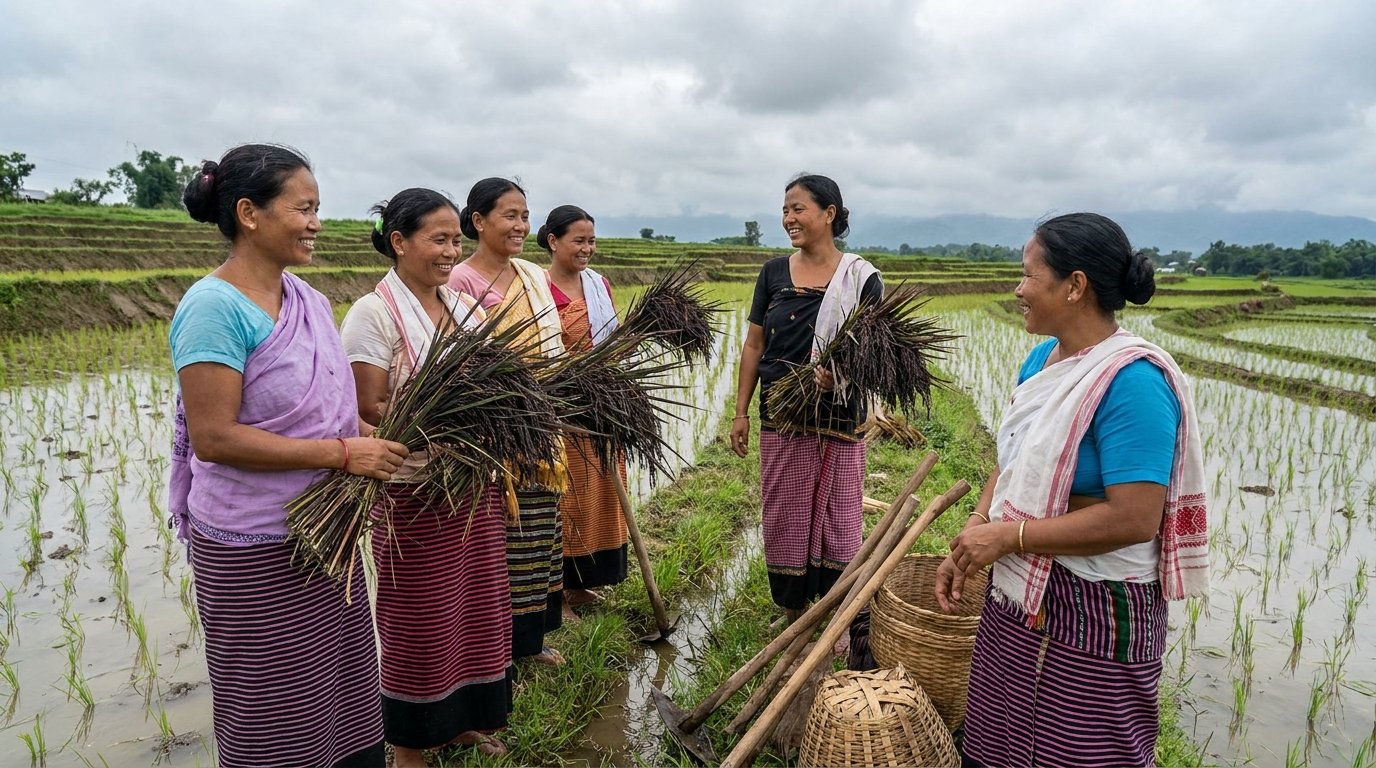
Search "black rice manufacturer in India" and you'll find pages of results — mills, traders, wholesalers and exporters, often listed under the same heading even though they play quite different roles. That mix-up matters more than it sounds, because how a manufacturer handles the grain determines almost everything about the final product: its colour, its aroma, how long it keeps, and how much of its nutrition actually survives the mill. This guide walks through what a genuine manufacturer does, where the grain is grown and processed across India, and what's worth checking before you place an order.
What Is a Black Rice Manufacturer?
"Manufacturer," "miller," "supplier," "trader" and "exporter" tend to get used interchangeably on B2B directories, which doesn't help anyone trying to source properly. A genuine black rice manufacturer in India is a business that processes the raw grain itself — procuring paddy or minimally-processed black rice from growers, then carrying out de-stoning, dehusking, grading, quality testing, packaging and labelling under its own food safety licence, before the product ever reaches a wholesaler, retailer or overseas buyer.
That's a different role from a trader, who typically buys rice that's already been milled and packed elsewhere, then resells it — sometimes under a different brand — without ever touching the actual production line. Neither role is illegitimate on its own, but they carry very different levels of control over quality, consistency and traceability, and that matters a great deal for a grain like black rice, whose value comes down almost entirely to how carefully the bran layer was preserved during milling.
Where Black Rice Is Grown & Manufactured in India
Black rice cultivation in India has traditionally centred on two heartlands. Manipur, together with neighbouring Nagaland, is home to Chak-Hao — an aromatic, glutinous black rice and the only variety in the country to carry a Geographical Indication tag, granted in 2020. Tamil Nadu has its own long-standing black rice, Kavuni (also written Karuppu Kavuni), a heritage variety with roots going back to the Chola era.
Beyond these two established regions, cultivation is spreading. Agriculture departments in states such as Chhattisgarh, Odisha, West Bengal, Assam and Jharkhand have been encouraging farmers to take up black rice as a higher-value alternative to ordinary paddy, and small pockets of cultivation are now appearing in each.
Manufacturing capacity, though, doesn't always sit exactly where the paddy is grown. Because black rice needs gentler, more specialised milling to keep its bran layer — and with it, its colour and nutrition — intact, a fair number of processing and export-grade packing units have set up in states like Karnataka, Madhya Pradesh, Haryana and parts of Tamil Nadu, sourcing raw or lightly-processed grain from Manipur and Tamil Nadu before finishing, grading and packing it to export specification.
India's Black Rice Map, At a Glance
A general guide to where the grain is grown versus where it's more commonly finished and packed for market.
Manufacturer vs. Trader: Why It Matters
The difference between buying from a manufacturer and buying from a trader usually comes down to how many hands the rice passes through before it reaches you, and how much of that journey anyone can actually account for.
Buying direct from a manufacturer typically means a shorter, more accountable chain — the farmer or farmer-producer group, the manufacturer's own facility, and then you. Cleaning, dehusking, grading, testing and packing all happen under one roof and one set of records, which makes it far easier for the manufacturer to answer specific questions about a batch: where the paddy came from, when it was milled, and what its moisture content and purity level were at the time of packing.
Going through a trader usually adds at least one more link, often an independent mill the trader doesn't own, sitting somewhere between the farmer and the final pack. That isn't automatically a problem, but it does mean more of the story behind a given batch is second-hand by the time it reaches you.
Two Ways to Buy Black Rice
Fewer hand-offs generally mean more traceability and more accountability for a given batch.
How Black Rice Is Manufactured: From Paddy to Pack
Manufacturing black rice is less about heavy processing and more about restraint. The whole point is to remove the husk without stripping away the pigmented bran underneath it, since that's where the colour, aroma and most of the nutrition actually sit. A typical manufacturing line runs through roughly the same stages, wherever in India it's based:
- 1Paddy procurement. Sourcing paddy or lightly-processed black rice directly from farmers or a farmer-producer company, usually shortly after harvest.
- 2Cleaning & de-stoning. Removing husk fragments, stones, straw and other foreign matter before the grain goes anywhere near the mill.
- 3Dehusking. Removing only the outer husk, with huller settings gentle enough to leave the bran layer intact, unlike the heavy polishing used for white rice.
- 4Grading & sorting. Separating grains by size and colour, and pulling out broken or discoloured grains to keep the batch consistent.
- 5Quality testing. Checking moisture content, foreign matter and admixture percentage against the buyer's specification sheet before the batch is approved for packing.
- 6Packaging & labelling. Packing into export-grade bags or retail pouches, with batch numbers and any relevant certification marks applied at this stage.
- 7Documentation & despatch. Preparing the paperwork exporters need — phytosanitary certificates, certificates of origin and the like — before the shipment leaves the facility.
None of these steps are unique to black rice on paper, but the tolerances are tighter. Over-polishing at the dehusking stage is the single most common way an otherwise good batch of black rice ends up looking patchy, or loses its nutritional edge over white rice.
From Paddy to Pack: The Manufacturing Line
The same seven stages, laid out end to end.
Procurement
Paddy sourced from growers
Cleaning
Stones & debris removed
Dehusking
Husk off, bran kept intact
Grading
Sorted by size & colour
Testing
Moisture & purity checked
Packing
Bagged & labelled
Despatch
Export paperwork & shipping
Certifications & Licences to Check
Because black rice manufacturing sits inside India's regulated food processing and export framework, a genuine manufacturer should be able to produce documentation on request, not just a bag with a label printed on it. The ones worth asking about:
FSSAI Licence
The baseline food safety licence required of any food business operating in India. Without one, a business shouldn't be manufacturing or packing food at all.
APEDA Registration
Needed to export scheduled agricultural and processed food products, rice included. A registered exporter should be able to share its Registration-Cum-Membership Certificate on request.
ISO 22000
Or an equivalent food safety management certification — a sign the facility follows a documented system, rather than informal good practice.
Organic Certification
Required (typically NPOP, or an internationally recognised equivalent) before "organic" can legally be used on the label, whatever the farming method actually was.
If the product is Chak-Hao or Kavuni specifically, ask for the GI documentation too — it's what confirms the batch traces back to the protected growing region, rather than black rice grown elsewhere and sold under the same name.
Chak-Hao: India's GI-Tagged Flagship Variety
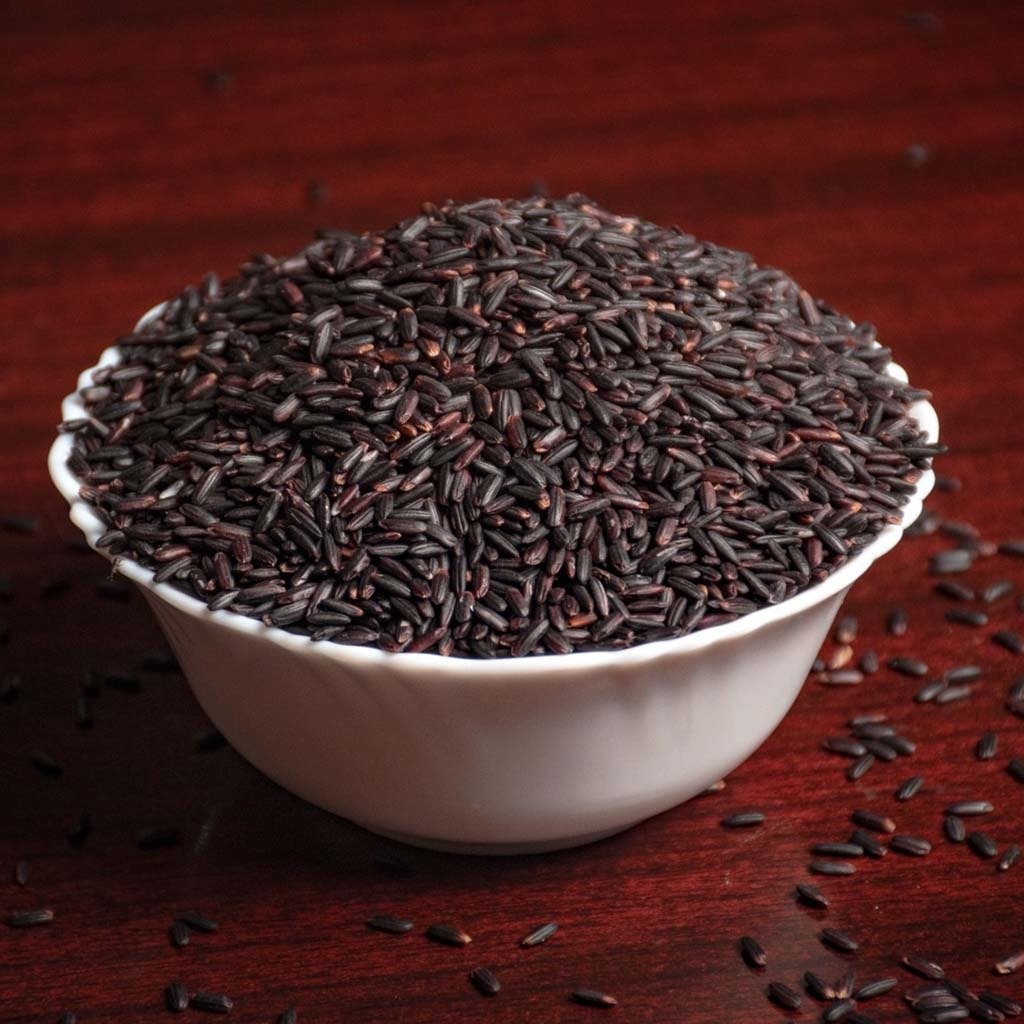
Of everything manufactured under the "Indian black rice" banner, Chak-Hao carries the most weight. It's the only variety in the country with legal Geographical Indication protection, granted in April 2020 to rice grown in Manipur and Nagaland following an application from the Consortium of Producers of Chak-Hao. That protection means the name itself can't legally be used for black rice grown outside the designated region — precisely the kind of detail a serious manufacturer should be upfront about.
Chak-Hao is also the variety behind Chak-Hao Kheer, the black rice pudding that's introduced most people outside Northeast India to the grain in the first place. A fair share of the export enquiries a Manipur-based manufacturer receives can usually be traced back to someone who tried the kheer, liked it, and went looking for the raw grain afterwards.
Nutrition That Proper Manufacturing Preserves
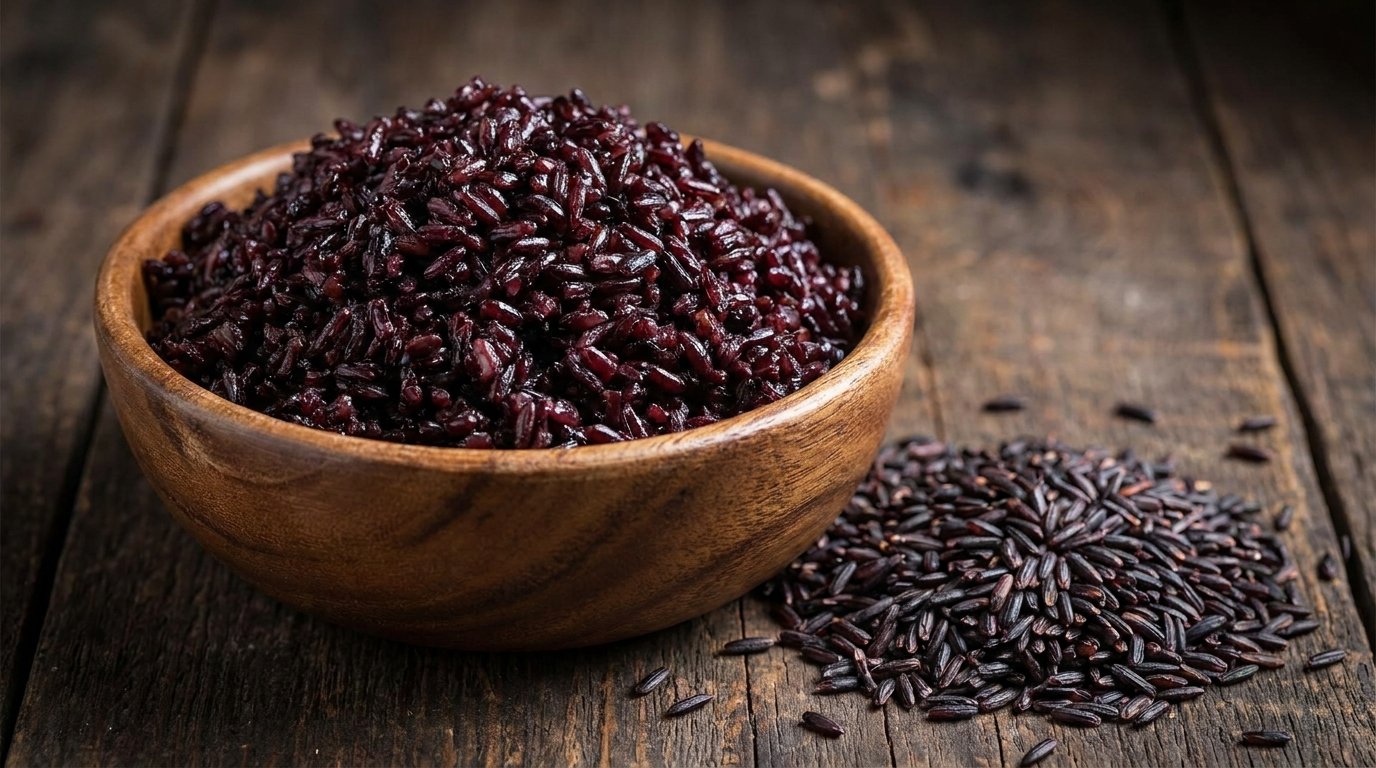
How a manufacturer mills black rice has a direct bearing on what actually ends up in the bag. Because the bran and germ are left largely intact — unlike white rice, which is polished until they're removed entirely — black rice retains meaningfully more dietary fibre, protein and iron than its polished counterpart, along with the anthocyanin pigments responsible for its colour and much of its antioxidant activity. None of that survives over-polishing, which is why the milling step matters more for black rice than for almost any other grain a manufacturer might handle.
Black Rice vs. Polished White Rice
Relative levels only, not lab measurements — the point is the direction of the gap, not exact figures.
Choosing the Right Black Rice Manufacturer
- Ask for licence numbers up front. Request the FSSAI licence number and APEDA registration before you place an order, not after.
- Request a batch-specific spec sheet. Moisture content, admixture and broken grain percentage tell you far more than a generic product brochure.
- Ask where the paddy was actually grown. Check that it matches any GI or origin claim printed on the label.
- Check if samples are available. A manufacturer confident in its own quality should have no issue sending one before you commit to a bulk order.
- Clarify packaging options and order sizes. Ask about both trial quantities and repeat-order minimums.
- Find out who handles export documentation. Some manufacturers manage this in-house; others expect you to bring in a freight forwarder separately.
Packaging, Private Labelling & Bulk Supply
Packaging is usually the last decision point before an order goes ahead, and manufacturers running their own processing lines tend to offer more flexibility here than traders reselling someone else's stock. Common options include export-grade PP or jute bags for wholesale and food-service buyers, smaller retail-ready pouches for supermarket or e-commerce listings, and private labelling for buyers who want to bring the product to market under their own brand rather than the manufacturer's.
Sourcing black rice in bulk for wholesale, retail or export? Get certifications, packaging options and documentation from our trade desk.
Frequently Asked Questions
The Bottom Line
"Black rice manufacturer in India" covers a wider spread of businesses than most buyers expect — from smallholder-facing mills near the growing regions to export-focused facilities several states away. What separates a genuine manufacturer from a middleman isn't the label on the listing, but whether the business actually controls the milling, testing and packing itself, and whether it can back that up with the right FSSAI, APEDA and, where relevant, GI documentation. Whether you're sourcing for retail, food service or export, that distinction is worth checking before the quality or the aroma ever comes up. To go further into the grain itself, have a look at our complete guide to Manipur black rice.
Further reading
- Wikipedia — Chak-Hao black rice
- APEDA — Agricultural & Processed Food Products Export Development Authority
- FSSAI — Food Safety and Standards Authority of India
- Press Information Bureau, Government of India — Manipur unveils high-yielding black rice variety RC Manichakhao-1