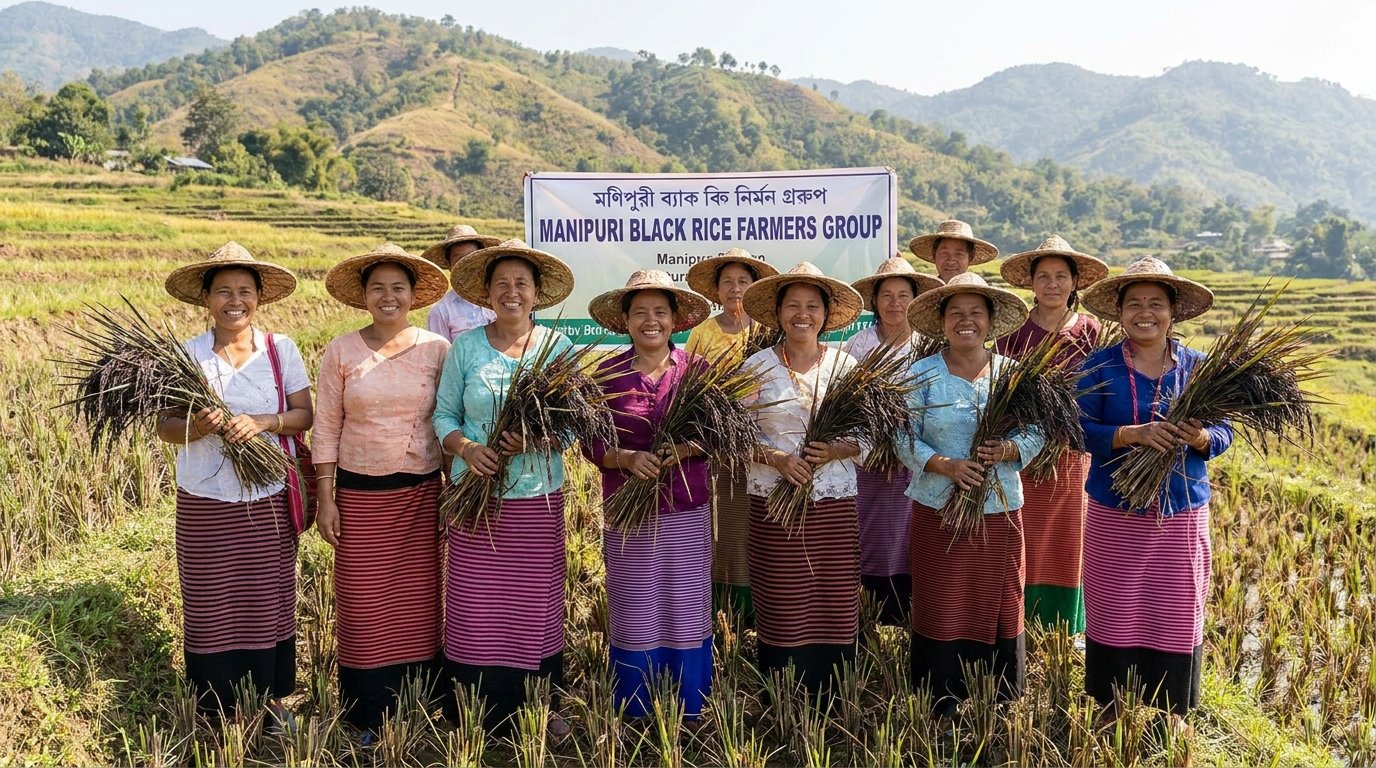
Black rice has moved well past "niche" on supermarket shelves and hotel menus across Singapore, but sourcing it by the tonne is a different exercise altogether from picking up a retail pack. This article looks specifically at what a wholesale black rice exporter actually does, why Manipur's Chak-Hao has become the black rice that discerning Singapore buyers ask for by name, and what's worth checking before you commit a purchase order to a new supplier.
What Does a Wholesale Black Rice Exporter Actually Do?
A wholesale black rice exporter isn't simply a shop that happens to sell rice by the bag. The role covers sourcing paddy directly from growers or registered mills, grading and quality-checking each lot, packing to a buyer's specification — including private label runs — and preparing the export paperwork a shipment needs before it ever reaches a Singapore port. A retail seller, by comparison, is usually just moving on pre-packed stock that someone further up the chain has already sourced and documented.
For a Singapore importer or distributor, that difference matters more than it might first appear. Buying wholesale means you're taking on responsibility for reselling the rice under your own operation — to a hotel kitchen, a supermarket chain, or a specialty grocer — so the traceability, consistency and documentation an exporter provides becomes part of what you're actually paying for, not an afterthought.
Why Singapore Buyers Are Turning to Manipur Black Rice (Chak-Hao)
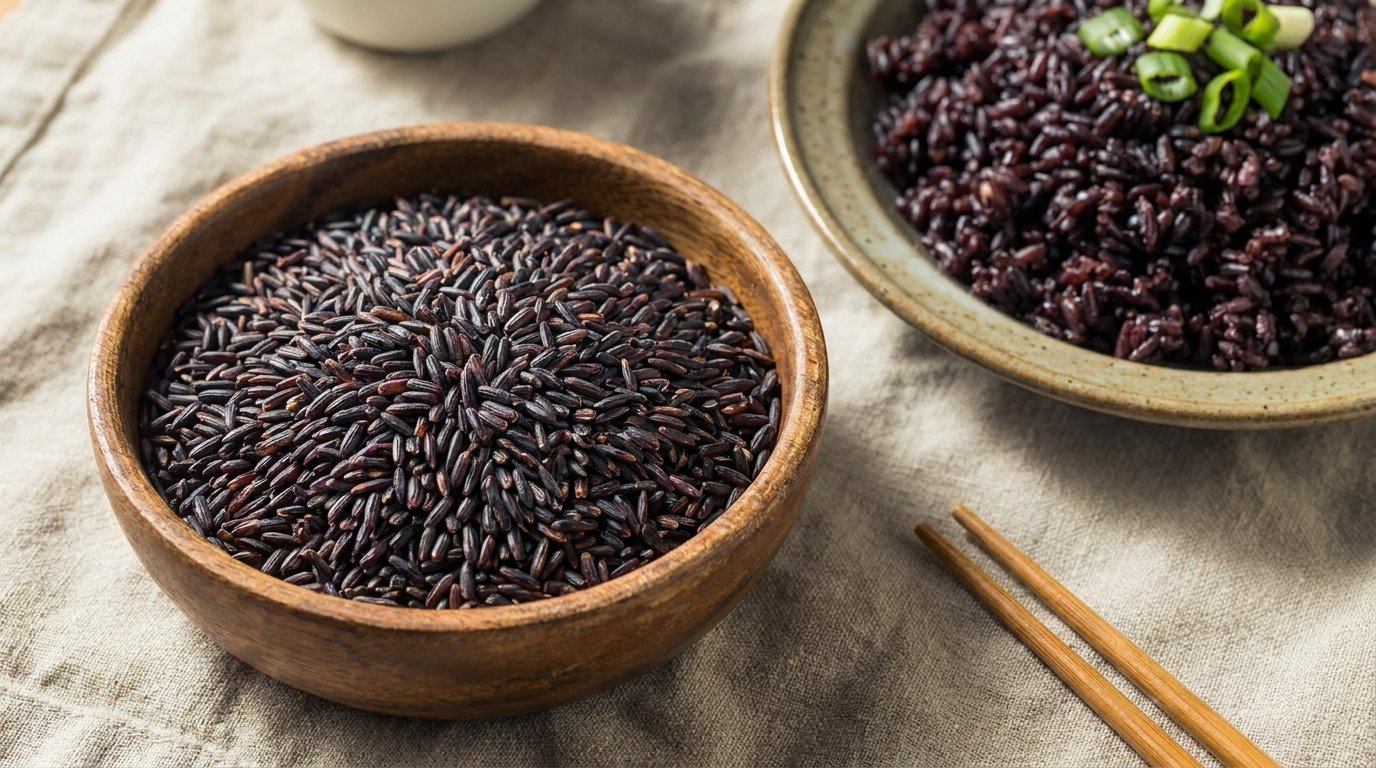
Chak-Hao is grown in the wetland paddies around Imphal in Manipur, Northeast India, and it's genuinely different from the black rice many buyers have encountered before — aromatic, glutinous, and deep purple-black rather than the firmer, less sticky forbidden rice that dominates the international market. That texture and fragrance carry through into cooking, which is exactly why it turns up on menus that want their black rice dishes — kheer-style puddings, grain bowls, congee — to actually taste distinctive rather than just look the part.
There's also a commercial angle Singapore buyers increasingly care about: because it's minimally milled, Chak-Hao keeps its bran layer, which means it reads well on a "whole grain" or clean-label shelf tag — a genuine point of difference for health food brands and specialty grocers stocking it alongside more familiar superfoods. For a deeper look at the grain itself — its nutrition profile, its four colour varieties and how to cook it — see our full guide to Manipur black rice.
GI Tag & Traceability: Why It Matters to a Wholesale Buyer
Chak-Hao is India's only Geographical Indication–tagged black rice, a status it was granted in 2020 after the Consortium of Producers of Chak-Hao applied with backing from Manipur's Department of Agriculture and NERAMAC. In practical terms, the tag legally reserves the name "Chak-Hao" for rice actually grown within defined districts of Manipur — the same principle that protects names like "Darjeeling tea."
For a wholesale buyer, that's not just a certificate to file away. It's the clearest available signal that what you're bringing in under the Chak-Hao name genuinely traces back to Manipuri paddy, rather than black rice grown elsewhere and relabelled to ride on a premium reputation — a real risk once any specialty grain starts commanding attention in export markets. Ask a prospective wholesale black rice exporter to show GI documentation alongside their shipment paperwork, not just a mention of it on their website.
What Singapore Importers Should Look For in a Wholesale Black Rice Exporter
Price is rarely the first thing that trips up a new wholesale relationship — inconsistent grading, missing paperwork or vague lead times usually are. Based on the questions that tend to come up most often in conversations with Singapore-based buyers, here's roughly how the priorities stack up:
Wholesale Packaging & Private Label Options
A wholesale black rice exporter worth working with should be able to pack to more than one specification, since a hotel kitchen, a supermarket chain and an online health food brand are usually buying for very different endpoints.
Kraft Sacks
The standard format for HORECA kitchens, central catering and food manufacturers who portion rice on-site rather than sell it retail-packed.
Retail-Ready Pouches (Private Label)
Sized for supermarket and specialty grocer shelves, packed and labelled under your own brand rather than the exporter's.
Bulk & Jumbo Bags
For large-scale repackers, distributors and manufacturers who prefer to handle their own downstream packing.
Certifications a Reliable Wholesale Black Rice Exporter Should Hold
Certifications won't tell you everything about a supplier, but their absence is usually a fast way to rule one out. At minimum, ask to see:
GI Tag (Chak-Hao)
Confirms the rice is genuinely grown within Manipur's protected districts, not blended or relabelled black rice from elsewhere.
Organic Certification
Recognised organic status if you're marketing the rice as organic — don't take the word "organic" on a label at face value.
ISO 22000 / HACCP
Gives you a paper trail for hygiene and handling, which Singapore's own food safety expectations will eventually ask you about too.
Export Documentation
A certificate of origin and phytosanitary certificate prepared correctly the first time, rather than chased after your shipment is already at the port.
From Imphal to Singapore: How the Export Process Works
However tidy a supplier's website looks, the actual journey from paddy field to your Singapore warehouse runs through several distinct stages:
- 1Sourcing & harvest verification. Paddy is sourced from registered Chak-Hao growers around Imphal, with harvest lot and origin details recorded from the start.
- 2Milling, grading & testing. The rice is lightly milled to keep the bran intact, then graded and, where required, lab-tested for moisture and purity.
- 3Packing to specification. Packed into the bag size and labelling format agreed with the buyer, including private label runs where requested.
- 4Export documentation. Certificate of origin, phytosanitary certificate, and any GI or organic paperwork are compiled ahead of shipment.
- 5Freight to Singapore. Cargo is consolidated and shipped by sea for larger volumes, or by air for smaller or time-sensitive orders.
- 6Customs clearance & delivery. Cleared through Singapore Customs and the Singapore Food Agency under the applicable rice licence, then delivered to your warehouse or distribution point.
Singapore Import Rules Wholesale Buyers Should Know
Singapore treats rice a little differently from most other food imports, which catches some first-time buyers off guard.
A quick regulatory snapshot
- Rice is a controlled item. Under Singapore's Price Control Act and the Price Control (Rice) Order, a licence issued by the Singapore Food Agency is required to import, re-export or carry out wholesale dealings in rice — including specialty varieties such as Chak-Hao, not just ordinary white rice.
- GST applies at 9%. Singapore charges GST on the CIF value of most imported goods, including food staples like black rice, though rice itself isn't subject to additional customs duty — duty in Singapore is largely limited to liquor, tobacco, motor vehicles and petroleum products.
- Classification falls under HS heading 1006. The exact subheading depends on how the rice has been milled, so it's worth confirming the correct code with your customs broker before your first shipment.
Rules and rates can change, so it's worth confirming current requirements with SFA or your customs broker before you ship — a well-established wholesale black rice exporter should already be familiar with what Singapore-bound paperwork looks like.
Wholesale Exporter vs. Local Repacker vs. Online Marketplace Seller
Not every supplier calling itself a "black rice exporter" is set up the same way. Here's how the three most common options in the Singapore market tend to differ:
Local Repacker / Retail Distributor
Buys already-milled rice from various sources and repacks it under a local label. Convenient for small, fast-turnaround orders, but traceability back to Manipur is often lost somewhere along the way.
Online Marketplace Seller
Easy to order small trial quantities on short notice, but blended origins, inconsistent grading and little to no export paperwork make it a poor fit for anything beyond a first sample order.
Direct Wholesale Black Rice Exporter
Sources straight from Manipur, controls grading and packing in-house, and issues complete export documentation — a traceable, repeatable supply chain suited to regular, larger-volume orders.
Who Buys Wholesale Black Rice in Singapore
Demand for wholesale black rice in Singapore isn't coming from just one type of buyer — it spans several corners of the local F&B and retail trade:
HORECA
Hotels, restaurants and caterers using Chak-Hao for signature desserts, grain bowls and premium rice pairings that stand out on a menu.
Supermarkets & Specialty Grocers
Stocking it as a premium, better-for-you alternative alongside quinoa, brown rice and other whole grains.
Health & Wellness Businesses
Building products — porridge mixes, grain blends, bakery ingredients — around its natural bran and anthocyanin content.
Private Label Distributors
Buyers who want the rice packed and labelled under their own brand for onward retail or B2B resale.
How to Vet a Wholesale Black Rice Exporter: A Quick Checklist
Before you commit a purchase order, a short round of due diligence saves a lot of trouble later:
- Ask for GI and/or organic certification documents, not just a mention of them on a website.
- Request a sample before committing to a full container or bulk bag order.
- Confirm they can issue a proper certificate of origin and phytosanitary certificate for Singapore-bound cargo.
- Ask whether they've shipped to Singapore before, and whether references are available.
- Clarify packaging, labelling and private label options upfront, in writing.
- Get MOQ and realistic lead times confirmed before you plan a launch or reorder schedule around them.
Sourcing wholesale black rice for the Singapore market? Get packaging options and export documentation from our trade desk in minutes.
Frequently Asked Questions
Sources
- Singapore Food Agency / Singapore Customs — licence requirements for importing, re-exporting and wholesale dealing in rice
- Inland Revenue Authority of Singapore (IRAS) — current GST rate on imported goods
The Bottom Line
A wholesale black rice exporter is only as good as the traceability, documentation and consistency it brings to your supply chain — and for Manipur's Chak-Hao, that starts with a GI tag that legally ties the name to one valley in Northeast India. Whether you're stocking a hotel kitchen, a supermarket shelf or a private label brand, it's worth choosing a supplier who can prove where the rice comes from, not just claim it. To go further, explore our complete guide to Manipur black rice or get in touch with our trade desk for a wholesale quote.