
If you've searched "black rice bulk," you've probably moved past buying a single retail pack and into sourcing serious volume — for a store shelf, a production line, a restaurant menu or an export shipment. This guide is written for exactly that stage: what actually counts as a bulk order, how black rice is packaged and graded at scale, what to verify before you commit, and how sourcing GI-tagged Manipur Chak-Hao in bulk differs from ordering a generic, unlabelled bag online.
Quick Answer: What Buying Black Rice in Bulk Involves
Buying black rice in bulk generally means ordering well beyond a single retail pack — anywhere from a few sacks of 25–50 kg up to full container loads measured in metric tonnes. Wholesale buyers, including retailers, food manufacturers, hotels and exporters, typically source directly from growers or verified suppliers to get consistent grain quality, proper certification and packaging built for long-distance shipping rather than a supermarket shelf. For genuine, traceable stock, look specifically for GI-tagged Manipur Chak-Hao rather than an unlabelled "black rice" bag, since the GI tag is the clearest guarantee of both origin and quality control at scale.
The rest of this guide breaks that down properly — who actually places these orders, how order sizes are typically tiered, what separates a premium bulk grade from a processing-grade batch, and what to have ready before you request a quote.
Who Actually Buys Black Rice in Bulk?
"Bulk" means something different depending on who's asking. Ranked roughly by the volume each buyer type typically moves in a single order, here's who makes up the wholesale side of the black rice trade:
Import & Export Trading Companies Largest volume
Buy full container loads to redistribute across a region or country. Documentation, GI certification and consistent batch quality matter more to this group than anything else, since they're reselling on reputation.
Food & Beverage Manufacturers
Use black rice as a raw ingredient in cereals, snack bars, rice flour and plant-based products. They order large, recurring volumes and care deeply about consistent moisture content and grain-size uniformity batch to batch.
Retailers & Supermarket Chains
Order on a recurring wholesale schedule, often under their own private-label packaging. Reliable lead times and packaging that's ready for private labelling both matter here.
Restaurants, Hotels & Catering Groups
Restock regularly for menu items such as Chak-Hao kheer or black rice bowls. Order sizes are smaller than a distributor's but repeat often enough that consistency matters more than any single batch.
Health Food & Nutraceutical Brands
Order smaller bulk volumes but ask the most questions — lab-verified anthocyanin content, pesticide residue reports and clean sourcing documentation are usually non-negotiable for this group.
E-commerce & Subscription Brands
Buy bulk sacks and repackage into smaller retail units under their own brand. Usually the entry point of the bulk-buying ladder, and often the group most willing to test a new supplier with a smaller first order.
Whichever category you fall into, the underlying sourcing questions stay the same: how much you actually need, how it should be packaged for your supply chain, and how you'll verify the grain is what the supplier says it is.
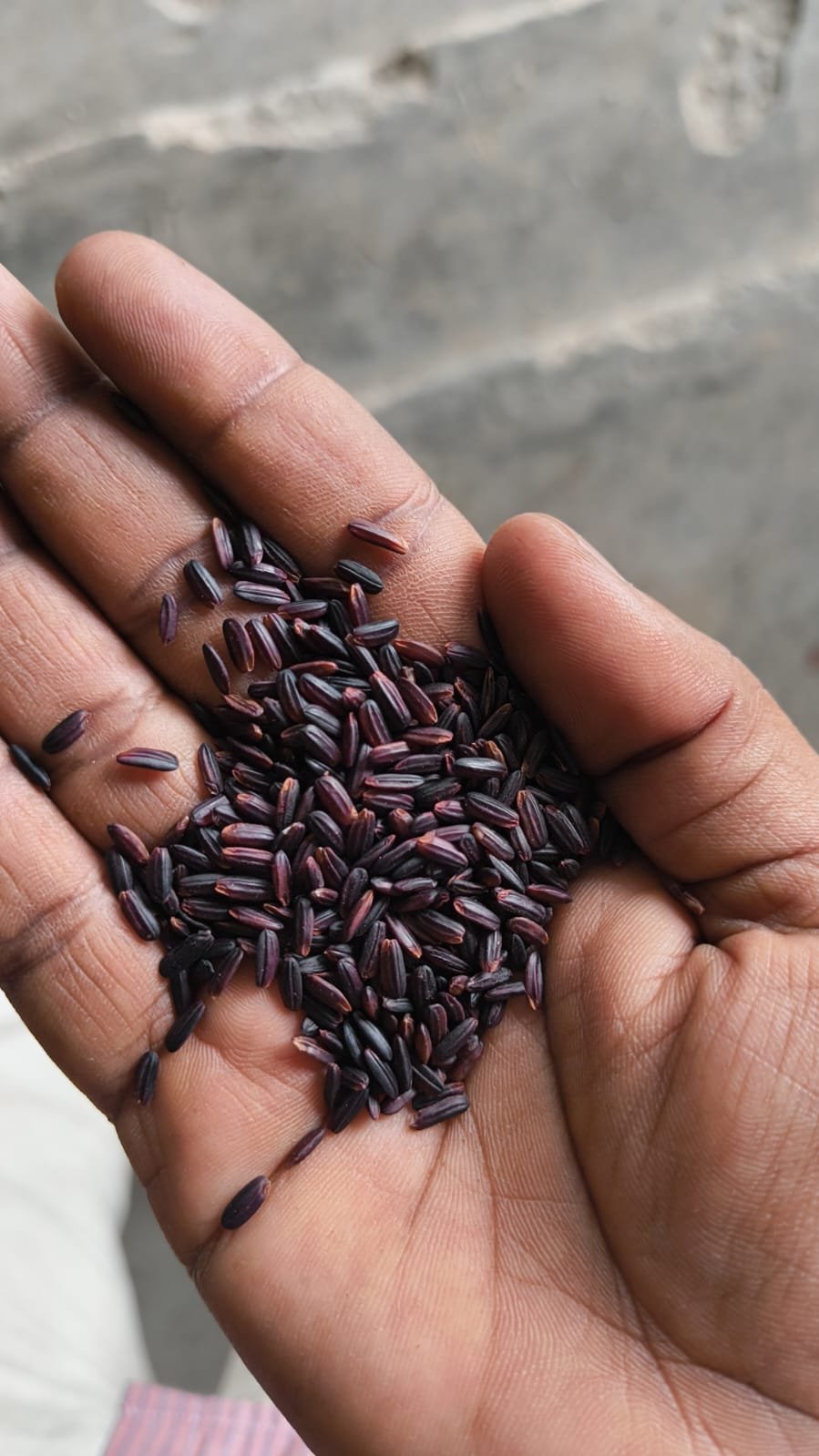
Bulk Order Tiers: How Much Is "Bulk," Exactly?
There's no single industry-wide cutoff for what makes an order "bulk" — it depends on the buyer, the packaging format and the supplier's own minimums. Broadly, though, here's how order sizes tend to break down in practice:
Typical Bulk Order Tiers
Rough order-size bands used across the trade — not fixed rules
These bands are general conventions used across the grain trade, not fixed rules — always confirm the actual minimum order quantity directly with your supplier, since it depends on packaging format, grade and destination.
What to Confirm Before You Place a Bulk Order
Before you commit to a wholesale quantity of black rice, run through this checklist with your supplier. It's a lot cheaper to ask these questions upfront than to discover the answer after a container has already shipped:
- Origin and GI status. Confirm whether the stock is genuine GI-tagged Manipur Chak-Hao or an unlabelled black rice blend sourced from mixed origins.
- Moisture content. Ask for the moisture percentage on the lab report — grain that's too high in moisture is a real spoilage risk over a long shipment.
- Broken grain and purity percentage. This affects both cooking quality and shelf appeal, and it's a fair question to ask of any bulk supplier.
- Lab and certification reports. Request pesticide-residue testing, organic certification where relevant, and phytosanitary documentation before committing to a container-size order.
- Packaging compatibility. Make sure the bag format actually matches your logistics — a 25 kg retail-style bag isn't the right choice for a 10 MT ocean-freight order.
- Lead time around harvest. Chak-Hao is a monsoon-season crop, so lead times can stretch during off-season months; ask early rather than assuming stock is always sitting ready.
- Sample availability. A supplier unwilling to send a pre-shipment sample for a large order is worth treating as a warning sign.
Understanding Bulk Black Rice Quality Grades
Not every bag of "black rice" sold at wholesale is graded the same way, and knowing the difference protects you from mismatched expectations once the shipment actually arrives:
Premium Export Grade
Hand-selected, minimally broken grain from lab-tested batches — the standard used for export and private-label programs.
Standard Wholesale Grade
Good for cost-conscious bulk buyers who don't need private-label-level uniformity, but still expect basic quality screening.
Broken & Byproduct Grade
Higher broken-grain content, usually better suited to milling into flour or extrudates than to a whole-grain retail pack.
Not sure which grade fits your product or menu? Our trade desk can walk you through samples of each before you commit to a bulk order — no pricing needed to get started.
Packaging, Shipping and Documentation for Bulk Orders
How your black rice is packed matters almost as much as the grain quality itself once you're moving real volume — the wrong bag format can undo a good grade over a long, humid shipping route. Here's how the common formats compare:
PP Woven Bags
The standard format for smaller wholesale restocking — easy to palletise and handle without heavy equipment.
Jute Bags
Traditional and breathable, but less protective against humidity on long transit routes than a lined alternative.
Jumbo / FIBC Bags
The standard choice for container-scale wholesale and export orders — needs forklift or crane handling but ships efficiently at volume.
Private-Label Packaging
Branded bags packed to your own specification — a common request from retailers and e-commerce brands buying at bulk volume.
On the paperwork side, a typical bulk or export order involves a commercial invoice, a packing list, a certificate of origin, a phytosanitary certificate, and — where genuine Chak-Hao is involved — a copy of the GI certificate confirming the grain's origin. Exact requirements shift depending on the destination country, so it's worth confirming the full document list with your supplier and, if you're importing, your customs broker, well before the order ships.
Storage Conditions and Shelf Life at Bulk Volumes
Because black rice keeps its bran layer largely intact, it's more prone to natural oxidation over time than heavily milled white rice — which matters a lot more once you're holding several months' worth of stock rather than a single retail pack. Packaging format and storage conditions both play a direct role in how long a bulk batch stays at its best:
Shelf Life by Packaging & Storage Conditions
Approximate storage life under recommended conditions — illustrative, based on general grain-storage practice
Store in a cool, dry space away from direct sunlight regardless of packaging — humidity and heat shorten shelf life far more than time alone does.
Common Mistakes First-Time Bulk Buyers Make
- Skipping the sample stage. Committing to a wholesale order before checking a sample is the single most avoidable risk in bulk sourcing.
- Ordering on weight alone. Two sacks of the same weight can have very different broken-grain percentages and cooking behaviour.
- Ignoring Incoterms. Not clarifying who's responsible for freight and insurance leads to disputes that are far harder to resolve after the goods have shipped.
- Assuming "black rice" means Chak-Hao. Not every dark-grained rice sold at wholesale is genuine, GI-tagged Manipur black rice — ask directly.
- Overlooking monsoon-season lead times. Ordering right before or during peak season without planning ahead can stretch delivery timelines.
- Choosing packaging on convenience alone. The right bag format depends on your shipping route and climate, not just what's easiest to load.
How to Request a Bulk Black Rice Quote
- 1Share your requirements. Tell us the grade, packaging format, order volume and destination you're working with.
- 2Request a sample. Verify grain quality, aroma and cooking behaviour firsthand before committing to volume.
- 3Review documentation. We'll share the GI certificate, lab reports and phytosanitary paperwork relevant to your order.
- 4Confirm packaging and Incoterms. Agree on bag format, loading method and shipping terms upfront.
- 5Confirm the order. Lock in a production and shipping timeline with our trade desk.
Frequently Asked Questions
The Bottom Line
Buying black rice in bulk comes down to the same handful of questions every time: how much you actually need, what grade and packaging fit your supply chain, and whether the grain is genuinely what the supplier says it is. Manipur's GI-tagged Chak-Hao remains the clearest way to answer that last question with confidence, since the tag itself is a legal guarantee of origin that a generic "black rice" listing simply can't offer. For more on the grain itself, see our guide to which state grows black rice and our full guide to Manipur black rice, or head straight to the product page to start a bulk enquiry.