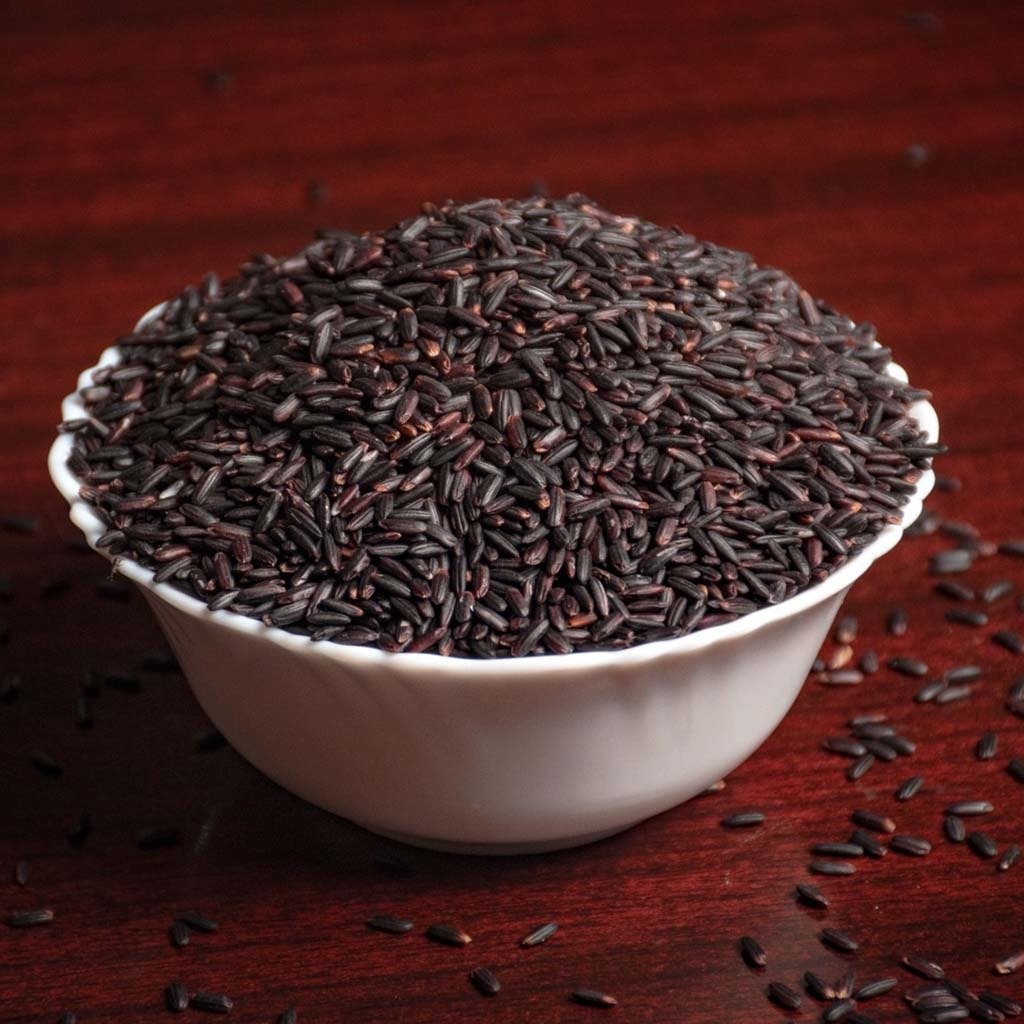
Type "black rice exporter" into a search engine and you'll turn up everything from small Manipur cooperatives shipping a few sacks a month to established trading houses moving container loads into a dozen markets — all describing themselves in much the same terms. Some can point to a Geographical Indication registration and a named harvest lot. Others use "black rice" as a catch-all for whatever pigmented grain happened to be available that season, whether it came from Manipur, China, Thailand or Indonesia. For a Singapore buyer — whether you're stocking a health food store, supplying a hawker centre stall known for its chak-hao kheer, or building a private-label pouch for retail — that difference matters well before certifications, packaging or shipping enter the conversation. This guide sets out what to check, in what order, and what Singapore's own import rules expect of you as the buyer.
What Is a Black Rice Exporter?
A black rice exporter sells and ships black rice across a border to an overseas buyer, and takes on (or at least coordinates) the customs, freight and compliance side of that transaction — not just the growing, milling or bagging of the grain. That extra layer is what separates an exporter from a purely domestic wholesaler: a wholesaler's job usually ends once the rice leaves the warehouse, while an exporter has to get a consignment through the destination country's own import rules, whatever those happen to be.
The label itself, though, tells a buyer very little. "Black rice" is an umbrella term spanning several unrelated grains — Chinese forbidden rice, Thai and Indonesian black glutinous varieties, and Manipur's aromatic, sticky Chak-Hao among them — and an exporter could be sourcing any one of these, blending several together, or simply re-exporting whatever a broker had on hand. Before comparing lead times or packaging, it is worth pinning down exactly which black rice an exporter is selling, and where it actually came from.
Why the Exporter's Origin Story Matters
At export volume, a vague origin claim stops being a minor letdown and starts becoming a liability that scales with your order size. If you're a Singapore distributor reselling under your own brand, or a food business building a menu item around it, the exporter's claims about origin effectively become the claims you are making to your own customers — and, indirectly, the basis on which your own import filings rest.
This is where Manipur's Chak-Hao has an edge that generic black rice sold by exporters usually doesn't: a Geographical Indication (GI) tag, granted on 20 April 2020 and currently valid until 25 December 2027, that legally reserves the name for rice actually grown in Manipur. A GI reference on its own doesn't make every exporter trustworthy, but it gives a buyer something concrete to ask for — a registered name tied to a specific place, rather than a marketing description that could describe almost any dark-hulled rice on the market.
Types of Black Rice Exporters, Compared
Most black rice exporters sit at one of three points in the supply chain, and each comes with a different trade-off. None is automatically the better choice — a Singapore importer chasing a fast private-label launch and a specialty retailer wanting fully traceable small lots are usually looking for different things.
| What to check | Grower-Exporter | Export Trading House | Contract Export Packer |
|---|---|---|---|
| Origin traceability | Direct — often ties a shipment back to a specific harvest lot | Depends on the aggregator's own supplier records | Only as strong as the growers it buys from upstream |
| Export documentation experience | Varies — smaller cooperatives may lean on a freight partner | Usually strong, across many shipments and destinations | Strong on packaging, often lighter on origin paperwork |
| Typical lead time | Longer, tied to harvest and cooperative schedules | Flexible, can consolidate stock quickly | Fast for stock packaging, slower for custom runs |
| Private-label flexibility | Limited — usually set up for bulk export sacks | Moderate, depending on packing partners | High — usually their core service |
| Best suited for | Buyers who prioritise traceability above speed | Buyers needing flexible or urgent volumes | Brands launching a private-label SKU quickly |
Treat this as a starting set of questions rather than a verdict on any category. A contract export packer with solid upstream sourcing records can be perfectly reliable, and a grower-exporter can still fumble a rush order.
Milling Depth & Grain Integrity for Export
Chak-Hao is milled lightly rather than deeply polished, which is what lets it keep most of its dark bran and germ intact. That matters more at export scale than it might at a local market stall: a long sea voyage means more handling, more time in transit, and more chances for an over-polished batch to lose the anthocyanins and fibre that make the grain worth buying in the first place — or for an under-milled batch to arrive with inconsistent husk fragments still in the bag.
Bran & Pigment Retention by Milling Type
An illustrative comparison of how much pigmented bran layer typically remains after milling, based on general nutrition literature on pigmented rice — not a certificate of analysis for any specific batch.
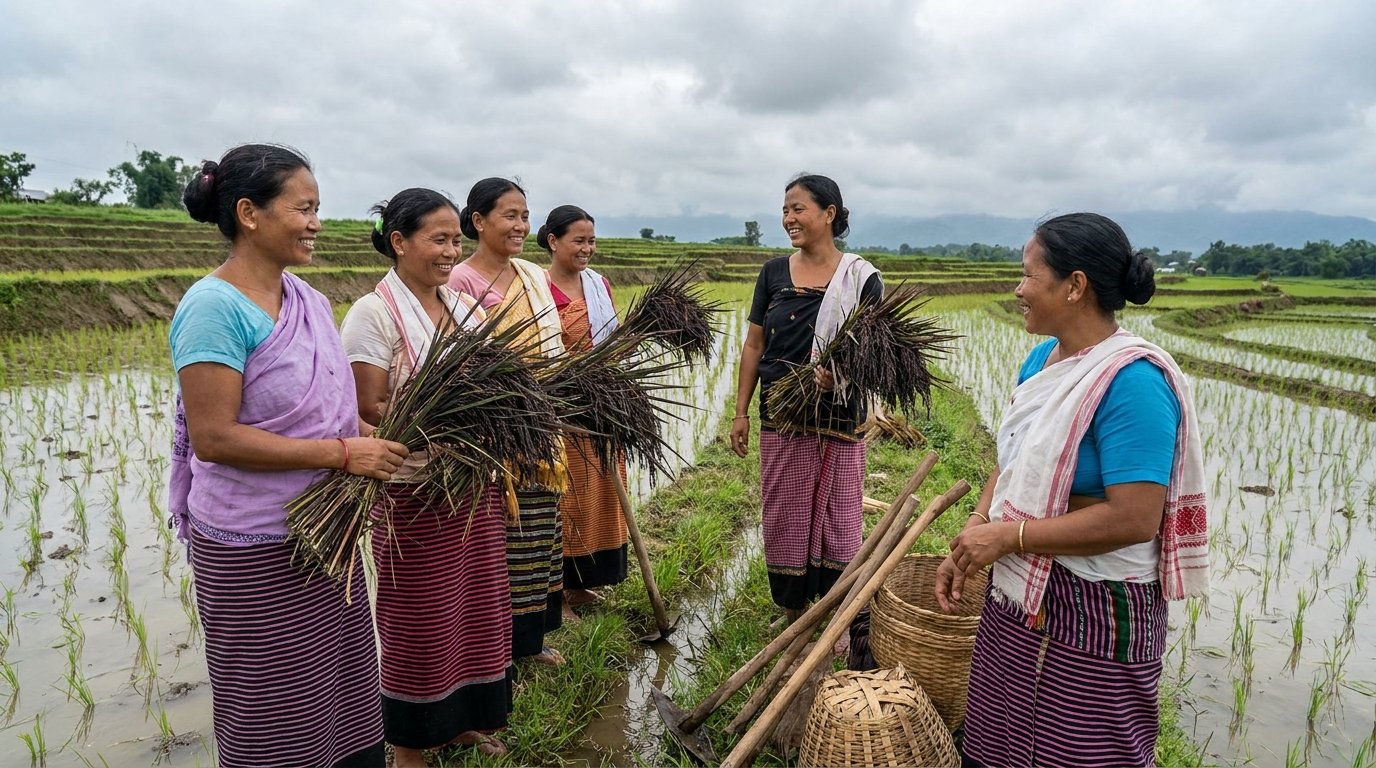
Moisture control is the other variable that gets more important, not less, once a container is sealed for weeks at sea. Rice kept above roughly 14% moisture is markedly more prone to mould and insect activity during long storage or transit, so an exporter moving container-scale volume should be actively testing for this — not just bagging the grain and hoping the voyage goes smoothly.
Certifications a Genuine Exporter Should Hold
None of this paperwork guarantees a good product by itself, but its absence is one of the fastest ways to spot an exporter who isn't set up for serious cross-border business.
- FSSAI licence. A baseline requirement for any Indian food business, including exporters preparing rice for shipment overseas.
- APEDA registration. India's Agricultural and Processed Food Products Export Development Authority registration is standard for a legitimate agricultural exporter.
- Organic certification. Look for a recognised certifying body rather than an unverified "organic" claim, especially if you intend to resell into a market with its own organic standards.
- GI registration reference. For genuine Chak-Hao, an exporter should be able to point to its standing within the GI framework rather than simply using the name.
- Lab test reports. Moisture content, foreign matter, broken grain percentage, and pesticide residue or heavy metal testing where your market requires it.
- Halal certification (where relevant). Not a Singapore import requirement, but useful commercially if the rice is destined for halal-certified foodservice or retail channels.
Need an exporter that can produce this documentation without back-and-forth? Our trade desk can share certifications and sample lab reports directly.
Singapore Import Rules Every Buyer Should Know
Rice of every description is a controlled item in Singapore, regulated under the Price Control Act (Chapter 244) and the Price Control (Rice) Order 1990. Since 1 April 2023, the Singapore Food Agency (SFA) has administered this regime directly, and a Rice Licence issued by SFA is required before a business can import, re-export or wholesale rice here at all — a step that sits with you as the Singapore buyer, not with the overseas exporter.
SFA's licensing framework splits rice into two tracks, and the track matters because it changes what you commit to as an importer.
Singapore's Two Rice Licence Categories
Based on the Singapore Food Agency's classification of rice under its Rice Licence scheme. Requirements can be updated by SFA, so confirm current details before shipping.
Stockpile Grade Rice
- White rice
- Basmati rice
- Parboiled rice
- Ponni rice
Requires participation in the Rice Stockpile Scheme and a Monthly Import Quantity commitment — a minimum of 50 tonnes for white rice.
Non-Stockpile Grade Rice
- Glutinous rice
- Brown rice
- Red rice
- Cargo rice
- Wild rice
No Monthly Import Quantity commitment — though an import permit filed through TradeNet is still required for every single consignment.
Because Chak-Hao is an aromatic, bran-retaining glutinous rice, it falls under the lighter-touch non-stockpile category, so a Singapore buyer bringing it in isn't drawn into the stockpile scheme's volume commitments the way an importer of white or basmati rice would be. Every consignment still needs its own import permit, filed through TradeNet — Singapore's national single window for trade declarations — quoting the correct HS/product code, the exporting establishment's code, and your own SFA licence number. Approval is typically processed within a few working days, after which SFA issues a Cargo Clearance Permit and GST becomes payable before the shipment is released.
One detail that surprises a lot of first-time buyers: unlike many other destination markets, Singapore does not generally require a phytosanitary certificate for milled rice. Singapore's own plant health guidance lists grains, spices and other stored products among the goods that don't need one, reserving phytosanitary certification mainly for fresh produce and planting material. So rather than chasing a phyto cert out of habit, focus your documentation checks on the TradeNet import permit, accurate labelling under SFA's Labelling Guidelines for Food Importers & Manufacturers, and — if your buyers ask for it — Halal certification for the retail or foodservice channel it's headed into.
Export Packaging & Container Options
- Bulk export sacks (25 kg, 50 kg). The default for FCL and LCL orders that a distributor will repack after arrival.
- Jumbo (FIBC) bags. Suited to full container loads that will be handled by machine rather than by hand at the receiving warehouse.
- Retail-ready pouches. Smaller, food-grade sealed packs for direct shelf sale — these must meet SFA's Labelling Guidelines for Food Importers & Manufacturers before they can be sold in Singapore, so confirm the exporter can produce compliant artwork.
- Palletised cartons. Common for smaller, mixed-cargo LCL shipments where the rice shares a container with other goods.
- Batch or lot coding. Worth requesting even on stock packaging, since it's what makes traceability usable once the rice is on a shelf in Singapore rather than just a promise on a spec sheet.
Shipping to Singapore: Sea vs Air
Manipur is landlocked, so a shipment typically moves overland or by rail to a coastal gateway — commonly Kolkata — before it's containerised for the onward sailing to Singapore. Build that inland leg into your lead-time expectations; it's easy to overlook when a supplier only quotes the port-to-port sailing time.
Sea Freight vs Air Freight to Singapore
General trade-offs for Manipur-origin cargo bound for Singapore. Actual transit times depend on the carrier, port pairing and season — check current schedules with your freight forwarder.
Sea Freight (FCL / LCL)
Lower cost per kg
The default for distributor and export-container orders. Slower overall, but Singapore's role as a major regional transhipment hub often means frequent sailing options once cargo reaches port.
Air Freight
Faster transit
Reserved for smaller or time-critical restocks — useful when a Singapore retailer or distributor has sold out and needs to bridge the gap before the next sea shipment lands.
Export Documentation Checklist
Rice generally falls under HS heading 1006, though the precise subheading depends on how far the grain has been milled — paddy, husked, semi-milled, wholly milled or broken each sit slightly differently. Rather than assume, confirm the exact classification with Singapore Customs' HS code search tool, since an incorrect code can delay your own TradeNet filing.
- Commercial invoice & packing list. The baseline documents for any cross-border shipment, listing value, quantity and packaging detail.
- Certificate of origin. Confirms where the rice was grown or processed, which can affect duties and preferential trade treatment.
- Exporting establishment details. Your Singapore import permit application will ask for the exporter's establishment code — a professional exporter should have this ready in advance.
- Lab or health certificate. Requested case-by-case depending on your buyer's own SFA filing needs, even though a phytosanitary certificate typically isn't required for milled grain.
- Agreed Incoterm. Terms such as FOB, CIF or EXW determine exactly where responsibility for freight, insurance and risk shifts from exporter to buyer.
- ISPM-15 marking (if wooden pallets are used). A general international freight requirement for treated wood packaging, not specific to rice, but worth checking regardless.
The Export Process, Step by Step
Enquiry & sample request
Share your target volume, packaging format and Singapore delivery point, then ask for a trial sample together with its lab report before discussing terms any further.
Sample & lab verification
Check the sample's grain colour, size and moisture against your own standard, and confirm the lab report reflects what a full production batch will actually look like.
Contract, terms & Incoterm
Agree the minimum order, packaging format, lead time and an Incoterm such as FOB or CIF, then put the specification in writing before any purchase order is raised.
Singapore licensing check
Confirm your own SFA Rice Licence status and, since Chak-Hao sits in the non-stockpile category, prepare the establishment and product details you'll later quote on a TradeNet import permit application.
Production, packing & inspection
The exporter mills and packs to the agreed specification; for container-scale orders, arrange an independent pre-shipment inspection rather than relying only on the exporter's own sign-off.
Export documentation & dispatch
The exporter prepares the commercial invoice, packing list, certificate of origin and any supporting lab or health certificates, then books the cargo — typically by sea for full or part container loads.
Singapore clearance & delivery
On arrival, your import permit is filed through TradeNet using the correct HS code and establishment details; once SFA issues the Cargo Clearance Permit and GST is settled, the shipment is released for delivery.
Red Flags When Evaluating a Black Rice Exporter
- No sample, no lab report. An exporter unwilling to send either before you commit to an order is not one to commit to.
- Vague origin claims. "Sourced from Northeast India" without a specific state, district or GI reference is worth pressing on further.
- No grasp of Singapore's rules. Confusion over the Rice Licence categories, TradeNet, or which certificates Singapore actually asks for usually means you'll be doing that homework yourself, under time pressure.
- Unclear MOQ or packaging policy. If an exporter can't describe its own order tiers clearly, expect that same vagueness to carry through the rest of the relationship.
- Quotations that swing with no explanation. Large, unexplained variation between quotations for the same specification is often a sign of undisclosed differences in grain quality or origin.
Frequently Asked Questions
The Bottom Line
"Black rice exporter" describes a business model, not a guarantee of origin or compliance — and for a Singapore buyer, that distinction carries real weight once import permits and licensing are involved. The exporters worth working with treat traceability, certification and Singapore-specific documentation as routine rather than an inconvenience: they'll send a sample without being asked twice, explain their own supply chain plainly, and know the difference between what your shipment actually needs and what buyers in other markets might assume it needs. For Manipur Chak-Hao specifically, a GI reference and clear batch traceability are the closest thing to a guarantee you'll get. To go further, see our wholesale sourcing guide or our complete guide to Manipur black rice, or reach out to our trade desk directly.
Further reading
- Wikipedia — Chak-Hao black rice
- Singapore Customs — TradeNet competent authority requirements: rice (SFA)
- Singapore Food Agency — Commercial food imports
- National Parks Board (NParks) — Plant health requirements for fresh produce & economic crops
- MyGov Blogs — GI-tagged agricultural products of Manipur
- APEDA — Agricultural & Processed Food Products Export Development Authority
- FSSAI — Food Safety and Standards Authority of India