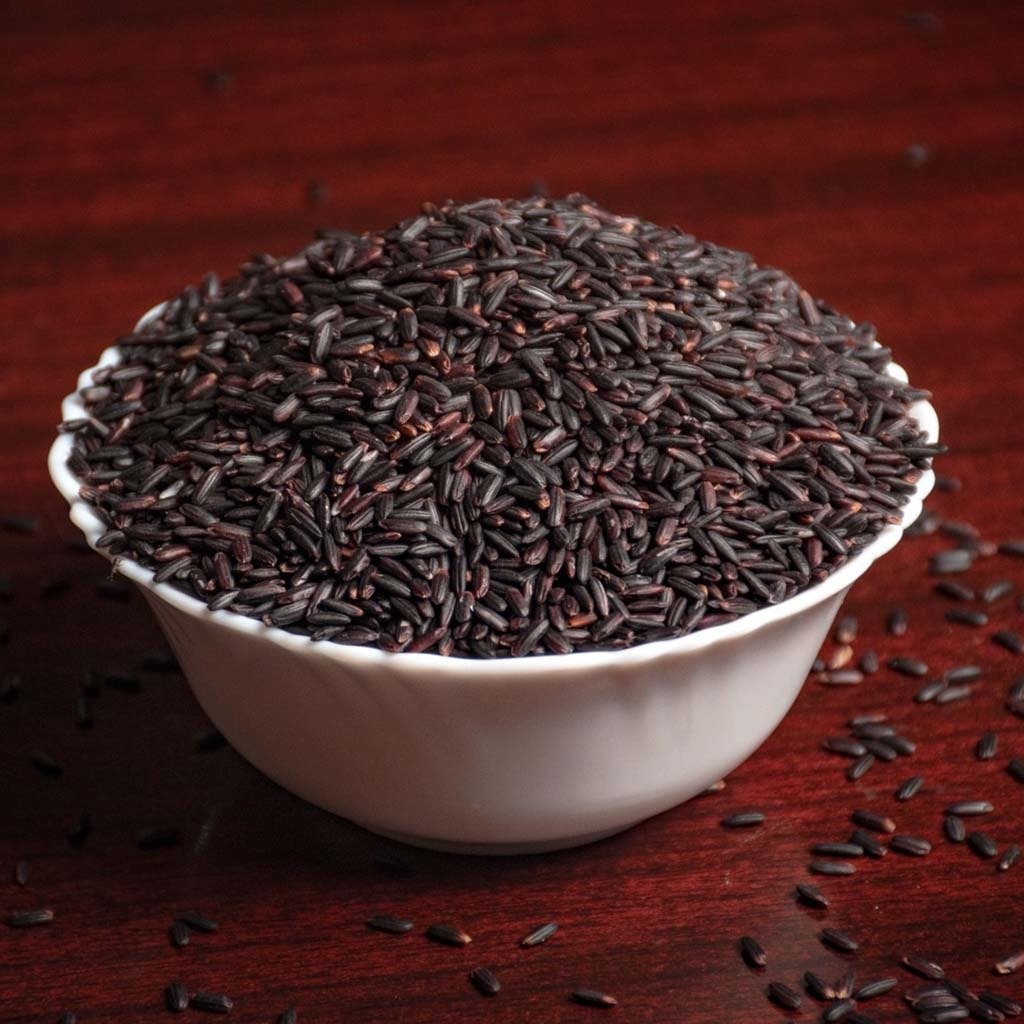
If you've decided you want real Manipur black rice — not a black rice blend sold under the Chak-Hao name — the honest answer is that where you buy it from matters almost as much as what you're buying. Chak-Hao is one of the only rice varieties in India with legal, GI-backed protection of its name, and that protection exists precisely because black rice grown elsewhere kept getting sold as the genuine article. Here's where authentic Manipur black rice is actually sold, how each source stacks up, and what to check before you hand over an order — whether that's a single retail pack or a wholesale shipment.
Why the Source Actually Matters
Once Chak-Hao's reputation started spreading beyond Manipur, black rice grown from Manipuri seed but cultivated in other states began appearing in markets under the same name, diluting a product that had been strictly local for generations. That's the exact problem the Consortium of Producers of Chak-Hao was formed to solve, and it's why the Geographical Indications Registry granted the name legal protection in 2020 — the tag legally ties "Chak-Hao" and "Manipur black rice" to grain actually grown within the registered districts of Manipur, not just any black rice that resembles it.
The complication for buyers is that "black rice" on its own is a near-meaningless label. It's grown commercially in China, Thailand and Indonesia, and increasingly in parts of India outside Manipur too. Only the name Chak-Hao — or "Manipur black rice," backed by its GI registration — tells you anything reliable about where the grain in the bag actually came from. That's the filter worth applying at every stage of buying it, regardless of which channel you use.
Verifying Genuine Chak-Hao Before You Buy
A GI tag doesn't inspect every bag that ships — it's a legal protection, not a barcode scan — so the responsibility for checking authenticity still lands mostly on the seller's claims and, to a lesser extent, on you as the buyer. For the full background on how the GI registration works, see our guide to Chak-Hao's GI tag. Before you buy, here's what's actually worth checking.
GI Number & Origin Claim
Look for "GI No. 602" or a clear, specific "Manipur" origin statement on the listing or pack — not just "black rice" or "forbidden rice" with no origin named.
Growing District
Genuine Chak-Hao traces back to Imphal East, Imphal West, Bishnupur or Thoubal. A seller who can't say which district it's from is worth a second look.
Aroma Before Cooking
Authentic Chak-Hao carries a distinct natural fragrance even dry, before it touches water. Grain with no scent at all is often a blended or non-Manipuri batch.
Colour & Bran Finish
Genuine grain looks deep, even purple-black with a matte bran layer, not patchy brown-black or an artificially glossy sheen.
Batch & Harvest Traceability
A legitimate supplier can share harvest season, producer or FPC name, or a lot number on request — not just a bag with a printed label.
Organic Certificate Number
If "organic" appears on the label, ask for the NPOP or APEDA certificate reference behind it rather than taking the claim at face value.
Where Manipur Black Rice Is Actually Sold
Genuine Chak-Hao reaches buyers through four broad channels, each with a very different trade-off between how easy it is to verify and how far it can actually reach you.
Local Markets in Manipur
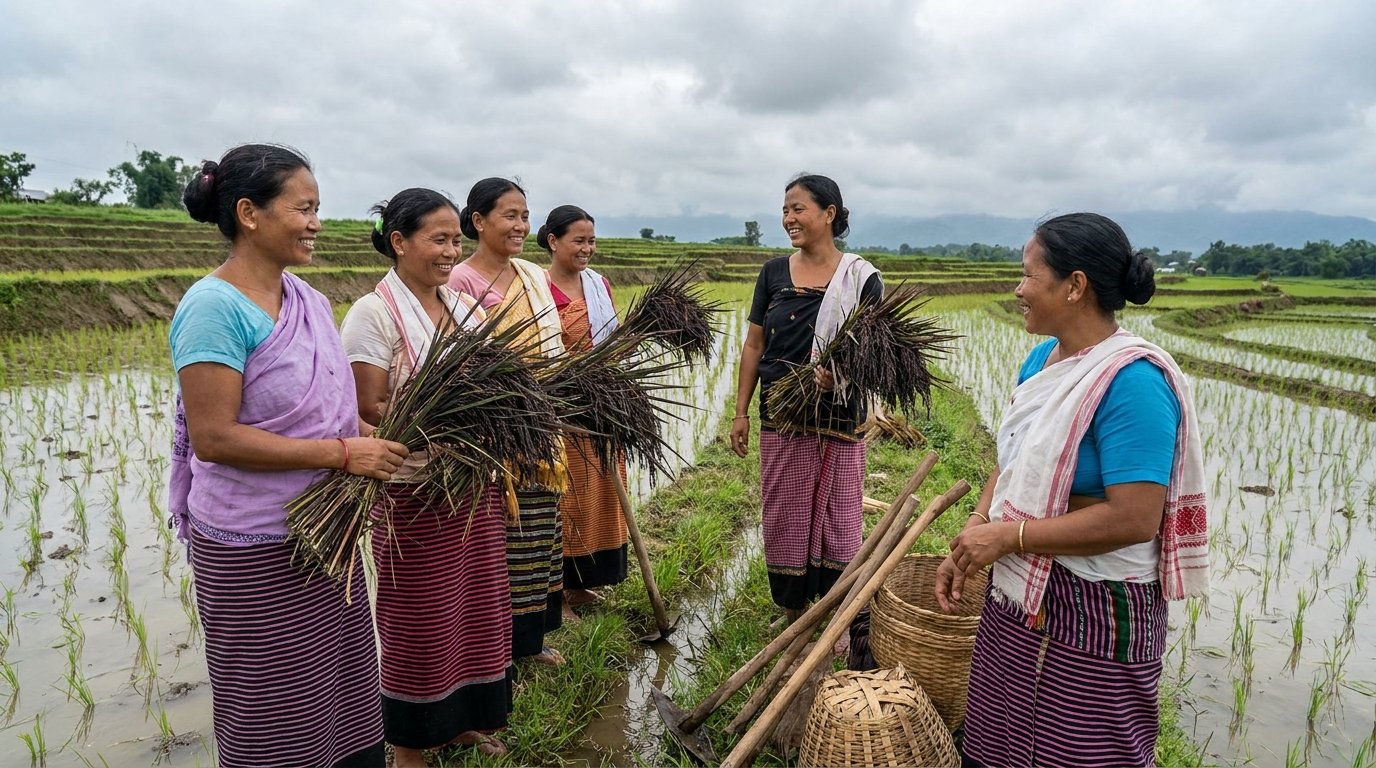
The most direct route is still Manipur itself. Ima Keithel in Imphal — a roughly 500-year-old, entirely women-run market often described as the largest all-women market in Asia — is where generations of Manipuris have bought their household rice, black rice included, alongside produce, textiles and spices. Buying here means you can see the grain, smell it, and ask the seller directly where it's from, which is about as close to first-hand verification as buying rice gets. Smaller Imphal grocers and valley-district shops carry it too, usually sourced from the same local paddy network.
Government & Cooperative Channels
Manipur's Department of Agriculture, NERAMAC and the Manipur Organic Mission Agency (MOMA) all back organised routes to market for GI-linked producers, including Farmer Producer Companies dedicated specifically to Chak-Hao. Several thousand hectares of Chakhao cultivation are certified under India's National Programme for Organic Production through the MOVCDNER scheme, and produce from that network has occasionally reached dedicated organic outlets outside the Northeast, as well as institutional buyers through the Government e-Marketplace (GeM) and listings on the Open Network for Digital Commerce (ONDC). This channel is well-documented but isn't built for casual retail shopping — it moves in bulk, through registered entities, more than it does in small packs to individual households.
General Online Marketplaces
Amazon, Flipkart, BigBasket and similar platforms all carry Chak-Hao alongside dozens of other black rice brands, some GI-referenced and some not. The reach here is unmatched — pan-India delivery, sometimes international — but the burden of verification shifts almost entirely onto the buyer. Authenticity on a general marketplace usually comes down to how much you trust one seller's product description and reviews, since the platform itself isn't verifying geographic origin.
Direct From a GI-Verified Supplier
For buyers who want documented origin without visiting Manipur in person, or who need quantities beyond a retail pack, going direct to a supplier who sources from the Imphal valley and can produce traceability documentation is usually the more reliable route — particularly for bulk, wholesale or export orders where a mislabelled shipment is a far bigger problem than a mislabelled kitchen pack.
Comparing the Buying Channels
No single channel wins on every count — a market stall in Imphal beats any website on trust, but it can't ship to Delhi or Düsseldorf. Here's how the four channels compare across the things that actually matter to a buyer.
Local Manipur Markets
Ima Keithel and Imphal-valley grocers. Best for verification, weakest for reach.
Government & FPC Channels
NERAMAC, MOMA, GeM & ONDC listings tied to registered producer companies.
General Online Platforms
Amazon, Flipkart, BigBasket and similar. Best reach, weakest verification.
GI-Verified Direct Supplier
Sourced from the Imphal valley with documented traceability, built for bulk and export.
Ratings above reflect general, typical experience across each channel type as a buying guide — not an audit of any individual seller. Always verify a specific listing on its own merits before ordering.
Buying In Manipur vs. Buying From Anywhere Else
Which channel makes sense mostly comes down to one question: are you standing in Manipur, or ordering from somewhere else?
Buy It In Person
You have the strongest verification tools available — use them.
- Visit Ima Keithel or a valley-district market and buy from a vendor who can name the village or farmer.
- Check the aroma and colour of the dry grain before you commit to a larger bag.
- Buy a small quantity first to test-cook it before returning for more.
- Ask whether it's from the current season's harvest, since freshness affects both aroma and cook time.
Order From a Verified Source
You're relying on someone else's claims — make them specific ones.
- Prefer listings that name a GI number or origin district over ones that just say "black rice."
- For retail quantities, check seller ratings and read a few reviews mentioning aroma or cook time, not just packaging.
- For bulk, wholesale or export orders, go directly to a supplier who can provide traceability documentation upfront.
- Ask about shipping timelines and, for international orders, export paperwork before you place the order.
Red Flags vs. Green Flags When Buying Online
Most authenticity problems show up in the listing itself, before you ever open the bag. Here's what tends to separate a genuine Chak-Hao seller from one riding on the name.
Red Flags
- Listed only as "black rice" or "forbidden rice" with no Manipur or Chak-Hao origin claim anywhere
- No GI number or GI registration reference mentioned in the description
- Seller can't answer a direct question about harvest season or producer name
- "Organic" claimed with no certificate number offered when asked
- Product photos show a uniformly glossy grain with no mention of natural aroma
Green Flags
- Clear "GI No. 602" or "Chak-Hao, Manipur black rice, GI-tagged" labelling
- Origin district named — Imphal East, Imphal West, Bishnupur or Thoubal
- Willing to share batch, harvest or producer details when asked
- Description matches known Chak-Hao traits: aromatic, glutinous, 40–45 minute cook time
- Offers wholesale or bulk quantities with export documentation support, not just single retail packs
Buying Wholesale, Bulk or for Export
Retail marketplaces and local markets are built around small, single-household quantities. For hotels, retailers, exporters or anyone buying beyond kitchen quantities, sourcing directly from a supplier with documented origin is the more dependable route — and it's where the traceability question matters most, since a bulk shipment mislabelled as Chak-Hao is a far bigger liability than one bad retail pack.
Chak Hao supplies GI-verified Manipur black rice sourced from the Imphal valley, with full traceability from paddy to pack. The state's broader Chakhao value chain has been steadily building an export track record — including a 2025 trial export agreement with Japan arranged through APEDA — which reflects growing international demand for the grain grown under this GI registration.
Year Chak-Hao received its GI tag (GI No. 602)
Core GI-registered districts: Imphal East, Imphal West, Bishnupur & Thoubal
Hectares of Chakhao land certified organic under the MOVCDNER value-chain scheme
Trial export volume agreed with Japan via a 2025 APEDA-backed MoU
Not sure which quantity or packaging fits your order? Our trade desk can walk you through options in minutes.
Frequently Asked Questions
The Bottom Line
There's no single "best" place to buy Manipur black rice — there's only the channel that fits how much you're buying and how far it needs to travel. In Imphal, your eyes and nose at Ima Keithel are the best verification tool you'll find anywhere. Everywhere else, the GI number and a named growing district do that job instead, whether you're picking up a retail pack or placing a wholesale order. For bulk, retail or export quantities backed by traceable sourcing, browse our product page or reach out to our trade desk directly. To go deeper on the grain itself, see our guides to Manipur black rice and its GI tag, how it compares to other black rice grown across India, and black rice vs. brown rice.
Further reading
- Wikipedia — Chak-Hao black rice
- Manipur Organic Mission Agency (Govt. of Manipur) — Black Aromatic Rice (Chak-Hao)
- Assam Tribune — Manipur to export first batch of Chakhao rice to Japan
- IncorpX — GI Tag in India: Registration, Benefits & Process